

TCN Boosts Apapa Road Substation Capacity Threefold to 180MVA, Strengthens Lagos Power Supply By Raymond Enoch
The Transmission Company of Nigeria (TCN) has upgraded the Apapa Road 132/33kV Transmission Substation in Lagos, raising its capacity threefold from 60MVA to 180MVA in a major intervention aimed at strengthening electricity supply to critical industrial and commercial areas of the state.
The upgraded facility was commissioned on Monday by the Minister of Power, Mr. Joseph Olasunkanmi Tegbe, marking another step in ongoing efforts to modernise Nigeria’s transmission infrastructure and improve the reliability of bulk electricity supply.
Speaking at the commissioning ceremony, the Managing Director and Chief Executive Officer of TCN, Engr. Sule Ahmed Abdulaziz, described the project as a significant milestone in the Federal Government’s efforts to reinforce the nation’s transmission network.
According to Abdulaziz, the project was sponsored by the Japan International Cooperation Agency (JICA), in partnership with TCN, as part of efforts to strengthen the transmission network serving one of Lagos State’s busiest industrial corridors.
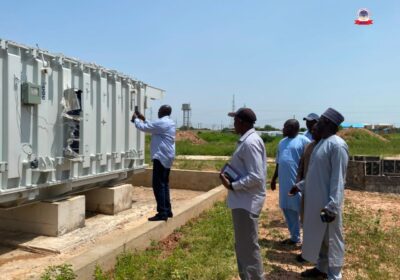
The TCN chief explained that the installation and energisation of two new 60MVA power transformers, alongside modern Gas Insulated Switchgear (GIS), increased the substation’s capacity from 60MVA to 180MVA.
The additional capacity is expected to make more bulk electricity available to the Eko Electricity Distribution Company (EKEDC) for onward distribution to consumers in Apapa Causeway, Ijora, Amukoko, Ajegunle, Apapa Wharf, Tin Can Island and surrounding areas.
Abdulaziz said the project had already contributed to improved electricity supply quality while supporting economic activities and productivity in Lagos State and the wider Nigerian economy.
He disclosed that the project was delivered by Takaoka Engineering Co. Ltd., a Japanese engineering and construction company, under the Emergency Rehabilitation and Reinforcement of Lagos Transmission Substations project.
The broader project followed a Grant Agreement signed between the Federal Government of Nigeria and JICA on November 23, 2018, with implementation commencing in 2019 after preparatory surveys and grant mobilisation undertaken by Yachiyo Engineering Co. Ltd.
The TCN boss noted that the Apapa Road substation upgrade formed a key component of the broader transmission rehabilitation programme, designed to reinforce critical sections of the Lagos transmission network.
He commended President Bola Ahmed Tinubu and the Minister of Power for their support and commitment to improving the country’s power sector, while also appreciating the Lagos State Government for providing an enabling environment for the project’s successful implementation.
Abdulaziz further said the development demonstrated TCN’s commitment to modernising Nigeria’s transmission network, reducing technical losses and strengthening the national grid to support economic growth.
He expressed appreciation to JICA and the Government of Japan for the grant intervention, as well as the Federal Ministry of Power, Federal Ministry of Finance, TCN engineers, contractors and other stakeholders involved in delivering the project.
The TCN managing director, however, appealed for similar grant support for other critical sections of Nigeria’s transmission network.
He said additional interventions would enable the company to sustain and optimise transmission operations nationwide and enhance its ability to fulfil its mandate.
The upgraded Apapa Road substation is particularly significant because of the strategic importance of the Apapa axis, which hosts major port, maritime, industrial and commercial activities and serves as an important gateway for Nigeria’s international trade.
With its capacity now tripled to 180MVA, the facility is expected to provide greater transmission headroom for EKEDC and help address capacity constraints affecting electricity delivery to businesses and communities within the Apapa corridor.
The project therefore represents not only an expansion of transmission capacity but also an important infrastructure intervention capable of supporting industrial productivity, commercial activity and economic development in Lagos.
TCN said the commissioning also underscored the value of international development partnerships in addressing infrastructure gaps and building a more resilient electricity transmission network for Nigeria.