

ECOWAS, UEMOA Rally West Africa for Water Security, Name Cabo Verde Host of Next Forum By Raymond Enoch
The Economic Community of West African States (ECOWAS), the West African Economic and Monetary Union (UEMOA) and the Permanent Interstate Committee for Drought Control in the Sahel (CILSS) have rallied countries and regional stakeholders around a common agenda for water security, climate resilience and sustainable development across West Africa.
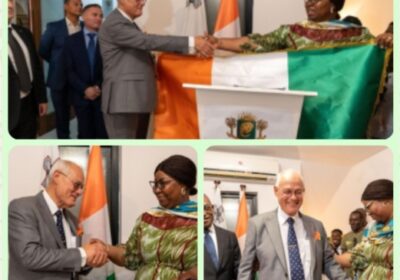
The regional push emerged from the maiden West Africa Regional Water Forum (FREAO), held in Port-Bouët, Abidjan, Côte d’Ivoire, from September 24 to 25, 2026, with Cabo Verde designated to host the next edition of the regional forum.
Held under the theme, “Valuing Water to Transform West Africa,” the two-day gathering brought together Heads of Government, ministers, regional institutions, river basin organisations, development partners, academia, the private sector and civil society to deliberate on the growing water challenges confronting the region.
The Forum concluded with the adoption of the Abidjan Declaration, as well as a shared regional roadmap designed to provide a common framework for advancing water security and strengthening climate resilience across West Africa.
Opening the Forum on behalf of the Government of Côte d’Ivoire, Prime Minister Robert Beugré Mambé called for stronger cooperation among countries in the management of shared water resources.
Mambé described water governance as a strategic political choice and a pillar of regional stability, stressing the importance of collective action in addressing challenges associated with the management and use of water resources that transcend national boundaries.
Representing the President of the ECOWAS Commission, H.E. General Birame Diop, Commissioner Amin Amidu Sulemani described the gathering as a regional call to action aimed at strengthening water security and building greater resilience to climate-related pressures.
The Commissioner underscored the significance of a coordinated regional approach at a time when water resources are increasingly linked to agriculture, livelihoods, economic development, environmental sustainability and the stability of communities.
The Forum also brought the West African water agenda into the broader continental conversation, with the President of the African Ministers’ Council on Water (AMCOW) and Senegal’s Minister of Water and Sanitation, H.E. Dr Cheikh Tidiane Dièye, linking the Abidjan discussions to Africa’s wider water priorities and preparations for the 2026 United Nations Water Conference.
A major focus of the deliberations was Integrated Water Resources Management (IWRM), with participants examining how countries and regional institutions could improve the coordinated development and management of water, land and related resources.
Discussions also addressed sustainable financing, climate resilience, water diplomacy and transboundary cooperation, reflecting the increasing importance of shared approaches to water resources management in a region where major rivers and water systems cut across national borders.
Participants reaffirmed the strategic role of water in West Africa’s development, particularly in strengthening food security, supporting economic transformation, protecting the environment and advancing regional integration.
The emphasis on transboundary cooperation was particularly significant as several of the region’s major water systems serve multiple countries, making coordination between governments and river basin organisations critical to sustainable management.
The Forum provided an opportunity for governments, regional institutions, technical organisations and development partners to exchange perspectives on how investment, policy coordination and institutional cooperation could be strengthened to address water-related challenges.
The adoption of the Abidjan Declaration marked a major outcome of the inaugural gathering, providing a collective statement of regional commitment to addressing water security and related development challenges.
The accompanying regional roadmap is expected to serve as a framework for translating the commitments made in Abidjan into coordinated action, while strengthening cooperation among ECOWAS member states and other regional actors.
For the organisers, the Forum also represents an effort to place water more firmly at the centre of regional development and integration discussions, rather than treating it solely as an environmental or technical issue.
The decision to designate Cabo Verde as host of the next edition ensures continuity for the regional platform and provides an opportunity for further assessment of progress on the commitments reached in Abidjan.
The choice also reinforces the regional character of the initiative, extending the water dialogue beyond the inaugural meeting and creating a platform for countries and stakeholders to continue sharing experience, policy approaches and solutions.
As West Africa faces increasing pressure from climate variability and competing demands for water for agriculture, communities, industry and ecosystems, the Abidjan Forum has placed water security firmly on the regional policy agenda.
The challenge ahead, however, will be translating the commitments contained in the Abidjan Declaration and regional roadmap into sustained investment, effective institutions and practical cooperation capable of delivering water security for communities across the region.
With Cabo Verde now designated to host the next edition, the regional water agenda moves from Abidjan to its next phase, with ECOWAS, UEMOA and CILSS seeking to maintain momentum around a resource increasingly recognised as fundamental to West Africa’s security, prosperity and integration.