

ECOWAS Moves to Tighten Maritime Security as Delegation Visits Cotonou Coordination Centre By Raymond Enoch
A high-level delegation from the ECOWAS Commission has stepped up efforts to strengthen maritime security in West Africa with a strategic visit to the Multinational Maritime Coordination Centre (MMCC) Zone E in Cotonou, Republic of Benin.
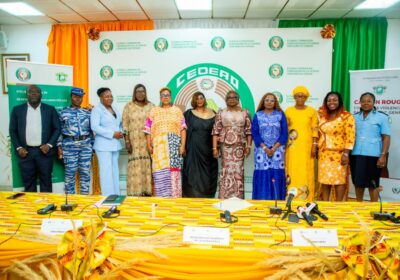
The visit, which took place on April 13, 2026, was led by the Commissioner for Political Affairs, Peace and Security, Abdel-Fatau Musah. It forms part of ongoing regional initiatives aimed at improving collaboration, intelligence sharing, and coordinated responses to maritime threats across the Gulf of Guinea.
During the visit, the ECOWAS delegation was warmly received by the Director of the Centre, Abdulraheem Tunde Olaniyan, who provided a comprehensive operational briefing. He highlighted the critical role MMCC Zone E plays in coordinating maritime security efforts among member states within its jurisdiction.
The Multinational Maritime Coordination Centre Zone E, headquartered in Cotonou, serves as a vital hub for monitoring and responding to maritime incidents such as piracy, armed robbery at sea, illegal fishing, and trafficking. The centre works closely with national navies and regional partners to ensure safer waters and secure maritime trade routes in the sub-region.
Captain Olaniyan, in his presentation, outlined key achievements recorded by the Centre in recent years. These include improved coordination among coastal states, faster response times to maritime incidents, and strengthened information-sharing mechanisms. He noted that such progress has contributed to a gradual decline in piracy and other maritime crimes in parts of the Gulf of Guinea.
However, he also drew attention to several operational challenges still facing the Centre. Among these are limited resources, logistical constraints, and the need for more advanced surveillance technology. He stressed that addressing these challenges is crucial for sustaining and enhancing the gains already made in maritime security.
Speaking during the visit, Ambassador Musah reaffirmed ECOWAS’ strong commitment to regional peace and security, particularly within the maritime domain. He emphasized that the safety of the region’s waters is directly linked to economic growth, given the importance of maritime trade to West African economies.
He further underscored the need for stronger cooperation among member states, noting that maritime threats are transnational in nature and cannot be effectively tackled by any single country alone. According to him, institutions like MMCC Zone E remain central to ECOWAS’ broader strategy of promoting collective security and stability.
The visit also provided an opportunity for both sides to exchange ideas on how to improve operational effectiveness. Discussions focused on capacity building, enhanced funding, and the deployment of modern technology to support surveillance and response operations.
Experts say such high-level engagements are essential in maintaining momentum in the fight against maritime insecurity in the Gulf of Guinea, a region that has long been considered a hotspot for piracy and other illegal activities at sea.
The ECOWAS delegation’s visit signals a renewed sense of urgency and commitment to tackling these challenges head-on. By strengthening institutions like MMCC Zone E and fostering closer collaboration among member states, the regional bloc aims to create a safer maritime environment that supports trade, investment, and sustainable development.
As maritime security continues to evolve, stakeholders believe that sustained political will, adequate funding, and regional solidarity will be key to ensuring long-term success. The visit to Cotonou is therefore seen not just as a routine engagement, but as a strategic step toward a more secure and prosperous West African maritime space.