

WEP, EnviroNews ORGANIZE TWO-DAY MEDIA TRAINING ON CLIMATE GOVERNANCE AND GENDER MAINSTREAMING, UNFCCC AND MINAMATA CONVENTION ON MERCURY By Raymond Enoch
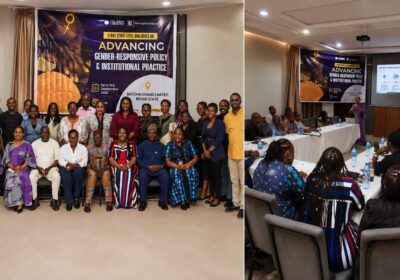
ABUJA — Journalists, Climate Experts, development partners, Civil Society actors, and government officials converged on Abuja for a high-level two-day media training on Climate Governance and Gender Mainstreaming under the United Nations Framework Convention on Climate Change (UNFCCC) and the Minamata Convention on Mercury.
The training, organised by Women Environmental Programme and EnviroNews Advocacy & Campaigns for Sustainability, aimed at strengthening the capacity of media practitioners to report accurately and effectively on climate change, environmental sustainability, and mercury pollution in Nigeria.
Held at Happag Lloyd House in Gaduwa, Abuja, the workshop brought together journalists from across the country to deepen their understanding of global climate frameworks and the growing importance of gender-inclusive environmental policies.
Participants at the opening session described the media as a critical partner in driving climate accountability, public awareness, and policy implementation, especially at a time when climate change continues to threaten livelihoods, food security, public health, and sustainable development.
Speakers after speakers at the workshop stressed that environmental reporting must move beyond headlines to become solution-driven, evidence-based, and people-centred. They noted that women and vulnerable communities are often the worst affected by climate disasters, pollution, and environmental degradation, making gender mainstreaming a key component of climate governance.
The organisers explained that the training is designed to equip journalists with practical tools for simplifying complex climate policies and international environmental agreements into compelling stories capable of influencing public action and government response.
According to the organisers, the workshop focuses on improving participants’ understanding of the United Nations Framework Convention on Climate Change and Nigeria’s climate commitments, while also enhancing awareness of the Minamata Convention on Mercury and its implementation strategies.
The programme further seeks to build the capacity of journalists for gender-sensitive and investigative environmental reporting, while promoting stronger collaboration among policymakers, environmental experts, civil society organisations, and the media.
Speaking during the sessions, facilitators urged journalists to take greater interest in climate reporting, noting that environmental issues are no longer distant global concerns but realities affecting communities across Nigeria through deforestation, flooding, desertification, pollution, and changing weather patterns.
The workshop also featured discussions on inclusive climate communication, environmental justice, and the role of the media in amplifying the voices of women, rural populations, and other vulnerable groups affected by environmental challenges.
The two-day training ended with renewed calls for stronger collaboration between the media, government institutions, environmental organisations, and development partners to promote accurate climate reporting and inclusive environmental policies. Participants expressed commitment to using the knowledge gained from the workshop to drive public awareness, strengthen accountability, and amplify conversations around climate action, gender mainstreaming, and mercury pollution in Nigeria.