

ECOWAS Moves To Activate Business Council, Courts Dangote To Drive Regional Economic Growth By Raymond Enoch
The Economic Community of West African States (ECOWAS) has intensified efforts to strengthen regional economic integration and expand private sector participation with fresh moves to operationalize the ECOWAS Business Council (EBC), a strategic platform expected to transform trade and investment cooperation across West Africa.
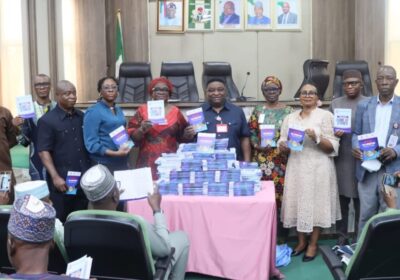
This formed the focus of a high-level working visit by senior ECOWAS officials to the Chairman of the ECOWAS Business Council and President of the Dangote Group, Aliko Dangote, at the corporate headquarters of the conglomerate in Lagos on Monday.
The delegation was led by ECOWAS Commissioner for Economic Affairs and Agriculture, Dr. Kalilou Sylla, alongside Commissioner for Internal Services, Dr. Habib Yaya Bappah, in what observers described as a decisive push by the regional bloc to place the private sector at the center of West Africa’s economic transformation agenda.
Also on the delegation were Gerard Amoi Amangoua, Technical President of the Technical Working Group (TWG) for the ECOWAS Business Council, and other members of the working group tasked with driving the framework for the council’s implementation.
The meeting, according to insiders familiar with the discussions, focused on accelerating the operational structure of the ECOWAS Business Council to ensure stronger collaboration between governments and the organised private sector in advancing the ECOWAS regional market.
The Council is expected to serve as a critical bridge between policymakers and business leaders across member states, helping to unlock investment opportunities, reduce trade barriers, boost industrialisation, and enhance intra-African trade under the African Continental Free Trade Area (AfCFTA).
Speaking during the engagement, ECOWAS Commissioner for Internal Services, Dr. Habib Yaya Bappah, emphasized the importance of private sector leadership in achieving sustainable regional development, noting that the ECOWAS Business Council represents a practical mechanism for translating regional integration policies into measurable economic outcomes.
He stressed that West Africa’s economic future depends largely on stronger institutional collaboration with indigenous businesses capable of driving industrial expansion, job creation, and regional competitiveness.
The renewed push to activate the council comes at a critical period when ECOWAS member states are seeking innovative strategies to address trade bottlenecks, economic fragmentation, infrastructure deficits, and declining investor confidence across the sub-region.
Analysts believe the involvement of Africa’s leading industrialist, Aliko Dangote, signals ECOWAS’ determination to position the private sector as a major driver of economic diplomacy and cross-border commercial expansion.
Sources at the meeting disclosed that discussions also explored practical frameworks for improving the ease of doing business across member states, harmonising investment policies, strengthening regional value chains, and promoting large-scale industrial partnerships capable of stimulating inclusive economic growth.
Economic experts say the full operationalization of the ECOWAS Business Council could significantly deepen regional integration by creating a stronger voice for businesses in policy formulation while accelerating implementation of trade and industrial policies within the bloc.
The latest engagement further reflects ECOWAS’ broader vision of building a more competitive, economically integrated, and investment-friendly West African region powered by strategic public-private partnerships.