

FRSC, INDIA DEEPEN TIES WITH WELL-BEING TRAINING 1,000 Security Personnel to Benefit By Raymond Enoch
The Federal Road Safety Corps (FRSC) has strengthened Nigeria’s growing institutional partnership with India through a 10-day international training programme designed to enhance stress management, emotional well-being and psychological resilience among law enforcement personnel.
The programme, which commenced on Monday at the ICT Hall of the FRSC National Headquarters, Abuja, is expected to benefit 1,000 personnel drawn from the FRSC and sister security and paramilitary agencies, including the Nigeria Police Force, Nigeria Immigration Service, Nigeria Correctional Service, Nigeria Customs Service, Federal Fire Service and Nigeria Security and Civil Defence Corps (NSCDC).
The training is being delivered in collaboration with Rashtriya Raksha University (RRU), Gujarat, India, a national security and police university under the Ministry of Home Affairs, Government of India.
The 10-day programme will take place in Abuja and at the FRSC Academy, Udi, Enugu State, providing participants with practical knowledge and skills to manage occupational stress, regulate emotions, build psychological resilience and maintain effectiveness in high-pressure operational environments.
Declaring the programme a strategic investment in Nigeria’s law enforcement human capital, the Corps Marshal of the FRSC, Shehu Mohammed, mni, said modern law enforcement requires more than technical competence.
According to him, officers routinely encounter road traffic crashes, emergencies, disasters, casualties, security threats and other critical situations capable of placing enormous psychological demands on them.
He said government must therefore look beyond equipping personnel for operational duties to ensuring that those responsible for protecting lives and property are also mentally resilient and emotionally balanced.
> “While we have traditionally focused on developing technical and operational competencies, experience has shown that sustainable effectiveness also depends on the mental and emotional well-being of those entrusted with safeguarding our roads and protecting lives and property,” the Corps Marshal said.
The initiative also received strong backing from the Indian government, with the Defence Advisor to the Indian High Commission, Col. Manoj Singh, declaring the training open on behalf of the Indian High Commissioner to Nigeria.
Singh noted that Nigeria and India have maintained bilateral relations for more than six decades, stressing that programmes such as the training provide an opportunity to translate the longstanding relationship into practical institutional development.
He said psychological resilience had become a strategic requirement for contemporary law enforcement, adding that the programme goes beyond conventional classroom instruction.
Participants, he explained, would acquire competencies in stress management, emotional regulation, psychological resilience, self-management and peer support—skills capable of improving operational judgement, professional conduct, crisis response and public service delivery.
Also speaking, the Dean, School of Behavioural Sciences and Forensic Investigation, Rashtriya Raksha University, Dr. Jasbirkaur Thadhani, who represented the Vice Chancellor of the university, reaffirmed RRU’s commitment to expanding its partnership with the FRSC.
Thadhani said the university attaches considerable importance to international collaboration and knowledge exchange, noting that stronger institutional partnerships were essential to improving the professional capacity and effectiveness of law enforcement agencies.
The participation of personnel from seven major law enforcement and paramilitary institutions gives the initiative a broader national dimension, creating a common platform for knowledge sharing and professional development across agencies.
For the FRSC, the programme is also a reflection of the growing recognition that public safety is not only about infrastructure, equipment and enforcement, but also about the people behind the uniform.
The Corps Marshal said inter-agency cooperation, shared knowledge and common professional standards remain critical to building a more effective safety and security architecture for Nigeria.
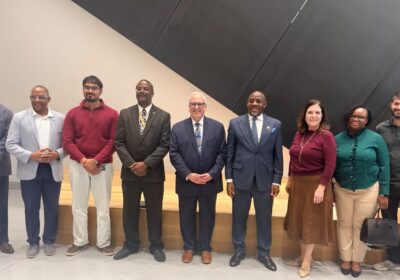
The Indian delegation to the programme includes Dr. Jasbirkaur Thadhani; Mr. Arsh G., Campus Director and Assistant Professor–Research (Criminology), RRU Puducherry; Mr. Kalpesh Sharma, Head, Sports Training–Strength and Conditioning; and Mr. Chandrakant Yadav, Head and Section Officer, Atal Incubation Centre.
At the end of the programme, the training is expected to leave participating agencies with a stronger pool of personnel equipped to manage the psychological demands of modern law enforcement while maintaining professionalism, sound judgement and effective public service.
More broadly, the FRSC-RRU initiative signals a new dimension in Nigeria-India cooperation, where longstanding diplomatic ties are increasingly being translated into practical capacity-building and institutional development.