

Tinubu’s Reforms Need Time to Heal Nigeria’s Economic Wounds — CHEI-IST By Raymond Enoch
The Continuous Human Empowerment Initiative, Inclusive Support for Tinubu (CHEI-IST), has urged Nigerians to give President Bola Tinubu’s economic reforms more time to deliver results, saying the country’s current challenges require sustained policy implementation rather than immediate judgments.
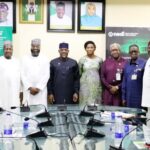
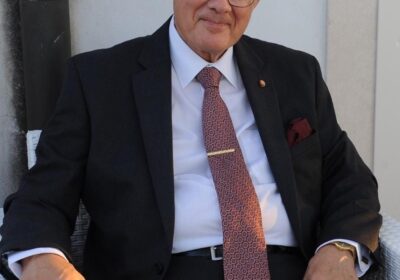
National Coordinator of the organisation, Dr. Agu Goodluck Michael, made the call on Wednesday during an interactive session with members of the Association of Corporate Online Editors (ACOE) at its national headquarters in Area 11, Garki, Abuja.
Michael, a medical doctor, acknowledged the economic hardship confronting Nigerians but argued that some of the reforms introduced by the Tinubu administration could yield positive outcomes if allowed to mature.
Using a medical analogy, he likened Nigeria’s economic condition to that of a patient suffering from multiple fractures, stressing that recovery could not be achieved immediately after admission to a hospital.
> “The mistake we would make is for a man with multiple fractures to believe that immediately he gets to the emergency, he will be well,” he said.
He argued that, just as doctors must first examine a patient, determine the extent of injuries and administer appropriate treatment before recovery can begin, economic reforms should also be assessed over a reasonable period.
According to him, the immediate difficulties being experienced by citizens should not be the sole basis for determining the success or failure of reforms.
Michael described CHEI-IST as a non-political empowerment initiative involved in civic engagement because of the link between political leadership, economic conditions and its programmes in healthcare, agriculture, youth development and skills acquisition.
He said the organisation had undertaken medical outreaches and empowerment programmes in different parts of the country, stressing the need to create an environment where Nigerians could access sustainable opportunities.
The CHEI-IST coordinator also called for increased investment in existing primary healthcare centres rather than concentrating largely on the construction of new facilities.
He noted that many primary healthcare centres were already available but remained poorly equipped or inadequately staffed.
According to him, government should prioritise equipment, personnel, training and effective management to make existing facilities functional and accessible.
“We must call a spade a spade. We must take responsibility,” he said, insisting that healthcare facilities must be properly equipped and staffed to deliver quality services.
Michael also addressed the continued migration of Nigerian doctors and other professionals abroad, popularly known as the “Japa” phenomenon.
He said improving working conditions, providing modern medical equipment and creating access to financing could encourage more Nigerian professionals abroad to return home.
He proposed government-backed financing schemes that would enable medical professionals to establish private healthcare facilities and create viable opportunities for those willing to practise in Nigeria.
On local government administration, the physician expressed support for greater autonomy for the third tier of government, arguing that local councils were closest to the people and therefore needed sufficient authority and resources to respond to grassroots challenges.
He said effective local government administration could strengthen development at the grassroots and ultimately contribute to national growth.
Michael also highlighted what he described as improvements in infrastructure, workers’ salaries and security under the Tinubu administration.
He said CHEI-IST’s empowerment programmes were designed to provide Nigerians with sustainable means of livelihood rather than temporary assistance or political handouts.
As the country moves towards the 2027 elections, he said the organisation would continue to engage communities through empowerment, education and civic participation.
He urged Nigerians to participate actively in the electoral process, protect their votes and make informed political choices based on their assessment of candidates and their policies.
Michael maintained that Nigeria possessed enormous potential despite its current challenges, expressing optimism that sustained reforms, improved governance and greater citizen participation could gradually move the country towards greater prosperity.