

Nigeria Moves to Reinforce Regional Influence with New Diplomatic Strategy for West Africa By Raymond Enoch
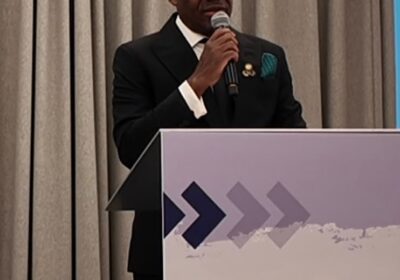
Nigeria’s Minister of Foreign Affairs, Her Excellency Bianca Odumegwu-Ojukwu, has charged newly appointed Ambassadors and High Commissioners-designate to West African countries to become frontline champions of democracy, security cooperation, economic integration and citizen diplomacy as the country intensifies efforts to reinforce its leadership role across the sub-region.
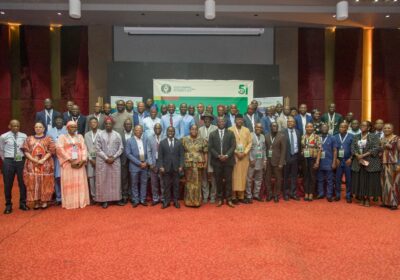
Speaking at the Strategic Retreat for Nigeria’s Ambassadors and High Commissioners-designate to West African countries in Uyo, Akwa Ibom State, the Foreign Affairs Minister declared that the envoys were assuming office at a defining moment in West Africa’s history, when the region is confronted by political instability, security threats, economic uncertainties and shifting geopolitical interests.
She described their appointments as strategic deployments rather than routine diplomatic postings, emphasizing that Nigeria’s commitment to West Africa remains “absolute and unwavering.”
“Your postings are not routine diplomatic assignments. They are strategic deployments to the frontline of our national interest. You are the faces of Nigeria’s renewed leadership in the sub-region,” she stated.
Odumegwu-Ojukwu reaffirmed that West Africa occupies a central place in Nigeria’s foreign policy framework and remains the country’s most important regional priority.
According to her, Nigeria must continue to serve as the anchor of regional integration, peace and security, while defending democratic governance and constitutional order across the sub-region.
The Minister expressed concern over the resurgence of unconstitutional changes of government in parts of West Africa, warning that democratic reversals threaten regional stability and cohesion.
She urged the incoming diplomats to actively engage host governments in strengthening democratic institutions, promoting the rule of law and supporting good governance.
“Democracy remains the best form of government for the peace and prosperity of our peoples,” she said.
On security, Odumegwu-Ojukwu highlighted the growing threats posed by terrorism, violent extremism and transnational organized crime, particularly across the Sahel, noting that the consequences of insecurity continue to undermine economic progress and regional development.
She called for stronger collaboration among West African countries through intelligence sharing, coordinated security mechanisms and enhanced diplomatic engagement.
“A secure West Africa is a prerequisite for a secure Nigeria,” she stressed.
The Minister also challenged the envoys to aggressively pursue economic diplomacy by leveraging opportunities created by the African Continental Free Trade Area (AfCFTA) and ECOWAS protocols on free movement.
She urged them to promote investment, facilitate trade, support Nigerian businesses and foster partnerships in critical sectors such as agriculture, manufacturing, energy and digital technology.
According to her, regional integration can only be meaningful when it translates into economic prosperity for citizens across the sub-region.
Odumegwu-Ojukwu further underscored the importance of citizen diplomacy, directing the ambassadors to ensure that Nigerian embassies become responsive centres of support for Nigerians living and working across West Africa.
She described the protection of Nigerians abroad as non-negotiable and encouraged stronger engagement with the diaspora as partners in national development.
The Minister also advocated the use of digital diplomacy and modern communication tools to expand outreach, build strategic networks and effectively project Nigeria’s interests in host countries.
Earlier, the Minister of State for Foreign Affairs, Ambassador Sola Enikanolaiye, reinforced the administration’s foreign policy direction, describing West Africa as Nigeria’s primary sphere of influence and strategic interest.
He noted that the welfare and security of Nigerians remain at the core of the country’s foreign policy objectives and emphasized that developments within neighbouring countries directly affect Nigeria’s national interests.
Enikanolaiye said the retreat was designed to deepen the envoys’ understanding of Nigeria’s role in promoting regional peace, security and economic development while strengthening ECOWAS as a credible and dependable institution.
He rejected suggestions that Nigeria’s influence in West Africa has diminished, arguing instead that the country’s leadership is evolving in response to changing realities across the region and the wider international system.
The Minister of State pointed to Nigeria’s hosting of the maiden West Africa Economic Summit in 2025 as evidence of its continuing capacity to shape regional discourse and provide leadership through ideas and strategic initiatives.
He identified terrorism, arms proliferation, human trafficking, banditry and unconstitutional changes of government as major challenges confronting the sub-region and called on the diplomats to adopt proactive and result-oriented approaches in addressing them.
Enikanolaiye also urged the envoys to facilitate trade, dismantle barriers facing Nigerian businesses and promote economic integration through ECOWAS and AfCFTA frameworks.
The retreat featured presentations on ECOWAS and Nigeria’s leadership role within the regional bloc, security challenges in West Africa and the Sahel, migration and humanitarian issues, trade liberalisation, geopolitical competition in the region and the expectations of Nigeria’s diplomatic missions.
The gathering comes at a period of significant transition in West Africa, marked by political realignments, security concerns and renewed debates over the future of regional integration.
For Nigeria’s incoming ambassadors and high commissioners, the message from Uyo was unequivocal: the country’s diplomatic mission in West Africa must become more proactive, more strategic and more responsive in advancing peace, prosperity and stability across the region while firmly protecting Nigeria’s national interests.