

ECOWAS Parliament Opens Accra Session, Deepens Talks on Climate Change, Regional Peace, Security By Raymond Enoch
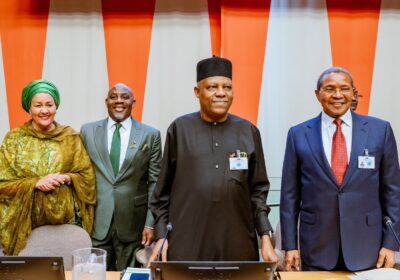
The Parliament of the Economic Community of West African States (ECOWAS) has opened its Second 2026 Parliamentary Seminar and Second Extraordinary Session in Accra, Ghana, with a strong call for coordinated regional action against the growing security and humanitarian consequences of climate change.
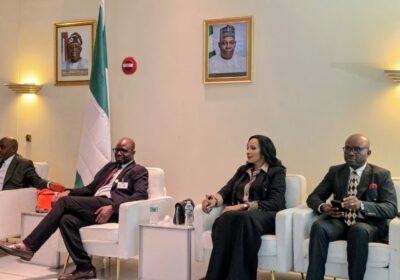
The high-level gathering, which commenced on September 22, 2026, brought together ECOWAS parliamentarians, representatives of regional institutions, the Government and Parliament of Ghana, development partners and other stakeholders to examine the increasingly complex links between climate change, environmental degradation, population displacement and insecurity across West Africa.
The joint opening ceremony was attended by the Vice-President of Ghana, Prof. Jane Naana Opoku-Agyemang, who welcomed the ECOWAS delegation and reaffirmed Ghana’s commitment to regional cooperation and the work of the ECOWAS Parliament.
The session also featured addresses by the Speaker of the ECOWAS Parliament, Rt. Hon. Hadja Mémounatou Ibrahima; Leader of the Ghanaian Delegation, Hon. George Kwaku Ricketts-Hagan; as well as representatives of the Parliament of Ghana and the ECOWAS Commission.
In her opening remarks, the ECOWAS Parliament Speaker stressed the urgency of moving beyond climate commitments towards concrete legislative action, adequately financed policies and measurable outcomes.
She emphasised that parliamentarians have a critical responsibility in strengthening climate resilience, exercising effective oversight and protecting communities and populations most vulnerable to the effects of environmental degradation and climate-related shocks.
The discussions placed particular attention on the emerging climate-security nexus, as changing environmental conditions increasingly affect livelihoods, food security, migration patterns, displacement and community stability across the region.
Representing the President of the ECOWAS Commission, Commissioner for Human Development and Social Affairs, Prof. Nassirou Bako-Arifari, highlighted the far-reaching implications of climate change for livelihoods, population displacement and regional security.
He reaffirmed the Commission’s commitment to strengthening regional cooperation and collective responses to challenges capable of undermining stability and sustainable development within the West African region.
The seminar subsequently featured a presentation by the United Nations Office for West Africa and the Sahel (UNOWAS), focusing on the climate-security nexus and the importance of inclusive climate governance.
Participants also engaged in panel discussions examining climate-related security risks, human security, displacement, resilience and financing for climate adaptation and response.
The deliberations are expected to deepen parliamentary understanding of the interconnected challenges facing the region and generate practical recommendations for stronger and more coordinated ECOWAS responses to climate-related threats.
The Accra session comes amid growing recognition that climate pressures cannot be treated solely as environmental concerns, as their consequences increasingly intersect with development, migration, humanitarian needs and peace and security.
For the ECOWAS Parliament, the engagement provides an opportunity to strengthen the legislative dimension of regional integration by encouraging member states to align climate policies, financing mechanisms and parliamentary oversight with the wider objective of building a more resilient and secure West Africa.