

ECOWAS DIRECTORS RETREAT TARGETS STRATEGIC RESET, TIGHTER SPENDINGS- –Move to Align Expenditure Plans with 2026–2030 Priorities By Raymond Enoch
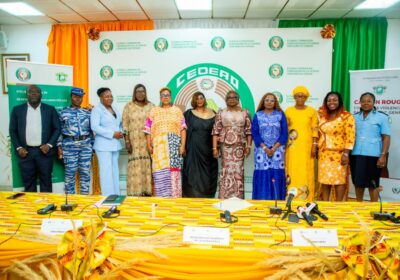
Directors of institutions and agencies of the Economic Community of West African States (ECOWAS) have commenced a 10-day strategic retreat in Lagos,Nigeria aimed at reshaping the Community’s expenditure framework around the priorities of the new management for the 2026–2030 period.
The retreat, which runs from September 21 to 30, 2026, is focused on the harmonisation and finalisation of the Medium-Term Expenditure Framework (MTEF) for 2027–2029, with the outcome expected to provide the foundation for the subsequent review and approval of the 2027 ECOWAS Programme Budget.
The exercise is coming at a critical transition point for the regional organisation, with the new ECOWAS management seeking to translate its strategic priorities into clearly defined, measurable and properly costed programmes capable of delivering tangible results across the Community.
Opening the retreat on behalf of the President of the ECOWAS Commission, H.E. General Birame Diop, the Vice-President of the Commission, H.E. Oluwatosin Anthony Ogunjimi, stressed that the new management’s priorities were designed to sharpen implementation rather than replace the Community’s existing long-term development architecture.
He explained that the priorities would complement ECOWAS Vision 2050 and the Community Strategic Framework 2023–2027, while placing greater emphasis on results that require accelerated delivery during the 2026–2030 management cycle.
The retreat therefore represents more than a budgetary exercise, as participating directors are expected to examine how institutional plans, resources and implementation mechanisms can be brought into closer alignment with the strategic direction of the Community.
A central objective is to ensure that ECOWAS expenditure is increasingly driven by strategic priorities, measurable outcomes and realistic implementation capacity, rather than by fragmented institutional planning.
The discussions are also expected to address areas of overlap among institutions and agencies, with a view to improving harmonisation, coordination and collaboration and ensuring that available resources are directed towards programmes with clearly established priorities and expected results.
The ECOWAS leadership has positioned 2026 as a year of transition and strategic reprioritisation, while 2027 is expected to become the first full year of implementation of the new management’s strategic direction.
Consequently, participants are expected to develop a credible and appropriately costed expenditure framework that reflects both the ambitions of the Community and the realities of implementation.
Particular attention is being given to the preparation of a realistic 2027 work plan, supported by feasible procurement and disbursement schedules. This is intended to minimise implementation gaps and ensure that approved programmes are backed by practical financing and procurement arrangements.
The retreat is also expected to strengthen ECOWAS’ performance-management architecture through the establishment of clear indicators, measurable targets and stronger accountability mechanisms for institutions and agencies.
Under the proposed approach, implementation would be subjected to a more structured system of monitoring and reporting, enabling the leadership to track progress against agreed priorities and identify areas requiring corrective action.
The outcome of the Lagos retreat is therefore expected to provide a more coherent link between ECOWAS strategic priorities, institutional programmes, expenditure planning and measurable results.
Beyond finalising the 2027–2029 MTEF, the exercise is designed to establish a common understanding among ECOWAS institutions and agencies on what must be prioritised, how resources should be deployed and how performance should be measured throughout the 2026–2030 cycle.
The agreed framework will subsequently feed into the review and approval process for the 2027 Programme Budget, marking an important step towards translating the new management’s strategic priorities into concrete programmes and activities across the West African regional integration system.
Ultimately, the Lagos retreat seeks to ensure that ECOWAS enters its next implementation phase with clearer priorities, better-coordinated institutions, realistic financial planning, measurable targets and stronger accountability for delivery.