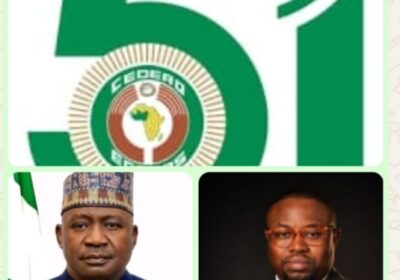


ECOWAS: Bassirou Diomaye Faye Sets Priorities With General Biram Diop By Raymond Enoch
Senegal’s President and Chairman Authority of Heads of States and Government of the Economic Community of West African States (ECOWAS), Bassirou Diomaye Faye, has set out key priorities for the regional bloc during a meeting with General Biram Diop, the newly appointed President of the ECOWAS Commission.
Faye received General Diop at the Presidential Palace, where discussions centred on critical measures aimed at strengthening regional integration, economic cooperation and collective security across West Africa.
At the heart of the meeting was the long-standing ambition to advance the Eco, the proposed common currency for the ECOWAS region, alongside measures to strengthen community financing through regional levies.
The two leaders also examined the free movement of people and goods—one of the foundational pillars of West African integration—and the need to deepen its implementation across member states.
Security featured prominently in the discussions, particularly the operationalisation of the ECOWAS anti-terrorism brigade, as the region continues to confront persistent security challenges and the growing threat posed by terrorism and violent extremism.
The engagement comes at a critical moment for ECOWAS, which is seeking to reinforce its institutions and redefine its regional priorities amid profound political, economic and security challenges.
For President Faye, the discussions underscore the need for ECOWAS to translate its integration commitments into concrete initiatives capable of delivering tangible benefits to citizens and strengthening cooperation among member states.
General Diop, who recently assumed leadership of the regional organisation, expressed appreciation to President Faye and other ECOWAS leaders for the confidence reposed in him.
His appointment places him at the centre of efforts to steer the Commission at a particularly consequential period in the history of the regional bloc.
The Dakar meeting therefore signals an early alignment between the political leadership of ECOWAS and its Commission on issues that could shape the organisation’s next phase—from monetary integration and regional financing to mobility, trade and collective security.
With the Eco, free movement and counter-terrorism cooperation once again high on the regional agenda, the meeting between Faye and Diop could prove significant in determining how quickly ECOWAS converts its priorities into action.