

Alausa Challenges Journalists to Expose Education Gaps with Data, Hold Governors Accountable By Beauty Akporido Aroh
Minister of Education, Dr. Tunji Alausa, has thrown a direct challenge to education journalists across Nigeria to use verified education data to hold state governors, local government chairmen and other stakeholders accountable for the quality of education in their jurisdictions.
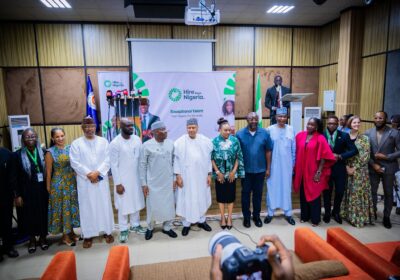
Speaking at the 2026 Annual Education Summit of the Education Correspondents Association of Nigeria (ECAN) in Abuja on Wednesday, Alausa said journalists now have unprecedented access to school-level data that should be deployed to expose deficiencies in classrooms, teacher deployment, infrastructure and student enrolment.
The summit, themed “Three Years of the Tinubu Administration: Assessing Reforms, Progress and Challenges in Nigeria’s Education Sector,” brought together policymakers, education administrators and media professionals to evaluate the government’s education reforms.
Describing data as the foundation of effective governance, the minister urged journalists to make full use of the Nigeria Education Data Infrastructure Management System (NEDIMS) to strengthen investigative reporting and promote accountability.
“Without data, you are flying blind,” Alausa declared.
He explained that the platform provides detailed information on teacher-to-student ratios, classroom availability, school facilities and other critical education indicators across the country.
“You now have the tools to challenge governors and local government chairmen with facts. Use the data for public good because the media remains the voice of the people,” he charged.
The minister praised ECAN for sustaining meaningful engagement on education policies, stressing that education remains Nigeria’s most strategic investment for economic growth, national security, innovation and social cohesion.
Highlighting achievements under President Bola Ahmed Tinubu’s administration, Alausa said the Federal Ministry of Education had concentrated reforms around six priority areas, including Technical and Vocational Education and Training (TVET), STEM education, digital transformation, reduction of out-of-school children, quality assurance and stronger education governance.
According to him, deliberate policy implementation has helped stabilise Nigeria’s tertiary education system, preventing industrial actions that previously disrupted academic activities.
“For the first time in three years, we have had no shutdown of our universities, polytechnics and colleges of education. That stability is a remarkable achievement,” he said.
Alausa also pointed to improvements in Nigeria’s global university rankings, revealing that the number of Nigerian universities among the world’s top 1,000 institutions had increased from 21 to 24, with public universities now dominating the country’s highest rankings.
Despite the progress, the minister admitted that access to education remains one of Nigeria’s biggest challenges.
He disclosed that although the country has nearly 25 million pupils in primary schools, only about five million proceed to junior secondary education.
“That means nearly 20 million children disappear between primary and junior secondary school. Where are they? That is a serious national concern,” he said.
He attributed the problem largely to inadequate access, noting that Nigeria has about 90,000 primary schools but only 16,000 junior secondary schools.
On efforts to reduce the number of out-of-school children, Alausa revealed that government interventions have returned more than one million children to classrooms within the last two years, while a nationwide household survey is being conducted with the National Bureau of Statistics to establish more reliable figures for future planning.
Minister of State for Education, Prof. Suwaiba Ahmed, called on journalists to support ongoing reforms through balanced, factual and responsible reporting capable of informing public discourse and encouraging sustained policy implementation.
She described education as the bedrock of national development, poverty reduction and democratic stability.
Also speaking, Executive Secretary of the Universal Basic Education Commission (UBEC), Aisha Garba, reaffirmed the commission’s commitment to ensuring that every Nigerian child, regardless of social or economic background, has access to quality basic education.
“The ultimate goal is simple: no Nigerian child should be left behind,” she stated.
Chairman of the Nigeria Union of Journalists (NUJ), FCT Council, Mrs. Grace Ike, underscored the media’s responsibility in advancing education reforms through accountability journalism and public advocacy.
She called for stronger collaboration among government, parents, educators and the media to improve learning outcomes nationwide.
Special Adviser to the Minister of Education on Media and Communication, Ikharo Attah, also urged journalists to embrace evidence-based reporting rather than assumptions, insisting that credible data remains the strongest foundation for impactful journalism.
Earlier, ECAN Chairman, Chuks Ukwauta, said the summit was convened to provide an objective assessment of the Tinubu administration’s education reforms while encouraging constructive dialogue among government agencies, development partners and the media.
The event concluded with the presentation of awards to the Minister of Education and heads of key education agencies in recognition of their contributions to sector reforms, alongside technical sessions by the Joint Admissions and Matriculation Board (JAMB) and the National Universities Commission (NUC).