

AI to Revolutionise Inclusive Higher Education, Okebukola Declares By Beauty Akporido Aroh
Former Executive Secretary of the National Universities Commission (NUC) and Chairman of the JAMB Equal Opportunity Group, Prof. Peter Okebukola, has declared that artificial intelligence (AI) will revolutionise inclusive higher education in Nigeria, describing the technology as a powerful tool for breaking barriers that limit access to tertiary education for persons with disabilities.
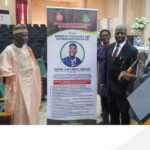
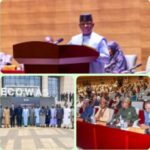
Speaking at the National Stakeholders’ Engagement on Inclusivity and Higher Education in Abuja, Okebukola said the event marked a decade of the JAMB Equal Opportunity Group, established by the Registrar of JAMB, Prof. Is-haq Oloyede, to promote equal access to higher education for all qualified Nigerians, irrespective of disability.
According to him, the gathering was not only an opportunity to review the achievements of the past ten years but also to chart a new course for the future of inclusive education, with artificial intelligence taking centre stage.
“We decided to look ahead and identify a development that will significantly influence the quality of higher education in the future. We picked artificial intelligence. This engagement is about how AI can be used to improve the efficiency of inclusivity in higher education,” he said.
Okebukola disclosed that the Equal Opportunity Group has, over the last ten years, supported 4,216 candidates with disabilities, including persons with visual impairment, autism, Down syndrome, albinism and other special needs, in accessing tertiary education across Nigeria.
He revealed that an average of 53 per cent of the candidates are admitted yearly into universities, polytechnics and colleges of education.
He stressed that candidates with disabilities are assessed under the same academic standards as every other applicant, dismissing the notion that they receive preferential treatment during the Unified Tertiary Matriculation Examination (UTME).
“We do not lower standards for them. They answer the same questions as every other candidate, and they perform remarkably well. Some of them emerge among the best-performing candidates,” he said.
Expressing admiration for their resilience and academic excellence, Okebukola said many students with disabilities have distinguished themselves in highly competitive courses, including Law.
“What I have found is that God is awesome. When someone has limitations in one area, God often strengthens them in another. Many of these students are exceptionally brilliant,” he noted.
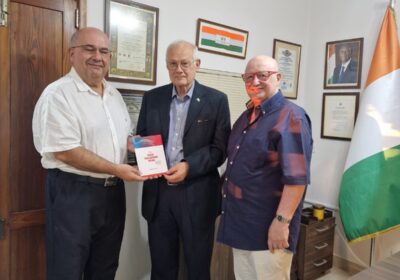
As part of activities marking the anniversary, Okebukola announced the publication of a landmark book titled “A Peep into the Future of Higher Education in Nigeria,” in honour of Prof. Oloyede.
He said the publication features contributions from 44 scholars selected from nearly 700 academics who indicated interest in participating.
“The contributors examined the current state of higher education in Nigeria, envisioned where it should be in the next ten years and proposed practical pathways to achieve that vision,” he explained.
The education expert also unveiled a comprehensive manual developed to support underage students admitted into tertiary institutions.
According to him, the guide was commissioned after JAMB requested the Equal Opportunity Group to address the growing concerns surrounding the emotional and social adjustment of exceptionally gifted students admitted before the age of 16.
He explained that the manual was developed following consultations with 468 education experts and feedback from underage students already studying in Nigerian universities.
“The manual is designed for parents, lecturers, vice-chancellors, provosts and everyone involved in the care of these students. It addresses issues such as bullying, exploitation and how to help them adjust successfully to university life,” he said.
Responding to concerns about whether Nigerian tertiary institutions possess adequate facilities to support students with disabilities, Okebukola maintained that universities have continued to strengthen their support systems over the years.
“For ten years, these institutions have admitted and graduated students with disabilities successfully. They study alongside other students and continue to excel academically. The capacity of our institutions is improving steadily,” he said.
He called on governments, tertiary institutions and education stakeholders to embrace innovation, particularly artificial intelligence, as a catalyst for building an inclusive higher education system where every qualified Nigerian has the opportunity to succeed regardless of physical or sensory limitations.