

ECOWAS Intensifies Democratic Support as Cabo Verde Heads to Crucial 2026 Elections By Raymond Enoch
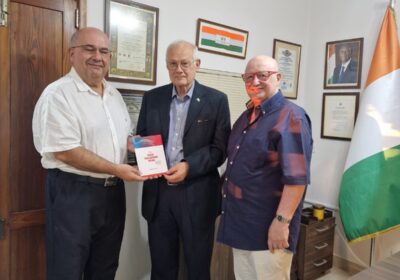
The Economic Community of West African States, Economic Community of West African States, has reinforced its commitment to democratic governance in West Africa with the arrival of the Head of its Election Observation Mission, Baboucarr-Blaise Ismaila Jagne, in Praia ahead of Cabo Verde’s legislative elections scheduled for May 17, 2026.
The mission comes at a critical moment for Cabo Verde, one of Africa’s most stable democracies, where political parties are competing for all 72 seats in the National Assembly. The elections are expected to shape the country’s political direction
Speaking shortly after his arrival in Praia, Jagne said ECOWAS was in Cabo Verde to accompany the electoral process in close coordination with national authorities, electoral institutions, political stakeholders, civil society actors and international observer missions. He expressed confidence that the elections would be conducted peacefully and transparently, reflecting the democratic traditions for which Cabo Verde has become known in the region.
The ECOWAS mission is part of a broader regional strategy to strengthen constitutional order and electoral credibility across West Africa amid growing democratic challenges in parts of the sub-region. According to ECOWAS sources, nearly 100 observers are expected to participate in the observation exercise, while a team of long-term experts has already been deployed across the archipelago to monitor the pre-election environment, campaign activities and institutional preparedness.
ECOWAS had earlier undertaken a pre-election fact-finding mission in Cabo Verde in March 2026 under the leadership of Ambassador Abdel-Fatau Musah, Commissioner for Political Affairs, Peace and Security. The delegation held consultations with government officials, electoral management bodies, political parties, civil society organisations and international partners to assess the readiness of the country for both legislative and presidential elections.
Political analysts say the elections will test the popularity of Prime Minister Ulisses Correia e Silva and his ruling Movement for Democracy (MpD), which currently holds a parliamentary majority, against the opposition African Party for the Independence of Cabo Verde (PAICV).
The legislative election is being closely watched by regional and international partners because Cabo Verde has consistently maintained a reputation for peaceful transfers of power and credible elections since the introduction of multi-party democracy in the early 1990s. Observers believe the country’s democratic stability offers an important example for the wider West African region at a time when concerns over political instability and unconstitutional changes of government remain high in some ECOWAS member states.
Beyond ECOWAS, other international observer groups, including the Community of Portuguese Language Countries (CPLP), have also deployed observer teams to monitor the polls, underscoring the growing international confidence in Cabo Verde’s democratic institutions.
As campaigning enters its final phase, ECOWAS says its observation mission will continue engaging stakeholders and monitoring developments nationwide, while encouraging peaceful participation, political tolerance and public confidence in the electoral process.
For ECOWAS, the Cabo Verde elections represent more than a national exercise; they are viewed as another opportunity to reaffirm the region’s collective commitment to democracy, dialogue and stability in West Africa.