

West Africa’s Security Architecture Under Review as ECOWAS Meets in Abuja By Raymond Enoch
In a decisive move to recalibrate West Africa’s security architecture, the Economic Community of West African States (ECOWAS) has launched a high-level Lessons Learned Workshop on Peace Support Operations (PSOs), signaling a bold shift toward a more agile, better-funded, and counterterrorism-focused regional force.
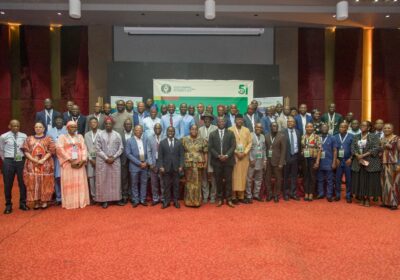
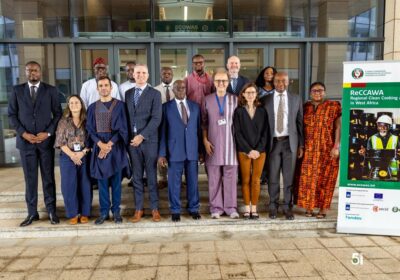
The three-day strategic session, which began Monday in Abuja, is bringing together diplomats, military planners, and regional security experts to critically examine ECOWAS interventions in hotspots such as The Gambia and Guinea-Bissau—operations that have long defined the bloc’s peacekeeping footprint.
But this is no routine review.
At the heart of deliberations lies an urgent question: how can ECOWAS sustain and scale its peace missions amid rising insecurity and dwindling resources?
Officials say the workshop is pivotal to an ongoing strategic overhaul of the ECOWAS Standby Force (ESF), with a clear pivot toward combating terrorism—now the region’s most pressing threat.
Representing Nigeria’s Permanent Representative to ECOWAS, Ambassador Olawale Emmanuel Awe, Ambassador Hafsatu Garba Abdulkadir reaffirmed Abuja’s steadfast backing for regional peace efforts, stressing that Nigeria remains central to ECOWAS’ security vision.
“The stability of West Africa is non-negotiable,” she noted, emphasizing the country’s continued commitment to collective defense and peacebuilding.
Chairman of the ECOWAS Permanent Representatives Committee, Ambassador Julius Sandy, struck a broader tone, warning that without sustained peace, economic integration—the bloc’s founding goal—would remain elusive.
“Peace and security are the bedrock upon which regional prosperity is built,” he said, calling for deeper collaboration among member states.
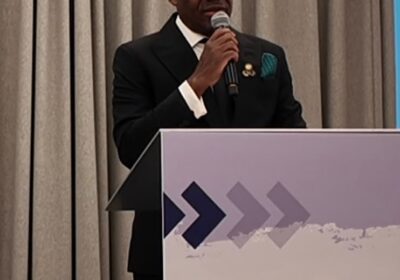
In a keynote that set the tone for robust engagement, ECOWAS Commissioner for Political Affairs, Peace and Security, Ambassador Abdel-Fatau Musah, delivered a candid assessment of the bloc’s peacekeeping journey—from its early interventions to its evolving role in a rapidly changing threat landscape.
Musah underscored a critical gap: funding.
He warned that without predictable and sustainable financing mechanisms, ECOWAS risks overstretching its operational capacity. Central to discussions is the effective utilization of the ECOWAS Peace Fund and unlocking access to international financing frameworks, including United Nations Security Council Resolution 2719, which supports AU-led peace operations.
Security analysts at the workshop argue that tapping into such mechanisms could mark a turning point, enabling ECOWAS to deploy faster, respond smarter, and sustain longer missions without over-reliance on ad hoc contributions.
Beyond funding, the workshop is expected to generate actionable insights on logistics, command structures, and inter-agency coordination—critical elements for a revitalized ECOWAS Standby Force capable of addressing asymmetric threats.
As deliberations intensify, one message is clear: ECOWAS is no longer content with incremental reforms. The region stands at a crossroads, and the decisions taken in Abuja this week could redefine the future of peacekeeping in West Africa.
For a region grappling with insurgency, political instability, and transnational crime, the stakes could not be higher.