

WARCC–Africa CDC Meets in Abuja,Nigeria Pushes for Stronger Disease Control and Emergency Response Systems.
By Raymond Enoch
West Africa’s health Experts Stajeholders and Head of Public Health Institutions has launched a decisive push to strengthen emergency preparedness across the region as the Africa CDC Western Regional Coordinating Centre (WARCC) convenes its Regional Review and Coordination Meeting in Abuja, with Nigeria offering both political will and technical capacity to drive the transformation.
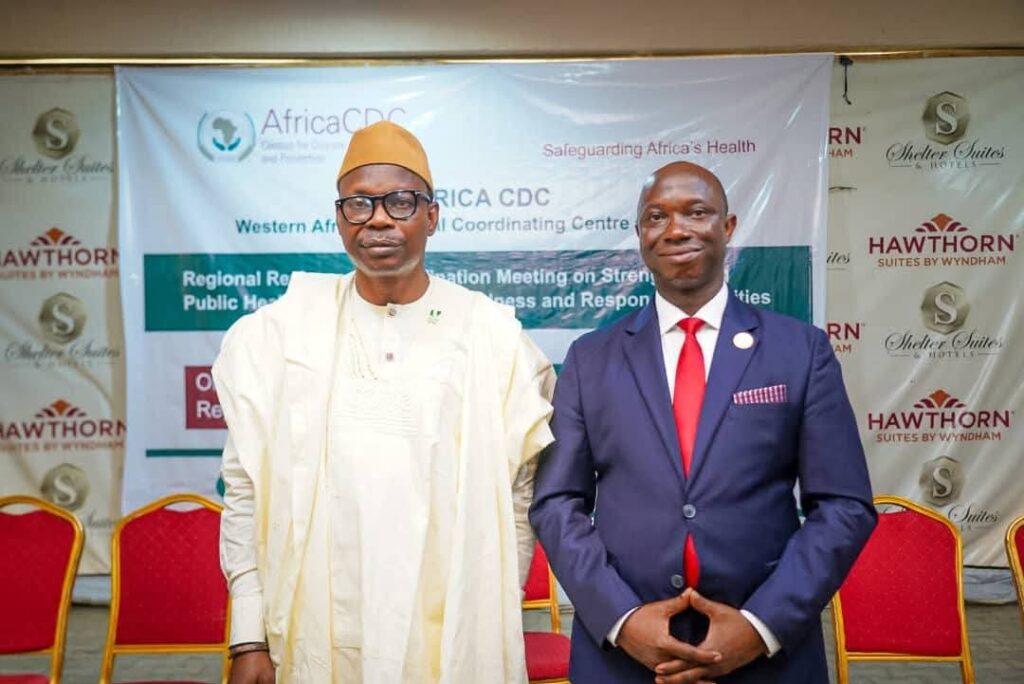
Delegates from fifteen African Union member states, including National Public Health Institutes, laboratory directors, surveillance officers, and global health partners, are examining outbreak trends, reviewing systems performance, and designing a shared coordination mechanism for faster response during epidemics.
Nigeria’s Minister of State for Health, Senator Solomon Olamilekan Adeola, FCA, opened the meeting with a clear call for regional unity backed by investment and innovation. “We cannot afford to wait for the next crisis before we strengthen the systems that protect our people. Nigeria remains fully committed to modernizing surveillance, expanding laboratory networks, and advancing local vaccine manufacturing to secure our health sovereignty,” he said in Abuja, stressing that President Bola Ahmed Tinubu’s agenda places emergency response capacities at the centre of national reform. He added that Nigeria is investing in digital epidemic intelligence so that outbreaks are detected “in real time, not in hindsight.”
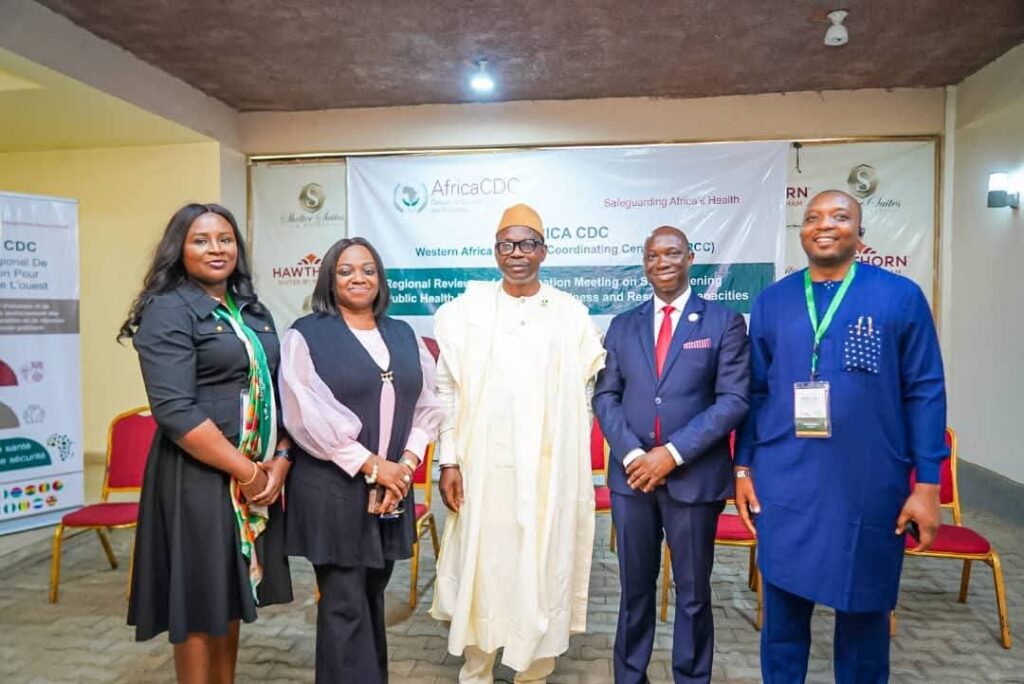
The Chair of the Regional Ministerial Steering Committee (ReSCo) emphasized that the lessons of recent years demand collaboration, not fragmentation, as the region faces recurrent threats from cholera, Lassa fever, mpox, meningitis, and climate-related health emergencies. “No country in West Africa is truly safe until every country is prepared. Our commitment today must be practical, measurable, and driven by African solutions,” she told delegates, urging political leadership to close data gaps and sustain financing beyond donor cycles. Calling for stronger regional structures, the Chair said, “We need a functioning Public Health Emergency Operations Coordination Platform that allows us to share information instantly, mobilize support rapidly, and act as one region when health threats strike.”
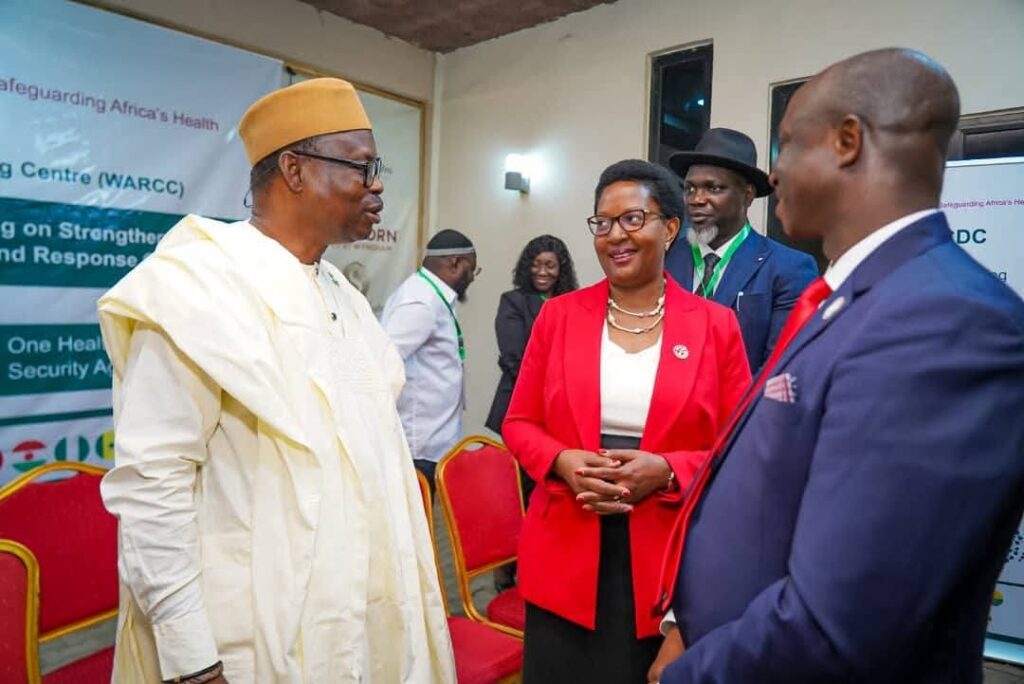
In an exclusive interview with the press at the event, the Regional Director of the Western Africa Regional Coordinating Center (WARCC), Africa CDC, Dr. Kokou Nouwame, said the review is intended to deepen milestones already achieved by regional public health institutions and strengthen their response mechanisms. He explained that the exercise is also designed “to focus on the delivery of WARCC’s mandate,” especially in areas of coordination, data harmonization, and emergency readiness across all member states.
On her part, Mrs. Muriel Mafico, the Resident Representative of the United Nations Population Fund (UNFPA) in Nigeria, stressed that institutional coordination, stronger leadership, and budgetary priorities remain the cornerstones of an effective regional response to public health emergencies. She emphasized that political commitment must translate into sustained financing, saying that “coordination without investment cannot deliver resilience.”
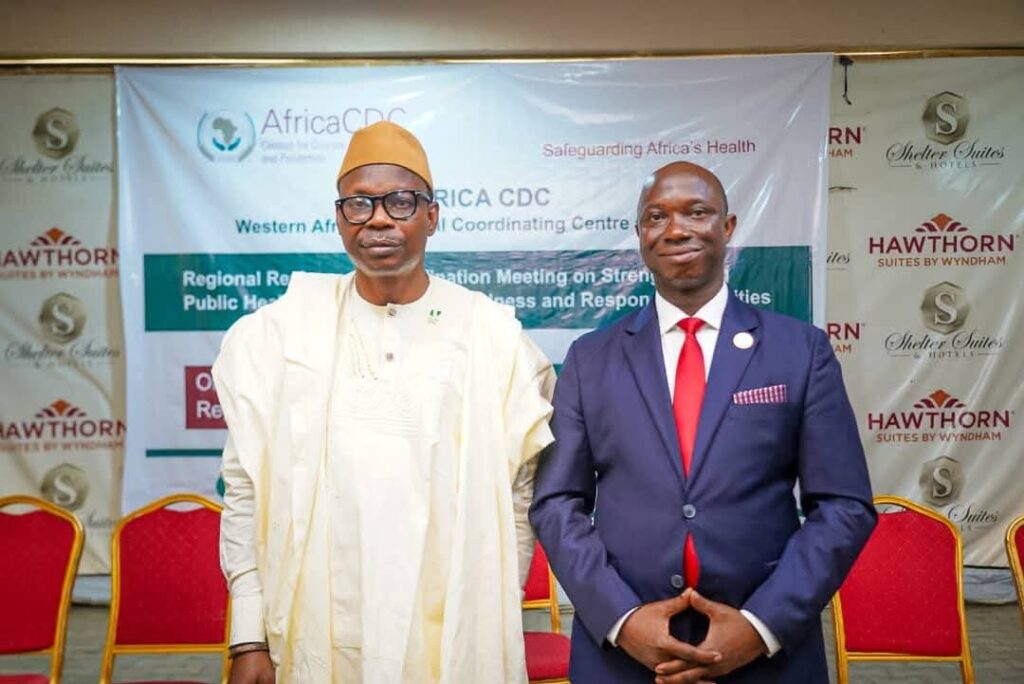
Dr. Tusupha Touray, Permanent Secretary at the Ministry of Health in The Gambia, applauded the work of WARCC–Africa CDC, describing health as central to national development. “Health must be strengthened across the West Africa sub-region,” he said. Citing the continent’s recent challenges during the COVID-19 pandemic, he noted that Africa struggled with vaccine acquisition “despite having some of the best brains,” adding that bringing Africa CDC member states together is “the foremost thing to do” as it will marshal collective efforts in disease control and emergency response.
Technical deliberations in Abuja are focusing on digital transformation, laboratory diagnostics, surveillance integration, and joint emergency planning, all framed under the New Public Health Order. Participants are reviewing progress made in PHEOC digitalization in seven member states, workforce development programmes, and continent-wide data governance efforts led by Africa CDC. The meeting is expected to produce a roadmap for operationalizing a regional coordination mechanism, with special attention to mutual assistance agreements and standardized outbreak reporting.
Speakers agreed that sustainable financing remains the biggest barrier to long-term preparedness, but insisted that leadership is shifting. “African-led financing and domestic accountability are no longer aspirations — they are necessities if we intend to control our own health destiny,” the ReSCo Chair said, pushing for regional investment in the African Epidemic Fund and innovative domestic revenue streams.
From Abuja, the message is expected to be unmistakable: West Africa is not simply responding to public health emergencies — it is redesigning how the region prevents them. The drive is toward strategic, sovereign, technology-enabled health security where countries support one another, act faster, and protect the lives and livelihoods of millions before crises escalate.