

ECOWAS Vice-President H E Damtien Tchintchibidja Pushes for Faster Action on Women’s Political Leadership, Describes Declaration on Gender Parity as Defining Legacy of ECOWAS at 51 By Raymond Enoch
The Economic Community of West African States (ECOWAS) has renewed its determination to accelerate women’s political participation and leadership across the region, with a strong call for Member States to move beyond policy commitments and deliver concrete reforms that will expand women’s representation in political decision-making.
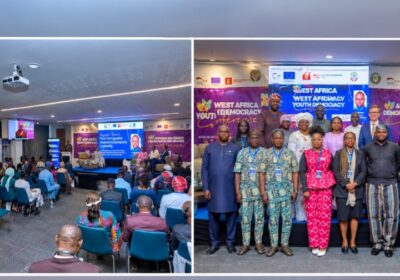
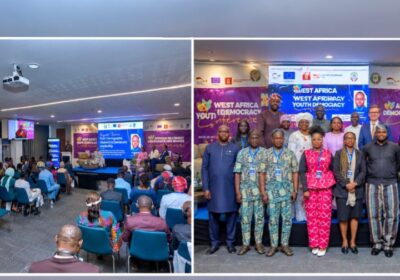
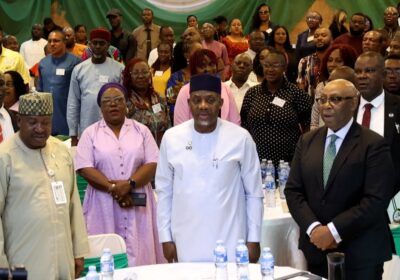
The renewed commitment was made on Thursday at the opening of the two-day West Africa Women’s Political Leadership Forum in Abuja, where political leaders, ministers, parliamentarians, development partners and civil society organisations gathered under the theme: “Accelerating Gender Parity in Political Leadership in West Africa: From Commitments to Action.”
Speaking at the opening ceremony, the Vice-President of the ECOWAS Commission, Damtien Larbli Tchintchibidja, described the Presidential Declaration on Strengthening Women’s Representation in Political Leadership, adopted by the ECOWAS Authority of Heads of State and Government, as a landmark political commitment and one of the defining legacies of ECOWAS as the regional bloc marks its 51st year.
She stressed that the time had come for governments across West Africa to transform political commitments into measurable action, emphasizing that inclusive governance remains central to democratic consolidation, peace, sustainable development and the implementation of the ECOWAS Vision 2050 agenda.
Tchintchibidja reaffirmed the Commission’s readiness to work closely with Member States, regional institutions and development partners to accelerate implementation of the declaration and achieve meaningful gender parity in political representation throughout the region.
The forum, jointly convened by the African Women Leaders Network (AWLN), ECOWAS, the United Nations Development Programme (UNDP) and other regional partners, is designed as a high-level action platform to identify practical reforms capable of removing long-standing barriers limiting women’s participation in politics.
In her welcome address, Nigeria’s Minister of Women Affairs, Imaan Sulaiman-Ibrahim, said women’s political leadership is no longer a matter of symbolic representation but a strategic necessity for strengthening democracy, promoting peace and driving sustainable development across Africa.
She noted that although women constitute more than half of West Africa’s population, their representation in political leadership remains below 20 percent in many countries, describing the situation as inconsistent with the region’s democratic aspirations.
The Minister said Nigeria is strengthening its institutional framework through the ongoing review of the National Gender Policy while advancing a third-generation policy aimed at responding to emerging governance realities.
She reaffirmed Nigeria’s commitment to achieving the 35 percent affirmative action benchmark for women’s participation in governance and political party structures, adding that several states, including Kwara and Ekiti, have already surpassed that target in key areas of public leadership.
Highlighting recent progress, Sulaiman-Ibrahim pointed to increasing appointments of women into senior positions across the executive, judiciary, civil service and security institutions under the Renewed Hope Agenda, arguing that women consistently excel whenever opportunities are deliberately created.
She also described the ECOWAS Presidential Declaration on Gender Parity as a historic opportunity to transform political aspirations into concrete regional reforms that guarantee greater inclusion of women in governance.
The gathering attracted senior government officials from across West Africa alongside representatives of ECOWAS institutions, the African Women Leaders Network, the African Union, UNDP, women parliamentarians, election management bodies, civil society organisations and development partners.
Among the dignitaries present were President of the ECOWAS Female Parliamentarians Association (ECOFEPA), Chantal Fanny; Director of the UNDP Regional Programme for Africa, T. J. Okere; AWLN Co-Chair Catherine Touré; senior ministers from Sierra Leone and Liberia; and representatives of regional institutions and women’s organisations.
Discussions during the two-day meeting will focus on legislative reforms, strengthening political party structures, expanding women’s access to leadership positions, promoting peer learning among Member States and identifying scalable regional initiatives capable of accelerating implementation of the ECOWAS Gender Parity Agenda 2035.
Participants are also expected to develop an Abuja Regional Action Agenda and a regional acceleration roadmap that will guide Member States in translating political commitments into measurable outcomes while strengthening accountability mechanisms and regional cooperation.
The forum represents one of the most significant regional engagements on women’s political leadership since the adoption of the ECOWAS Presidential Declaration and is expected to reinforce the bloc’s commitment to building more inclusive democratic institutions across West Africa.