

Diop Calls For Renewed Solidarity, Stronger Partnerships to Build Resilient West Africa, says deeper integration is no longer an option but a strategic necessity By Raymond Enoch
The President of the ECOWAS Commission, H.E. General Birame Diop, has called for renewed regional solidarity, stronger international partnerships and an accelerated integration process as West Africa confronts growing security, economic and geopolitical challenges.
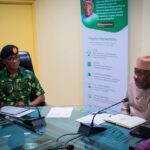
General Diop made the call in Abuja while addressing a high-level gathering of Ambassadors, Heads of Diplomatic Missions, Development Partners and representatives of International Organisations, in one of his first major engagements with the diplomatic and development community since assuming office.
The meeting, which also brought together the new management of the ECOWAS Commission, was aimed at strengthening international cooperation and reaffirming the shared commitment of the Community and its partners to advancing regional integration and sustainable development.
The ECOWAS Commission President was unequivocal in his assessment of the region’s current realities, declaring that regional integration must now be treated as a strategic imperative rather than a policy choice.
> “Regional integration is not merely an option; it is a strategic necessity. It is the most effective pathway towards building a prosperous, resilient and inclusive West Africa,” General Diop declared.
His remarks came against the backdrop of an increasingly uncertain global environment, with West Africa facing a complex mix of security threats, economic pressures, geopolitical tensions, climate-related shocks and disruptions to global supply chains.
General Diop argued that these challenges require collective regional responses capable of strengthening the resilience of West African states while protecting the gains made over five decades of regional cooperation.
He said the strength of ECOWAS would increasingly depend on the ability of Member States and their international partners to work together around common priorities, deepen cooperation and translate regional commitments into tangible benefits for citizens.
The ECOWAS chief expressed profound appreciation to the diplomatic and development partners whose support, he said, had played an important role in the evolution of the regional organisation over the past 50 years.
According to him, international partnerships have contributed significantly to ECOWAS interventions and programmes in peace and security, democratic governance, regional integration, infrastructure development, humanitarian assistance and institutional strengthening.
He therefore urged existing partners to remain committed to the region while encouraging stronger and more strategic partnerships capable of responding to West Africa’s emerging needs.
The engagement is coming at a critical moment in the history of ECOWAS, following the transition to a new leadership and a renewed push to strengthen the effectiveness and impact of regional cooperation.
General Diop stressed that ECOWAS is entering its new chapter at a time when the global environment is undergoing profound transformation.
He identified geopolitical tensions, increasing economic fragmentation, climate-related disruptions and instability in global supply chains as developments with direct implications for the economic and security prospects of West Africa.
Against this background, he emphasised the need for ECOWAS to remain focused on building a region that is more integrated, economically resilient, peaceful and inclusive.
The President’s appeal for renewed solidarity also comes at a time when the Community faces the challenge of maintaining regional cohesion and preserving the relevance of collective action in addressing common West African problems.
He maintained that stronger cooperation among countries of the region, backed by effective international partnerships, would be critical to overcoming the emerging challenges.
For the diplomatic community and development partners, the Abuja engagement offered an opportunity to reaffirm their support for ECOWAS and to explore ways of strengthening collaboration with the new Commission leadership.
General Diop’s message was clear: West Africa’s ability to withstand current and future shocks will depend largely on the strength of its regional solidarity, the depth of its integration and the quality of partnerships it builds with the wider international community.
As ECOWAS begins another chapter in its institutional journey, the Commission President’s call places renewed emphasis on collective action, strategic partnerships and accelerated integration as the foundation for a more prosperous, peaceful and resilient West Africa.