

Alausa, UNESCO Deepen Education Partnership as Over 1m Out-of-School Children Return to Class By Beauty Akporido Aroh
The Federal Ministry of Education and the United Nations Educational, Scientific and Cultural Organisation (UNESCO) are set to deepen collaboration on Nigeria’s education reforms as the administration of President Bola Ahmed Tinubu intensifies efforts to transform the sector and strengthen human capital development.
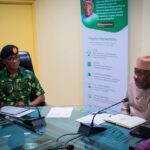
Minister of Education, Dr. Maruf Tunji Alausa, CON, made this known in Abuja while receiving the newly appointed UNESCO Country Representative to Nigeria, Professor Isaiah Barreto Da Rosa, who paid him a courtesy visit.
Alausa disclosed that more than one million out-of-school children had returned to the classroom within the last 20 months, describing the development as one of the significant outcomes of the Federal Government’s ongoing education reforms.
He also revealed that nearly 6.7 million girls had benefited from interventions designed to improve access to education and enhance retention in schools.
However, the Minister called for a more balanced approach to education interventions, stressing the need to sustain progress recorded in girl-child education while paying greater attention to the educational needs of boys.
According to him, Nigeria’s human capital development strategy must ensure that no child is left behind, regardless of gender or circumstance.
He said the Federal Government’s education transformation programme is anchored on six priority areas, including Technical and Vocational Education and Training (TVET), Science, Technology, Engineering and Mathematics (STEM), reintegration of out-of-school children, data and digitalisation, girl-child education and quality assurance.
Alausa said the government was investing heavily in skills development, technology and teacher capacity, while the increased use of reliable education data was helping authorities identify gaps, target interventions and measure results.
On teacher development, the Minister welcomed UNESCO’s technical support, particularly in strengthening the Ministry’s Accelerated Teacher Professional Programme, which targets one million in-service teachers.
He also acknowledged UNESCO’s contributions to TVET assessment, digital transformation, education for peace, and media and information literacy.
Alausa stressed that international partnerships would deliver greater impact when they complement and reinforce programmes already initiated by the Nigerian Government.
Earlier, Professor Da Rosa reaffirmed UNESCO’s commitment to supporting Nigeria’s education transformation efforts, describing the organisation as a technical partner ready to deploy its expertise in areas identified as national priorities.
He recalled UNESCO’s longstanding presence in Nigeria since the 1960s and highlighted its interventions in TVET, teacher development, peace education, science, culture, communication and information.
Da Rosa commended the Ministry’s progress in digitising education data and expressed UNESCO’s readiness to expand cooperation in TVET, teacher capacity development and the reintegration of out-of-school children.
He disclosed that UNESCO-supported programmes had trained more than 28,000 teachers across various states and reached over 1.7 million students, adding that the organisation’s specialised institutes remained available to provide further technical expertise.
Reaffirming Nigeria’s commitment to the partnership, Alausa assured the UNESCO representative that the Ministry would continue to work closely with the organisation to translate cooperation into practical outcomes.
He said the Tinubu administration remained committed to mobilising domestic resources and leveraging strategic technical partnerships to expand access to education, improve quality and equip both boys and girls with the knowledge and skills required to contribute meaningfully to Nigeria’s development.