

Airbus, Wits, ISAE-SUPAERO Seal Deal to Boost South Africa’s Aerospace Sector By Raymond Enoch
Airbus Southern Africa, the University of the Witwatersrand (Wits) and France’s Institut Supérieur de l’Aéronautique et de l’Espace (ISAE-SUPAERO) have entered into a four-year strategic partnership aimed at strengthening South Africa’s aerospace engineering capacity, developing high-level technical skills and accelerating innovation across the sector.
The landmark Memorandum of Understanding (MoU), signed in Johannesburg on Thursday, September 17, 2026, establishes a framework linking advanced aerospace education with industrial expertise, research, manufacturing and design, in what the partners describe as a major step towards building a sustainable pipeline of globally competitive South African aerospace engineers.
The partnership brings together Wits’ academic and engineering capacity, ISAE-SUPAERO’s specialised aerospace expertise and Airbus’ extensive industrial experience to create stronger links between university training and the practical requirements of the aerospace industry.
At the heart of the agreement is an ambitious plan to align aerospace engineering curricula at Wits and ISAE-SUPAERO through comprehensive gap analysis and curriculum mapping.
The exercise is expected to identify opportunities to strengthen existing academic programmes while exposing Wits students and faculty to advanced aerospace engineering knowledge and international best practices.
A reciprocal faculty exchange programme between Johannesburg and Toulouse will also form part of the collaboration, with the partners seeking to establish regular academic exchanges rather than a one-off engagement.
The arrangement will further provide Wits students with opportunities to access specialised aerospace Master’s programmes and advanced research methodologies in France, opening an international pathway for South African engineering talent.
“This collaboration connects academic excellence with industrial expertise to empower the next generation of South African aeronautical engineers,” said Nam-Binh Hoang, Airbus Country Representative in South Africa.
Hoang said the partnership would combine the local expertise of Wits University, the aerospace training capabilities of ISAE-SUPAERO and Airbus’ operational footprint to create a sustainable talent pipeline capable of supporting local innovation while meeting global aerospace standards.
Professor Lynn Morris, Deputy Vice-Chancellor: Research and Innovation at Wits University, said the agreement would strengthen the university’s ability to provide world-class engineering education while exposing students to opportunities directly connected to industry.
“Partnering with global leaders like Airbus and ISAE-SUPAERO enhances our capability to deliver world-class engineering education,” Morris said.
She added that the partnership would give students access to advanced aerospace modules, international exposure and practical research opportunities linked to industry needs.
For ISAE-SUPAERO, the partnership represents an opportunity to deepen international academic cooperation while contributing to the development of aerospace capabilities in South Africa and the wider region.
Marie-Hélène Baroux, President of ISAE-SUPAERO, said international academic collaboration was essential to addressing the increasingly complex engineering challenges facing the aerospace industry.
“Such an industry-academia partnership will allow to train in the country and the region top-level graduates able to meet the needs of the local aeronautical ecosystem,” Baroux said.
She said the collaboration would contribute to strengthening the global educational network supporting aerospace innovation.
The MoU sets out a number of strategic objectives, including the alignment of aerospace engineering curricula between Wits and ISAE-SUPAERO, faculty exchanges, enhanced student mobility and access to specialised postgraduate aerospace programmes.
It also seeks to strengthen research cooperation, promote industry-linked engineering education and develop technical skills required to support South Africa’s aerospace manufacturing and design ambitions.
Another key objective is to increase aviation awareness among university students and encourage more young people to pursue technical careers within the aviation and aerospace industries.
Airbus will engage directly with Wits students through awareness programmes, design-thinking mentorship and other initiatives intended to stimulate interest in aerospace innovation.
The partners will also explore potential undergraduate aviation courses focused on improving students’ understanding of aircraft operations and the broader aviation ecosystem.
The initiative therefore extends beyond traditional academic cooperation by creating a stronger interface between education, research and the aerospace industry.
To ensure that the agreement translates into measurable outcomes, the MoU provides for dedicated operational and executive oversight teams involving the three institutions.
The teams will be responsible for coordinating implementation, monitoring activities and conducting regular reviews throughout the four-year duration of the agreement.
The structured approach is intended to ensure continuity, accountability and sustained engagement among the partners.
The collaboration comes against the backdrop of growing global demand for highly specialised aerospace engineers and technological capabilities, particularly in aircraft design, advanced manufacturing, digital engineering and sustainable aviation.
By connecting Wits students to international aerospace education and industrial experience, the partners hope to strengthen the ability of South African engineers to participate in both domestic and international aerospace value chains.
The initiative could also contribute to the broader development of South Africa’s high-technology manufacturing sector by creating a pool of engineers and researchers capable of supporting sophisticated aerospace projects.
For Airbus, the agreement provides an avenue for deeper engagement with South Africa’s academic and engineering community, while for Wits it creates additional international opportunities for students and researchers.
ISAE-SUPAERO, meanwhile, brings its specialised aerospace education and research experience into a partnership designed to develop talent within South Africa and the wider African region.
The three-way collaboration ultimately places human capital at the centre of South Africa’s aerospace ambitions — linking education, research, industrial expertise and innovation in an effort to prepare the next generation of engineers for the evolving demands of global aviation.
From Johannesburg to Toulouse, the partnership is expected to provide a foundation for sustained academic exchanges, stronger industry connections and new opportunities for South African aerospace talent to participate in the technologies shaping the future of flight.
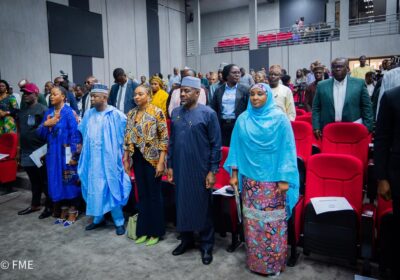
The signing ceremony was attended by Benjamin Cabouat, Deputy Head of Mission at the Embassy of France in South Africa, Lesotho and Malawi; Nam-Binh Hoang, Airbus Country Representative in South Africa; Géraldine Romano, Deputy Director of ISAE-SUPAERO; and Professor Daniel N. Wilke, Head of the School of Mechanical, Industrial and Aeronautical Engineering at Wits.