

ECOWAS LAUNCHES HIGH-LEVEL PRE-ELECTION MISSION IN CABO VERDE AHEAD OF 2026 POLLS. By Raymond Enoch
The Economic Community of West African States (Economic Community of West African States) has officially launched a high-stakes Pre-Election Fact-Finding Mission in Cabo Verde, signalling the regional bloc’s firm commitment to safeguarding democracy and stability ahead of the country’s forthcoming legislative and presidential elections.
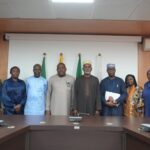
The mission, led by Ambassador Abdel-Fatau Musah, PhD, Commissioner for Political Affairs, Peace and Security of the ECOWAS Commission, began its engagements on Monday with a strategic briefing at the ECOWAS Permanent Representation in Praia. The delegation was received by Ms Kelly Lopes, setting the tone for what observers describe as a comprehensive and pre-elections preventive diplomatic engagement.
In a significant early move and enhagements, , the team paid a courtesy call on Cabo Verde’s Minister of Foreign Affairs, Cooperation and Regional Integration, H.E. Jorge do Livramento. Discussions centred on the country’s institutional preparedness, electoral framework, and the mechanisms in place to ensure transparency and credibility in the upcoming polls.
Diplomatic sources close to Paradigm News say the meeting was not merely ceremonial but factual. It provided ECOWAS with a firsthand assessment of the government’s readiness and its commitment to upholding democratic standards consistent with regional norms.
Beyond political consultations, the mission also extended its visit to the Multinational Maritime Coordination Centre – Zone G, where it was received by Captain Abdoulaye Dieng and his team. The visit underscored the broader security and governance context surrounding the elections, highlighting ECOWAS’ recognition that peaceful polls depend not only on electoral management but also on a stable security architecture.
The Pre-Election Fact-Finding Mission is a preventive diplomacy tool deployed by ECOWAS in Member States ahead of major elections. It is designed to assess the political climate, identify potential flashpoints, and recommend measures that promote transparency, inclusivity and peaceful participation.
In the coming days, the delegation is expected to hold wide-ranging consultations with electoral management bodies, political parties, civil society organisations, regulatory institutions and international partners. The objective is to build trust among stakeholders and strengthen dialogue before tensions can escalate.
ECOWAS’ intervention comes at a time when the region continues to grapple with democratic transitions and governance challenges. By moving early, the regional bloc aims to reinforce Cabo Verde’s democratic credentials and prevent disputes that could undermine public confidence in the electoral outcome.
The Mission’s work aligns with ECOWAS’ Supplementary Protocol on Democracy and Good Governance, which mandates the organisation to promote free, fair and credible elections across its Member States. The protocol remains a cornerstone of the bloc’s democratic architecture, providing standards against unconstitutional changes of government and electoral malpractice.
Political analysts in Praia view the mission as both a resourceful, reassurance and a signal — reassurance that regional mechanisms are active and engaged, and a signal that electoral integrity remains under close regional watch.
For Cabo Verde, widely regarded as one of West Africa’s stable democracies, the visit represents an opportunity to further consolidate its democratic record. For ECOWAS, it is a proactive step in ensuring that the ballot, not instability, defines the political future of its Member State.
As consultations deepen in the days ahead, attention will be focused on the Mission’s findings and recommendations — outcomes that could shape the tone and trajectory of Cabo Verde’s electoral season.
The message from ECOWAS is clear: the path to peaceful elections begins long before voters head to the polls.