

The Gambia Strengthens Mental Health Coordination with New Technical Working Group By Isatou Jawara
BANJUL, The Gambia — The Ministry of Health, through the National Mental Health Programme, has convened the inaugural meeting of the National Technical Working Group on Mental Health and Psychosocial Support (MHPSS), marking a significant step towards strengthening coordination and collaboration in mental health services across The Gambia.
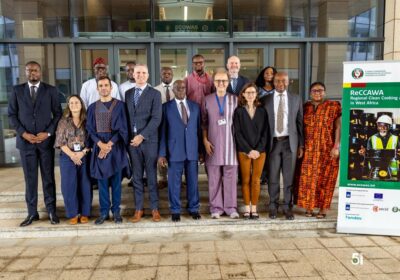
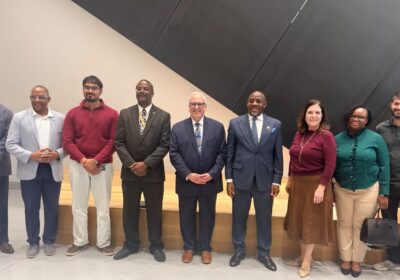
The meeting, held at Ocean Bay Hotel in Cape Point, brought together representatives of government institutions, United Nations agencies, civil society organisations, professional bodies, academic institutions and other development partners involved in mental health and psychosocial support.
The National MHPSS Technical Working Group is expected to provide a national platform for stakeholders to share evidence and experiences, coordinate interventions, identify service gaps and national priorities, and advise on actions required to strengthen mental health and psychosocial support services across the country.
Speaking at the meeting, Permanent Secretary at the Ministry of Health, Mr Lamin Dampha, described the establishment of the working group as an important milestone for mental health in The Gambia.
“Today is an important day for mental health in The Gambia,” Dampha said, noting that mental health work in the country has for years been carried out with limited resources by a relatively small number of committed health professionals, partners and families caring for loved ones.
He stressed that the scale of mental health needs requires a coordinated response that goes beyond the capacity of any single programme or ministry.
“Mental health and psychosocial support are not the health sector’s responsibility alone,” he said. “They concern social welfare, education, protection, migration, youth, disability, justice, community structures, civil society, traditional and religious leaders, professional bodies, academia and development partners. They concern every family.”
According to him, the establishment of the National Technical Working Group is therefore both timely and necessary.
He emphasised that the platform should not become simply another committee, but a practical mechanism for coordination, knowledge-sharing, accountability and joint action.
“This is not simply another committee or another meeting added to our calendars. It is a shared national platform where we can speak openly, share evidence, coordinate our work, identify gaps, prevent duplication, strengthen partnerships and agree on the priority actions required to improve mental health and psychosocial support services across the country,” Dampha said.
He acknowledged the contributions already being made by government institutions, UN agencies, civil society organisations, professional associations, universities, service providers and community groups.
“The National Mental Health Programme does not claim to have all the answers,” he said. “Our purpose is not to duplicate that work. Our purpose is to connect it.”
He said the working group would seek to create a mechanism through which stakeholders could learn from one another, share responsibility, hold themselves mutually accountable and jointly advocate for stronger mental health services.
The Permanent Secretary further called for mental health and psychosocial support to be placed at the centre of national development rather than treated as peripheral issues.
“We want to make sure that mental health and psychosocial support are no longer treated as issues at the margins of development, but as central to the health, wellbeing, productivity and dignity of our people,” he said.
He stressed the importance of making mental health services accessible within the environments where people live and work, including clinics and hospitals, schools, communities, social welfare services, protection programmes, migration responses, workplaces and homes.
Programme Manager of the Mental Health Programme, Mam Jarra Marega, also underscored the need for a coordinated national response, noting that mental health needs in the country are far greater than what any single institution can address.
She highlighted the importance of bringing together institutions and partners with different areas of expertise to strengthen the country’s mental health and psychosocial support system.
The Ministry of Health reaffirmed its commitment to working with stakeholders to build a more coordinated, inclusive and responsive mental health system capable of addressing the needs of people and communities across The Gambia.