

Special GBV Court Offers Renewed Hope as Major Cases Put Justice System Under Spotlight By Isatou Jawara
The government’s plan to inaugurate a Special Court for Sexual and Gender-Based Violence (SGBV) has renewed hope among survivors, women’s rights advocates, and the wider public at a time when the country’s justice system is facing increased scrutiny over how sensitive and high-profile cases are handled.
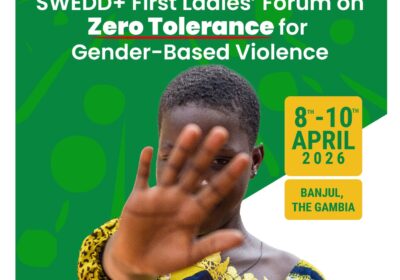
The announcement was made by the Minister of Gender, Children and Social Welfare, Fatou Kinteh, during the recent SWEDD First Ladies Conference on Gender-Based Violence, where she described the proposed court as a major step toward strengthening the justice system and improving access to timely justice for survivors.
According to the minister, the specialised court is expected to fast-track cases, reduce delays, improve confidentiality, and ensure that survivors receive fair and timely justice.
She also revealed that the government is in the process of operationalising a Special Support Fund for survivors of sexual and gender-based violence, which will provide assistance for medical care, legal representation, psychosocial services, and temporary shelter.
The initiative is particularly significant for women and girls in rural communities who often face enormous challenges in accessing justice. For many survivors outside the Greater Banjul Area, long travel distances, limited financial resources, and social stigma discourage them from pursuing cases through the courts. The minister’s emphasis on extending justice services beyond urban centres reflects a growing recognition that legal protection must be accessible to all, regardless of location.
The announcement comes at a critical moment, as recent cases involving gender-based violence, female genital mutilation, and controversial arrests have placed the country’s justice institutions under intense public attention.
One of the most emotionally charged cases remains the FGM-related infant death case that first came before the Bundung Magistrate Court and later progressed to the High Court. The case involves three women accused in connection with the circumcision of a one-month-old baby who later died from complications believed to be linked to severe bleeding following the procedure. The case has stirred national debate, not only because of the tragic loss of a child, but also because it highlights the continued presence of harmful traditional practices despite legal prohibitions.
For many Gambians, particularly women and mothers, the death of the infant brought home the devastating human cost of a practice that continues to affect girls and women in silence.
The legal proceedings have also exposed broader weaknesses within the justice process. Earlier this year, the High Court rejected key police statements presented by the prosecution after concerns were raised about how the statements were obtained.
This development raised serious questions about the quality of investigations and the ability of law enforcement agencies to effectively handle highly sensitive GBV and child protection cases.
The case has also renewed attention on the urgent need for stronger forensic capacity in The Gambia. For years, authorities have relied on neighbouring countries such as Senegal and Ghana for forensic examinations in complex cases involving sexual violence and harmful practices.
The minister had previously indicated that the government is working toward establishing a national forensic laboratory, a move many legal experts believe is essential to strengthening evidence-based prosecution.
Beyond the courtroom, the FGM case has taken on a deeply human dimension. It has reopened painful conversations within communities about culture, women’s bodily autonomy, and the protection of girl children. For many families, it is a stark reminder that behind every statistic is a life permanently affected by trauma or loss.
At the same time, the recent acquittal and re-arrest of the Bojang siblings in the high-profile murder case linked to the killing of two PIU officers has further intensified public debate over the rule of law and respect for judicial decisions.
After spending more than two years in detention, the siblings were acquitted by the High Court after the prosecution failed to establish the case beyond reasonable doubt. Their subsequent re-arrest shortly after release triggered public concern, with many questioning whether the rights of acquitted individuals are being adequately protected.
For ordinary Gambians, the issue has gone beyond legal technicalities. It has become a matter of trust in the justice system itself. Many are asking whether an acquittal by a competent court truly guarantees freedom and whether judicial decisions are being respected in practice.
Human rights advocates have warned that such developments risk undermining public confidence in the courts and may create fear among citizens who rely on the justice system for protection.
Against this backdrop, the proposed Special GBV Court is being widely viewed as both timely and necessary. According to data referenced by the minister from the Gambia Bureau of Statistics, 20.1 per cent of women aged 15 to 49 have experienced physical violence, while 7.5 per cent have suffered sexual violence.
These figures paint a sobering picture of the reality faced by many women and girls across the country. For survivors, justice is not only about convictions but also about dignity, healing, and the assurance that their pain is recognised by the state.
The success of the proposed court will likely depend on more than its establishment alone. Legal experts and rights groups say it must be supported by trained judges, survivor-centred procedures, stronger investigations, and decentralised access so that women in rural areas are not left behind.
As The Gambia continues to grapple with difficult cases that test the resilience of its justice system, the creation of the Special GBV Court may mark a turning point in how the country responds to violence against women and girls.
For many survivors and their families, it represents not just a legal reform, but a chance for justice to become more humane, more accessible, and more responsive to the realities of everyday life.