

Gambia Strengthens Health Security Sector as Ministry of Health Graduates New Generation of Disease Detectives and Health Leaders. By Raymond Enoch
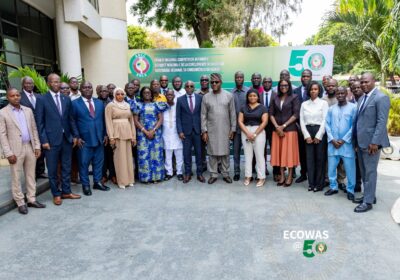
The Ministry of Health has taken a significant step toward reinforcing The Gambia’s public health defense system with the graduation of the second cohort of the Field Epidemiology Training Program (FETP) – Intermediate Level and the country’s first-ever Executive Level cohort.
The ceremony, held on Saturday, 13 December, was conducted through the Ministry’s Epidemiology and Disease Control Unit and marks a strategic investment in human capital at a time when disease surveillance and rapid response remain central to national and global health security.
Supported by funding from the World Bank under the Health System Strengthening Project, and implemented with technical assistance from the Africa Field Epidemiology Network (AFENET), the program produced a total of 41 graduates. Of these, 23 completed the Intermediate Level, while 18 senior health professionals—including Regional Health Directors, Program Managers, and Hospital Chief Executive Officers—successfully completed the Executive Level.
Health sector leaders say the dual-track graduation reflects a deliberate policy shift: building epidemiological competence not only among frontline practitioners, but also among top decision-makers who shape policy and manage health institutions.
The Field Epidemiology Training Program is widely regarded as a cornerstone of modern public health systems. It equips participants with practical skills in disease surveillance, outbreak investigation, data analysis, and evidence-based decision-making—tools that are increasingly vital in an era defined by emerging infections, antimicrobial resistance, and climate-related health threats.
By extending the program to executive-level leaders for the first time, the Ministry of Health is positioning epidemiology as a leadership competency, ensuring that strategic health decisions are informed by real-time data and scientific analysis rather than reactive measures.
Officials within the Ministry describe the graduation as both a milestone and a signal of intent: to institutionalize a culture of preparedness, prevention, and rapid response across all levels of the health system.
As the graduates return to their respective regions, programs, and hospitals, expectations are high that the newly acquired skills will translate into stronger surveillance systems, faster outbreak detection, and more coordinated responses to public health emergencies nationwide.
For The Gambia, the latest FETP graduation underscores a broader commitment—backed by international partners but driven locally—to safeguard public health through knowledge, leadership, and resilience.