

BANJUL DECLARATION: FIRST LADIES LEAD WEST AFRICA’S ZERO-TOLERANCE COMMITMENT AGAINST GBV By Raymond Enoch
A powerful coalition of West and Central African First Ladies has taken center stage in the fight against gender-based violence (GBV), declaring zero tolerance and setting a bold regional agenda for action at the landmark SWEDD+ Summit in Banjul, The Gambia.
Held from April 8th-10th, 2026, under the Sub-Saharan Women’s Empowerment and Demographic Dividend Plus (SWEDD+) initiative, the high-level Forum brought together political leaders, development partners, and technical experts with one clear mission: to accelerate decisive and measurable action to protect women and girls across the region.
Co-hosted by the Economic Community of West African States (ECOWAS) and the Government of The Gambia, the summit drew strategic collaboration from global and regional institutions including the United Nations Population Fund (UNFPA), the World Bank, and the Economic Community of Central African States (ECCAS).
At the heart of the gathering was a resounding political statement: ending gender-based violence is no longer optional—it is urgent, non-negotiable, and central to the region’s development future.
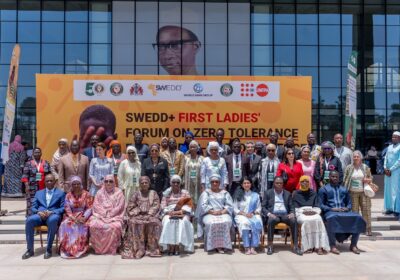
The opening ceremony was graced by Her Excellency Fatoumata Bah-Barrow and Her Excellency Marie Koné Faye, alongside other First Ladies from SWEDD+ countries and representatives from Cameroon. Their presence underscored a growing recognition that women in leadership must drive the change from the frontlines.
Also in attendance was Omar Alieu Touray, who delivered a keynote address reinforcing ECOWAS’ commitment to translating policy into impact.
“Through our institutions, we are strengthening legal frameworks, enhancing institutional responses, and ensuring that commitments lead to real change in the lives of our citizens,” he stated.
Representing President Adama Barrow, Vice President Mohamed B.S. Jallow reaffirmed The Gambia’s national commitment to tackling GBV, calling for unified action across borders.
The Banjul Forum built on prior engagements, including a Ministerial Meeting and Experts’ Session, which laid bare both progress and persistent gaps in addressing GBV. Despite existing frameworks, implementation challenges remain widespread, leaving millions of women and girls vulnerable to violence, harmful practices, and systemic inequality.
Participants agreed that the time for rhetoric has passed.
Central to the outcomes was the endorsement of a Regional GBV Roadmap (2026–2028)—a strategic blueprint designed to coordinate action, strengthen institutions, and deliver measurable results across countries. Complementing this is the Regional GBV Legal Scorecard, a tool aimed at tracking accountability and ensuring that laws and policies are not just adopted but effectively implemented.
In what observers described as the defining highlight of the summit, First Ladies ceremonially adopted and signed a Joint Declaration on Zero Tolerance for Gender-Based Violence.
The declaration signals a united front at the highest political level, committing leaders to champion the rights of women and girls, dismantle harmful social norms, and drive transformative change within their respective nations.
It also places First Ladies at the forefront of advocacy—leveraging their influence to mobilize governments, communities, and international partners toward a common goal
Deliberations at the Forum emphasized that tackling GBV is inseparable from broader development priorities. From improving health outcomes to expanding economic opportunities and harnessing the demographic dividend, participants stressed that empowering women and girls is key to sustainable growth.
The summit called for:
Increased investment in GBV prevention strategies,
Strengthened access to justice and survivor-centered services,
Engagement of men and boys in shifting harmful norms.
Equally critical is the need for reliable data and robust monitoring systems to guide policy decisions and ensure accountability.
The Forum highlighted the pivotal role of ECOWAS and its specialized institutions in driving regional alignment. The establishment of a Regional Technical Working Group on GBV was welcomed as a practical mechanism to enhance collaboration, track progress, and sustain momentum.
Stakeholders also called for deeper partnerships with civil society, governments, and development agencies to mobilize the financial and technical resources required to implement the Roadmap effectively.
As the curtains draw down on the Banjul Summit, one message rang clear: the fight against gender-based violence must move from commitments to concrete impact.
Participants described the SWEDD+ platform as a unique opportunity to deliver lasting results by aligning political leadership, technical expertise, and funding.
For the First Ladies, the task ahead is clear—and urgent.
Their unified stance sends a powerful signal across West and Central Africa: achieving zero tolerance for gender-based violence demands decisive leadership, sustained investment, and unwavering commitment.
And in Banjul, that commitment has been boldly declared—marking what could be a turning point in the region’s pursuit of dignity, safety, and equality for all women and girls.