

ECOWAS Deepens €17m Clean Cooking Drive as Second ReCCAWA Steering Committee Meeting Holds in Abuja By Raymond Enoch
ECOWAS Deepens €17m Clean Cooking Drive as Second ReCCAWA Steering Committee Meeting Holds in Abuja
By Raymond Enoch
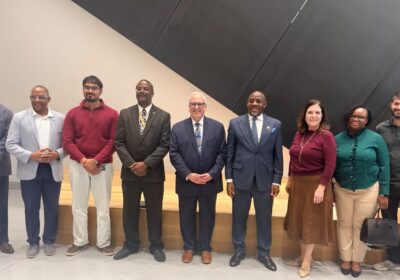
The Economic Community of West African States (ECOWAS) has intensified its regional drive to expand access to clean cooking solutions, as the Second Steering Committee Meeting of the Regional Clean Cooking Action in West Africa (ReCCAWA) held at the ECOWAS Headquarters in Abuja.
The meeting brought together ECOWAS and international development partners to assess progress and strengthen the implementation of the €17 million regional initiative, financed by the European Union and the Netherlands Ministry of Foreign Affairs.
The programme targets 750,000 people across West Africa, with a focus on expanding access to affordable, reliable, clean and sustainable cooking solutions while addressing the public health, environmental and socio-economic consequences associated with traditional biomass fuels such as firewood and charcoal.
At the Abuja meeting, participants reviewed technical progress under ReCCAWA and examined strategies for strengthening national ownership, regional policy coherence, gender equity and the development of viable clean-cooking markets.
The initiative is jointly implemented by the ECOWAS Centre for Renewable Energy and Energy Efficiency (ECREEE), the Spanish Agency for International Development Cooperation (AECID) and the Netherlands Enterprise Agency (RVO).
The Steering Committee is chaired by the ECOWAS Commission’s Energy and Mines Directorate, reflecting the strategic positioning of clean cooking within the region’s wider energy-transition agenda.
Beyond the immediate objective of replacing polluting cooking fuels, the programme is designed to address the interconnected energy, health, environmental and economic dimensions of household cooking across West Africa.
Traditional biomass combustion releases pollutants into household environments, while sustained dependence on firewood and charcoal contributes to pressure on forest resources and exposes households to the economic and health burdens associated with inefficient cooking systems.
ReCCAWA therefore adopts a regional approach that combines policy coordination, market development, institutional strengthening and technology adoption, with the ultimate objective of creating conditions in which cleaner cooking solutions can become accessible and commercially sustainable at scale.
The September 18 meeting provided a platform for participating institutions to consolidate progress, address implementation priorities and further align national interventions with regional clean-energy objectives.
With its €17 million financing envelope and 750,000-person target, ReCCAWA represents one of ECOWAS’s coordinated efforts to place clean cooking within the broader architecture of energy security, sustainable development, environmental protection and public health in West Africa.