

Youth Inclusion in West Africa: Reimagining Democratic Governance Through Meaningful Youth Participation By Raymond Enoch
The Economic Community of West African States (ECOWAS) has reaffirmed its commitment to putting young people at the heart of democratic governance and political decision-making across the region, as it pushes for a stronger and more meaningful framework for youth political participation.
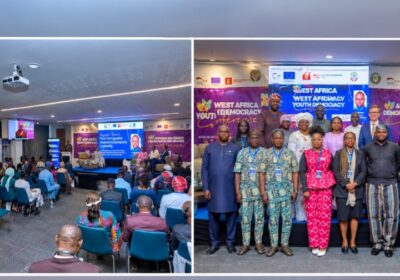
The regional push formed the centrepiece of the first edition of the West African Youth Conference on Democracy, held in Dakar, Senegal, from 8 to 10 September 2026, under the theme: “From activism to taking power: reassessing the political inclusion of young people in West Africa and advancing a regional agenda for democratic governance.”
The conference, co-organised by the ECOWAS Commission, through its Directorate of Political Affairs, and LEGIS360, a youth organisation promoting rights, development and public awareness, brought the question of youth inclusion into sharper regional focus at a time when young people constitute a significant force in West Africa’s political and social landscape.
Rather than viewing young people principally as voters, activists or voices of protest, the Dakar conference sought to deepen the conversation around their transition into positions where they can shape policies, influence institutions and exercise political power.
The central message emerging from the gathering was that democratic consolidation in West Africa cannot be complete if a generation that represents a substantial proportion of the region’s population remains insufficiently represented in political institutions and decision-making structures.
The conference provided a high-level regional platform to assess the progress already made in youth political inclusion, identify persistent barriers and explore evidence-based political and institutional reforms capable of creating greater space for meaningful youth participation in democratic governance across ECOWAS Member States.
At the heart of the discussions was a fundamental question: How can West Africa move from recognising young people as important stakeholders in democracy to creating practical pathways for them to become active decision-makers and political leaders?
For ECOWAS, the issue goes beyond electoral participation. Meaningful inclusion requires stronger institutional mechanisms that allow young people to participate in political processes, public policy formulation, governance and leadership, while ensuring that democratic institutions remain open, representative and responsive to changing realities.
The Dakar meeting therefore represents an important opportunity to reassess the relationship between youth activism and political power—particularly in a region where young people have increasingly demonstrated their capacity to mobilise around governance, accountability, social justice, development and democratic values.
The conference also comes against the backdrop of continuing debates across West Africa over democratic governance, political transitions, civic participation and the ability of existing political systems to respond to the aspirations of younger generations.
For many young West Africans, the challenge is no longer simply being heard. It is securing a legitimate place within the structures where decisions affecting their future are made.
That reality gives greater urgency to the regional agenda being advanced through the Dakar conference.
A more inclusive democratic system, participants argued, must create opportunities for young people not only to campaign, vote and advocate, but also to contest elections, enter political institutions, contribute to policymaking and assume leadership responsibilities.
The conference consequently placed youth political inclusion within the broader ECOWAS objective of strengthening democratic governance and building resilient institutions across West Africa.
It also underscored the importance of moving beyond declarations of support for youth participation towards concrete reforms capable of addressing the institutional, political and socioeconomic barriers that continue to limit young people’s access to decision-making spaces.
The Dakar conference could therefore mark a significant step in shaping a more coherent regional youth-and-democracy agenda, particularly if its discussions translate into practical recommendations and sustained engagement among governments, political actors, civil society, youth organisations and regional institutions.
For West Africa, the stakes are considerable.
A generation increasingly connected through technology, civic activism and cross-border networks is demanding greater influence over the political, economic and social direction of the region. Harnessing that energy within democratic institutions could strengthen governance, while failing to provide credible avenues for participation risks widening the gap between citizens—especially young citizens—and political institutions.
The ECOWAS initiative consequently places youth inclusion where it arguably belongs: at the centre of the region’s conversation about the future of democracy.
The challenge now is to turn the momentum generated in Dakar into sustained regional action—moving from youth participation as a democratic aspiration to youth inclusion as an institutional reality.
And for West Africa, that may ultimately determine whether its next chapter of democratic governance is merely about governing for young people, or genuinely governing with and through them.