

Touray: ECOWAS remains an indispensable pillar of West African development as leadership changes hands in Abuja By Raymond Enoch
The leadership of the Economic Community of West African States (ECOWAS) Commission changed hands in Abuja on Monday, with outgoing President, H.E. Dr. Omar Alieu Touray, declaring that the 50-year-old regional institution remains “an indispensable pillar for West African development”, as his successor, H.E. General Birame Diop, assumed responsibility for steering the Community through one of the most consequential periods in its history.
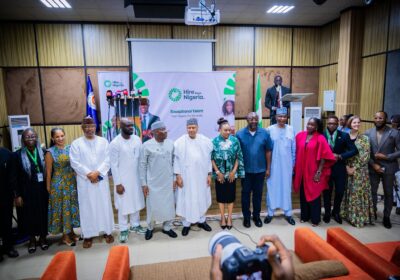
The historic transition, held at the ECOWAS Commission headquarters in Abuja, brought together Honourable Ministers, outgoing and incoming statutory appointees, senior officials, diplomats, staff and invited guests, in a ceremony that combined a farewell to the outgoing management with a powerful call for institutional renewal, dialogue and stronger regional integration.
In his farewell address, Dr. Touray reflected on a tenure he said began at one of the most turbulent moments in the history of ECOWAS, stressing that despite the challenges confronting the regional bloc, his management team pursued the mandate of the Commission with clarity, vigour and sustained effort.
Touray expressed appreciation to the Authority of Heads of State and Government, the staff of the Commission and his cabinet for the support extended to the outgoing leadership, while highlighting reforms and institutional achievements recorded across several areas during his tenure.
He urged the staff of the Commission to maintain their commitment to the ideals of regional integration and to give the new management the same institutional support required to advance the Community’s mandate.
But as Touray closed one chapter, General Diop opened another with an unusually candid assessment of the challenges awaiting the new administration, describing ECOWAS as being at a crossroads and making clear that his administration would have to rebuild confidence, strengthen institutions and reconnect the organisation with the citizens it was created to serve.
Speaking to journalists immediately after his inauguration, the new ECOWAS President said he would do everything humanly possible to live up to the expectations of his mandate, while congratulating Touray and his management team for their stewardship of the regional institution.
General Diop said the outgoing administration had managed ECOWAS in a manner that significantly contributed to sustaining the dream of the founding fathers of the Community.
He, however, acknowledged the difficult circumstances under which he was assuming office, pointing to the departure of Burkina Faso, Mali and Niger from ECOWAS and the consequent political, economic and institutional implications for the regional bloc.
The withdrawal of the three countries, he noted, has fundamentally altered the landscape of West African integration, with the affected states accounting for a substantial share of the Community’s population and economic space.
For Diop, the response cannot be disengagement but renewed diplomacy.
He said ECOWAS would seek to pursue dialogue with the Alliance of Sahel States, otherwise known as the AES, stressing the need to keep open channels of communication in the interest of regional peace, stability and integration.
On the political crisis in Guinea-Bissau, the new ECOWAS President said the organisation would pursue a solution in the spirit of dialogue, while acknowledging Senegal’s role in efforts to broker peace and address the crisis.
His message was unmistakable: dialogue must become an instrument of regional problem-solving rather than an option of last resort.
General Diop also placed the first five years of the ECOWAS Vision 2050 agenda under renewed scrutiny, raising questions about implementation, institutional cohesion and the ability of the Commission to translate regional policies into tangible benefits for citizens.
“How can we make sure citizens are given an opportunity to have a voice in ECOWAS?” was at the heart of his concerns, as he pointed to the need to make the regional organisation more connected to the people whose lives its policies are intended to improve.
He also identified financing as a critical challenge to the implementation of ECOWAS programmes, stressing that ambitious regional policies cannot be effectively delivered without sustainable financial mechanisms.
Security, another defining challenge for the new administration, featured prominently in his assessment.
Diop questioned what needed to be done to operationalise the ECOWAS Standby Force, against the backdrop of persistent security threats across the region, and underscored the urgency of strengthening the Community’s collective capacity to respond to instability.
“We have no alternative to putting in place a strong institution,” he said, making institutional strength the defining proposition of the new administration.
The leadership transition itself reflected the scale of the changes taking place across the ECOWAS system, with handover notes signed and certificates and gifts presented to outgoing and incoming statutory appointees.
Among those involved were outgoing Vice President, H.E. Mrs. Damtien L. Tchintchibidja, and incoming Vice President, H.E. Anthony Ogunjimi, as well as incoming Commissioner for Infrastructure, Energy and Digitalisation, Hon. Mr. Amin Amidu Sulemani.
The transition also covered several strategic portfolios, including economic affairs, agriculture, environment and natural resources, human development and social affairs, political affairs, peace and security, internal services and other areas central to the functioning of the regional institution.
Leadership changes were equally formalised at key ECOWAS institutions, including the West African Health Organisation, WAHO, and the Inter-Governmental Action Group against Money Laundering in West Africa, GIABA.
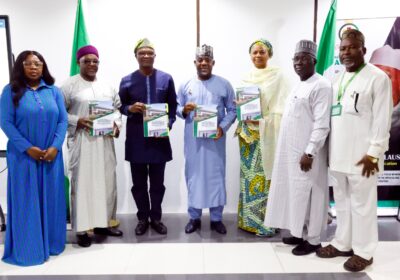
Earlier in the ceremony, the ECOWAS @50 Special Exclusive Publication, produced by Africa Agenda Network in partnership with the ECOWAS Commission, was officially unveiled, adding a historical dimension to a ceremony marking both the completion of five decades of regional integration and the beginning of a new leadership era.
A documentary chronicling the achievements of the outgoing management was also presented before Touray delivered his farewell speech and symbolically handed the Management Performance Compendium to Diop.
For outgoing Vice President, Mrs. Tchintchibidja, the moment was not simply about leaving office but about reflecting on a period of service to the region. She expressed gratitude for the opportunity to serve and committed both the outgoing and incoming management teams to prayers as they embark on new chapters of their professional and personal journeys.
The ceremony ended with goodwill messages from staff, a vote of thanks, the ECOWAS Anthem and a group photograph before the luncheon.
Yet beneath the ceremony and protocol was a deeper message: ECOWAS is entering a period in which its relevance will be measured less by declarations and more by its capacity to deliver.
Touray leaves behind a Commission that has endured political turbulence, institutional pressures and a major rupture in the regional integration architecture. Diop inherits that institution at a crossroads, with the task of restoring cohesion, strengthening implementation, addressing security concerns, reopening meaningful dialogue and ensuring that ordinary West Africans can see and feel the value of ECOWAS.
The outgoing President’s description of ECOWAS as “an indispensable pillar for West African development” therefore assumes a significance beyond a farewell speech. It is both a statement of confidence in the regional project and a challenge to the new leadership to prove that, despite its present difficulties, the Community remains indispensable to the future of West Africa.
And General Diop appears to have accepted the challenge.
His first message was neither triumphalist nor evasive. It was a call for dialogue, stronger institutions, sustainable financing, citizen participation, security preparedness and, above all, renewed cohesion.
The Touray era has ended. The Diop era has begun. For ECOWAS, the real test now is whether a region at a crossroads can find a common road forward.