

CCDG, ECOWAS Agencies and UN Women Validate Regional Programme on Gender and Green Economy By Raymond Enoch
The Economic Community of West African States Centre for Gender Development (CCDG), in collaboration with UN Women and other specialised agencies working on the Water-Energy-Food Nexus with gender integration, has validated an Integrated Regional Programme on Gender, Climate Change and the Green Economy aimed at strengthening regional responses to climate-related challenges affecting women and girls in West Africa.
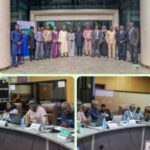
The validation meeting was held from May 15 to 16, 2026, at the ECOWAS Resident Representation in Abidjan, Côte d’Ivoire, with participants drawn from ECOWAS institutions, development partners and government representatives. The programme is expected to support the implementation and financing of the ECOWAS Action Plan on Gender, Climate Change and the Green Economy across Member States.
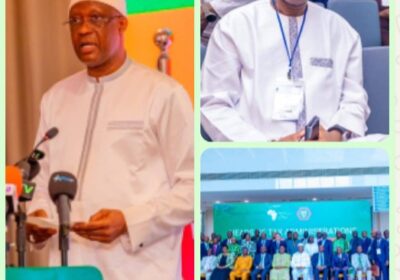
The overall objective of the meeting was to finalise the strategic framework of the regional programme and establish a roadmap for its implementation. The opening ceremony was chaired by Louis Philippe Goli, Chief of Staff representing the Minister Delegate for African Integration and Ivorians Abroad of Côte d’Ivoire.
Also present at the ceremony were the Resident Representative of UN Women in Côte d’Ivoire, the ECOWAS Commissioner for Economic Affairs and Agriculture, representatives of the Ministry of Women, Family and Children, the ECOWAS National Office in Côte d’Ivoire, and representatives of specialised ECOWAS agencies including CCDG, CGRE, PPDU and CEREEC, as well as officials from the Directorate of Environment of the ECOWAS Commission.
In her remarks, Director of the CCDG, Sandra Oulaté Fattoh, stated that climate action and ecological transition present both risks and opportunities for women and girls in the region. She noted that the collaboration between CCDG and UN Women has enabled the development of gender-sensitive policies and programmes aimed at supporting governments and civil society organisations in addressing the impact of climate change on vulnerable populations.
Fattoh explained that the Integrated Regional Programme on Gender, Climate Change and the Green Economy seeks to strengthen and expand regional efforts to address Member States’ priorities while promoting inclusive and sustainable economic growth.
The UN Women Resident Representative in Côte d’Ivoire, Adjaratou Fatou Ndiaye, highlighted the long-standing partnership between CCDG and UN Women, which she said dates back to 2003 and has contributed significantly to advancing gender equality and the empowerment of women and girls in West Africa.
According to her, the validation workshop marks a decisive step toward translating political commitments on gender, climate change and the green economy into practical and impactful actions capable of improving the lives of women and communities across the region.
Representing the Ministry of Women, Family and Children of Côte d’Ivoire, Dr. Namizata Binate emphasised that gender-responsive climate action remains essential for strengthening women’s resilience, improving livelihoods and creating economic opportunities within the green economy.
She identified sectors such as sustainable agriculture, renewable energy, waste recycling, agri-food processing and green technologies as critical areas capable of generating opportunities for women and young people while supporting inclusive development.
ECOWAS Commissioner for Economic Affairs and Agriculture, Dr. Kalilou Sylla, described the workshop as a strategic platform focused on sustainable development and women’s empowerment within the context of climate change and green economic transformation.
Sylla stressed the need to move beyond policy discussions toward concrete actions that would ensure the green transition creates decent jobs and real economic opportunities for women and young people throughout the region.
In his remarks, Louis Philippe Goli stated that the implementation of the Integrated Regional Programme is crucial to ensuring equitable access for women to green economic opportunities, financing and employment. He noted that governments within the region must strengthen cooperation and adopt coordinated approaches to climate and economic challenges at both national and regional levels.
He further emphasised the importance of equipping governments with the necessary tools, resources and institutional capacity required to implement inclusive and gender-sensitive policies capable of building resilient and sustainable economies in West Africa.
The meeting also enabled ECOWAS agencies and development partners to make progress in finalising the programme document, including discussions on budgetary provisions, intervention priorities and institutional responsibilities.
Participants are expected to validate the final project document and implementation roadmap during a specialised working session scheduled to hold from June 29 to July 6, 2026, in Lomé.