

FLOOD RELIEF: ECOWAS UNVEILS $604,576 SUPPORT FOR GUINEA DISASTER VICTIMS By Raymond Enoch
In a bold show of regional solidarity, the Economic Community of West African States (ECOWAS) has launched a $604,576 emergency support project to assist victims of the devastating 2025 floods and landslides in Guinea, offering renewed hope to thousands of affected families.
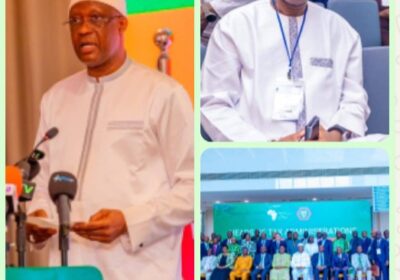
The intervention was officially unveiled in Conakry during a five-day mission from April 6 to April 10, 2026, led by a high-level ECOWAS delegation representing the President of the ECOWAS Commission, Dr. Omar Alieu Touré, alongside the Commissioner for Social Affairs, Professor Fatou Sow Sarr. The mission is also assessing the impact of ECOWAS’s 2024 flood response across the country.
At the heart of the launch ceremony was the symbolic presentation of a cheque worth $604,576 to the Government of Guinea. The cheque was received by Mr. Mohammed C.K. Camara, Secretary General of the Ministry of Territorial Administration and Decentralization, on behalf of the Guinean authorities.
The emergency fund is targeted at communities hardest hit by last year’s disasters, where torrential rains triggered widespread flooding and deadly landslides, destroying homes, displacing families, and crippling local livelihoods. While exact figures of casualties and displacement continue to be assessed, humanitarian agencies estimate that thousands of residents across multiple regions were severely impacted, with critical infrastructure and farmlands washed away.
ECOWAS $604,576 package will go directly into relief efforts, including the provision of essential supplies, rehabilitation support, and community recovery initiatives. The intervention is also expected to strengthen Guinea’s resilience against future climate-related disasters.
Speaking during the event, members of the delegation emphasized that the initiative reflects ECOWAS’s unwavering commitment to collective response and shared responsibility in times of crisis. They stressed that no member state should stand alone when disaster strikes.
For many victims, this support comes as a lifeline after months of hardship and uncertainty. Local authorities have welcomed the intervention, noting that the scale of destruction from the 2025 floods overwhelmed national response capacity.
As climate shocks continue to intensify across West Africa, ECOWAS’s latest move signals a growing urgency to not only respond to emergencies but also invest in long-term disaster preparedness.
For Guinea, the message is clear: help has arrived—but the road to full recovery is just beginning.