

EU, Germany Launch Strategic Agri-Value Chain Project in Jos to Transform Dairy, Ginger, and Tomato Production Across Northern Nigeria.
By Raymond Enoch
A major intervention targeting three of Northern Nigeria’s most commercially promising crops — dairy, ginger, and tomatoes — has been launched in Plateau State, signaling renewed momentum for agriculture-driven economic growth in the region.
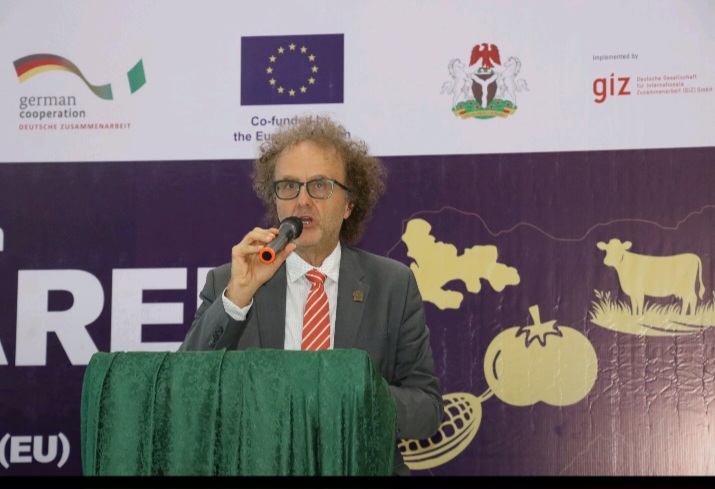
In a landmark event held in Jos, the German Cooperation and the European Union formally unveiled the EU-VACE TARED Project, a strategic initiative designed to strengthen agricultural value chains, boost rural incomes, and expand climate-smart agribusiness opportunities across Kano, Kaduna, Kebbi, and Plateau States.
The program merges two extensive development frameworks — the EU Agriculture Value Chain Facility (EU-VACE) and the Transformative Agricultural Systems for Rural Economic Development in Nigeria (TARED). Together, they aim to deliver higher productivity, stronger market systems, and resilient livelihood options for producers and processors.
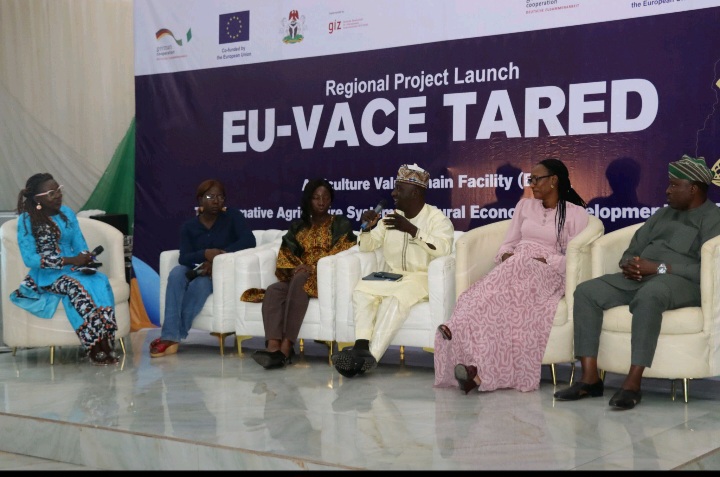
Dr. Karin Jansen, Head of Cooperation at the German Embassy in Abuja, described the launch as “a practical demonstration of Europe’s commitment to Nigeria’s agricultural transformation.” She stressed that sustainable farming remains essential to diversifying Nigeria’s economy, stating:
“The agri-food sector holds enormous untapped potential to create jobs, reduce poverty, enhance nutrition, and build climate resilience.”
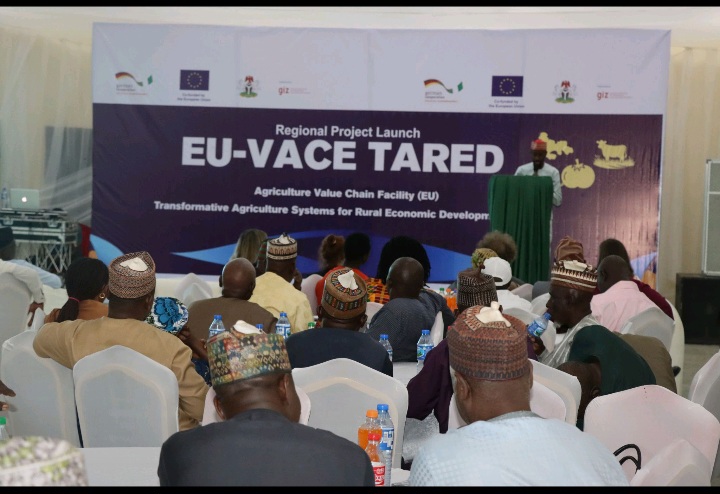
Beyond Northern Nigeria, the EU-VACE TARED initiative will also extend to Cross River, Oyo, and Ondo States, creating national pathways for private-sector led growth. The project is designed to co-create and co-invest with agribusiness companies in climate-smart production, with a particular focus on empowering women and young people.
Representing the Plateau State Governor, Dr. Sunday Akpa, Commissioner for Livestock Development, praised the program’s focus on practical impact. He reaffirmed the state’s readiness to partner with international donors and federal institutions such as the Ministry of Livestock Development and the Bank of Agriculture.
According to him, “Nigeria can achieve agricultural self-sufficiency sooner than many believe — with the right partnerships, financing, and technical support.”
The event also featured a strong call for accountability and shared responsibility. Mr. Massimo De Luca, Head of Cooperation at the Delegation of the European Union to Nigeria and ECOWAS, urged all participating stakeholders to remain committed to measurable, long-term outcomes.
“This is a big challenge, and we will be held accountable for our commitment today. We know we can count on a strong community ready to be part of this journey,” he said.
The EU-VACE TARED project is commissioned by the German Federal Ministry for Economic Cooperation and Development (BMZ), co-financed by the European Union, and implemented by Deutsche Gesellschaft für Internationale Zusammenarbeit (GIZ) GmbH.
With Northern Nigeria facing rising food security concerns, climate pressures, and volatile commodity markets, development partners say this new partnership can unlock value chain efficiencies, strengthen producers’ access to finance and markets, and stimulate sustainable job creation.
If successfully implemented, analysts predict the EU-VACE TARED initiative will establish new models of agricultural cooperation capable of catalyzing regional economic reforms — and reshaping Nigeria’s role in continental food production for decades to come.