

Women’s Political Inclusion at a Crossroads as GPU Calls for Action Ahead of 2026–2027 Polls By Raymond Enoch
The President of the Gambia Press Union (GPU), Isatou Keita, has issued a firm call for structural reforms and responsible media engagement to advance women’s political participation, describing the moment as pivotal to the country’s democratic consolidation ahead of the 2026–2027 electoral cycle.
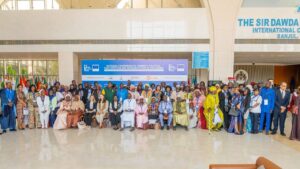
Speaking at the National Conference on Women’s Political Participation, held from 15–16 December 2025 at the Sir Dawda Kairaba Jawara International Conference Center, Keita said the underrepresentation of women in political decision-making remains a critical democratic deficit, despite constitutional guarantees of equality.
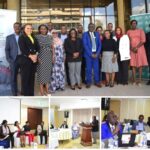
The conference, convened under the theme “Breaking Barriers, Building Power: Advancing Women’s Political Participation and Representation in The Gambia,” brought together state institutions, political actors, civil society, and development partners at a time when debates around inclusion, accountability, and electoral reforms are intensifying.
“This gathering responds to a long-standing gap between our constitutional commitments and the reality of women’s limited presence in elected office, party leadership, and senior public positions,” Keita told participants, stressing that women’s political participation is “not a symbolic exercise, but a democratic necessity.”
She noted that while Gambian women play active roles in community leadership, civil society, and economic life, structural, cultural, and economic barriers continue to restrict their access to political power. According to her, these disparities undermine the representativeness and legitimacy of democratic institutions.
Keita placed particular emphasis on the role of the media, arguing that how political actors are portrayed can either reinforce exclusion or normalise women’s leadership. She urged media houses to move beyond stereotypes and personality-driven narratives, and instead prioritise issue-based reporting, policy scrutiny, and leadership records.
“The media influences how women leaders are perceived and how political ambition by women is either questioned or accepted,” she said, reaffirming the GPU’s commitment to ethical reporting and public interest journalism on gender and governance issues.
Beyond media responsibility, the GPU President called on political parties, electoral bodies, and state institutions to translate commitments into action. She highlighted the need for internal party reforms, equitable access to campaign resources, and enforcement of existing gender equality laws and policies.
Observers at the conference described the discussions as timely, noting that the absence of deliberate measures risks repeating historical patterns of exclusion in the next electoral cycle. Several speakers echoed the view that dialogue must yield measurable outcomes if women’s representation is to improve.
Keita concluded by expressing appreciation to International IDEA and the European Union for convening the engagement, and urged stakeholders to use the platform to agree on practical steps that can be implemented before upcoming elections.
The conference was organized by International IDEA, in collaboration with the Government of The Gambia through the Ministry of Gender, Children and Social Welfare, the CSO–Gender Platform, National Assembly of The Gambia, National Human Rights Commission, Gambia Press Union, and the Inter-Party Committee.
As The Gambia reflects on nearly a decade since the 2016 political transition, participants agreed that expanding women’s political participation is not only a matter of equity, but a test of the country’s commitment to inclusive and accountable democracy.