

UNFPA Drives People-Centred Humanitarian Support in Nigeria as 25 Million Face Rising Vulnerabilities By Raymond Enoch.
With no fewer than 25 million Nigerians projected to require humanitarian assistance in 2026, the urgency to recalibrate Nigeria’s humanitarian architecture has never been clearer than now. At the heart of that recalibration is the United Nations Population Fund (UNFPA), positioning women and girls at the centre of national response efforts amid shrinking global funding and expanding needs.
Nigeria’s humanitarian crisis remains complex and protracted — shaped by conflict, climate shocks and entrenched structural vulnerabilities.
The 2026 Humanitarian Needs and Response Plan (HNRP) projects that about 60 percent of Nigerians live in multidimensional poverty. In the BAY States — Borno, Adamawa and Yobe — 5.9 million people are expected to face severe to extreme humanitarian needs (severity levels 3–5), with women and girls accounting for approximately 2.95 million of those affected.Food insecurity is deepening.
Projections for the 2026 lean season indicate that 35 million Nigerians could face acute food insecurity, including 5.8 million in the BAY States alone.
Meanwhile, over two million people remain displaced in the North-East due to persistent insecurity.
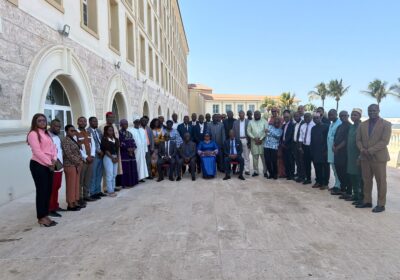
It was against this sobering situations, that UNFPA Nigeria emerged as a strategic voice at the maiden meeting of the National Council on Humanitarian Affairs and Poverty Reduction in Calabar, Cross River State.
The Council convened under the theme: “Beyond the National: Strengthening Sub-National and Multi-Stakeholder Synergy for a Unified Approach to Humanitarian Response and Poverty Reduction.”
For development partners, UN agencies and government actors in attendance, UNFPA’s presence was both operational and policy-driven.
Through a high-impact exhibition, UNFPA showcased its frontline interventions in maternal health, voluntary family planning, and the prevention of and response to gender-based violence (GBV). Central to its message was the integration of Sexual and Reproductive Health (SRH) and GBV services into emergency preparedness and response frameworks — aligned with national priorities and global humanitarian standards.
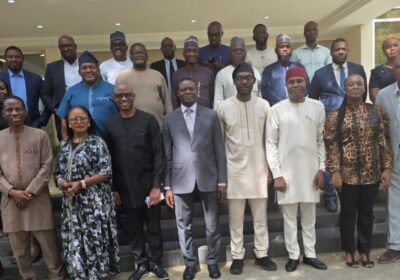
The UNFPA booth drew significant engagement from Commissioners of Humanitarian Affairs, Permanent Secretaries, Federal and State Directors, traditional leaders and development partners, reinforcing the Fund’s convening power and technical leadership in rights-based humanitarian programming.
Available information to Paradigm News International says that out of 105 memos deliberated during the Council’s technical session, 44 were adopted at the Ministerial Session led by the Minister of Humanitarian Affairs and Poverty Reduction, Dr. Bernard M. Doro, alongside the Minister of State, Dr. Yusuf Tanko Sununu.
Notably, one of the adopted memos — sponsored by UNFPA — institutionalizes the integration of GBV and SRH services into emergency preparedness and response plans across states, while strengthening inter-agency coordination mechanisms.
The move signals a significant policy shift toward system-wide protection mainstreaming in Nigeria’s humanitarian response.
Beyond policy dialogue, UNFPA demonstrated tangible impact. The Minister and dignitaries visited the UNFPA exhibition space, engaging directly with evidence of frontline interventions. Products crafted by women and girls previously affected by crisis — now economically empowered through UNFPA-supported programmes in the North-East — were purchased in symbolic support of resilience-building initiatives.
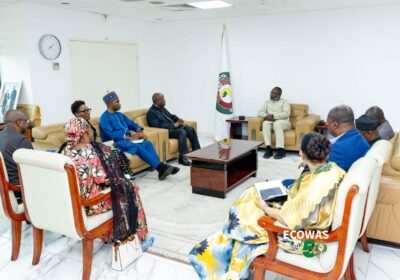
UNFPA Resident Representative in Nigeria, Ms. Muriel Mafico, attended the Ministerial Session in a dual capacity — representing UNFPA and the UN Nigeria Resident and Humanitarian Coordinator, Mr. Mohammed Fall. Delivering a goodwill message on behalf of development partners, she described the establishment of the National Council as a pivotal step toward coordinated, efficient and sustainable humanitarian governance.
She underscored that nearly six million Nigerians currently require urgent lifesaving assistance amid tightening global humanitarian financing, calling for predictable domestic funding, stronger national and sub-national coordination, protection-focused action and Nigerian-led solutions.
Reaffirming the UN system’s commitment, she emphasized continued support for lifesaving assistance, community protection and the collective resolve to leave no one behind.
Across technical engagements, policy deliberations and side events, UNFPA’s participation reinforced the indispensable role of midwives, GBV case workers and community-based responders in ensuring women and girls access essential, dignity-affirming services in crisis settings.
For partners across the UN system, development agencies and federal and state governments, the message from Calabar was clear: humanitarian reform in Nigeria must be people-centred, protection-driven and nationally anchored — with women and girls not at the margins, but at the core.
Source: United Nations Population Fund (UNFPA) Nigeria.