

The Success, the Achievements of ECOWAS under the Presidency of Dr Omar Alieu Touray (2022–2026) By Raymond Enoch
At a defining moment in West Africa’s history—marked by escalating insecurity across the Sahel, a wave of unconstitutional changes of government between 2021 and 2023, and mounting economic pressures linked to global shocks—the leadership of Dr Omar Alieu Touray at the Economic Community of West African States (ECOWAS) has stood out as both stabilizing and transformative. Since assuming office in July 2022, Touray has steered the Commission through one of its most complex periods, combining crisis management with institutional reform and forward-looking regional strategy. Between 2022 and 2026, ECOWAS has not only confronted urgent political and security disruptions—including transitions in Mali, Burkina Faso, and Niger—but has also advanced measurable progress in regional integration, food security, governance frameworks, and development programming, laying a foundation for long-term resilience and people-centered growth.
The story of this period is not one of rhetoric, but of deliberate action—captured in measurable gains across security, economic integration, governance, and social development.
In the face of rising terrorism and political instability, ECOWAS under Touray recalibrated its peace and security architecture. Intelligence-sharing mechanisms were significantly strengthened among member states, contributing to a marked decline in piracy incidents in the Gulf of Guinea by 2024, according to regional maritime security reporting. For a region where maritime insecurity once disrupted trade and threatened livelihoods, this progress signaled a turning point.
Beyond maritime security, the Commission expanded its early warning infrastructure, establishing National Early Warning and Response Centres in key countries including The Gambia and Guinea. These centres now serve as frontline mechanisms for conflict prevention, reflecting a strategic shift from reactive crisis management to proactive stabilization.
Diplomatic engagement also proved decisive. In Sierra Leone, ECOWAS played a critical role in ensuring post-election stability, reinforcing its position as a credible regional mediator. Complementing these efforts was progress toward operationalizing the ECOWAS Standby Force, alongside the activation of strategic logistics assets such as the Lungi depot—steps that have significantly enhanced the region’s rapid response and peace support capabilities.
While security laid the groundwork, economic integration under Touray provided the momentum for growth. The introduction of the ECOWAS Payments and Settlement System marked a quiet but powerful transformation in regional trade, enabling transactions in local currencies and reducing reliance on external financial systems. This innovation is already expanding opportunities for intra-regional commerce, particularly benefiting small and medium-scale enterprises.
Harmonization of standards in sectors such as food and textiles further eased cross-border trade, while sustained efforts toward macroeconomic convergence kept the long-standing vision of a single regional currency within reach. Infrastructure development also advanced, with the Abidjan–Lagos Corridor Highway project continuing to gain traction as a critical artery for economic connectivity, linking major commercial hubs across the region.
On governance, the Touray presidency demonstrated a renewed commitment to democratic principles and accountability. The revision of the Supplementary Protocol on Democracy and Good Governance reflected an adaptive response to evolving political realities, while election observation missions were deployed with increased rigor, transparency, and credibility.
Perhaps most emblematic of this commitment was ECOWAS’s support for transitional justice efforts in The Gambia, including the establishment of a Special Tribunal framework led at the national level, with strong regional backing. This development underscores ECOWAS’s readiness to support accountability mechanisms and reinforce the rule of law in post-authoritarian contexts.
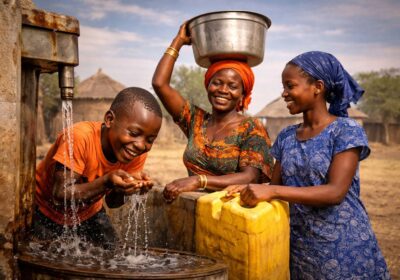
Yet, beyond institutions and policies, the true measure of ECOWAS’s progress under Touray lies in its tangible impact on everyday lives. Through regional social protection and school feeding initiatives implemented in partnership with member states, over 13 million meals were delivered to tens of thousands of schoolchildren across the region between 2022 and 2025. These interventions have strengthened both nutrition and access to education, particularly in vulnerable communities.
At the same time, the regional food security reserve expanded by more than 100 percent during the period, significantly improving the capacity of member states to respond to food crises amid global supply disruptions and climate-related shocks. These efforts reflect a broader commitment to human security as a core pillar of regional integration.
Gender inclusion also moved closer to the center of ECOWAS policy, with targeted programmes designed to empower women economically, enhance participation in decision-making, and address structural inequalities. This shift reflects a growing recognition that sustainable development must be inclusive and people-driven.
Driving these achievements has been a parallel effort to strengthen ECOWAS as an institution. Internal reforms improved human resource management systems, enhanced operational efficiency, and promoted a culture of accountability and results-based management. At the same time, strengthened communication strategies increased the visibility of ECOWAS interventions and improved public engagement across the region.
Strategic partnerships were also significantly expanded, enabling the Commission to mobilize over €360 million in programmatic funding between 2022 and 2025—largely supported by contributions from Germany through key development institutions such as Deutsche Gesellschaft für Internationale Zusammenarbeit (GIZ) in 2025. These resources have supported a wide range of initiatives, from peacebuilding and humanitarian response to infrastructure and economic development programmes.
Notably, the Touray presidency was also defined by difficult but decisive policy choices in moments of regional uncertainty. The Commission navigated the complex and unprecedented withdrawal announcements of Niger, Mali, and Burkina Faso from ECOWAS, managing both the political implications and institutional consequences, including the disengagement of ECOWAS staff from these countries.
At the same time, ECOWAS responded firmly to democratic backsliding in Guinea-Bissau, reinforcing its zero-tolerance stance on unconstitutional governance. Despite these tensions, the Commission sustained dialogue, preserved diplomatic channels, and maintained its broader regional mandate—demonstrating both resilience and strategic patience.
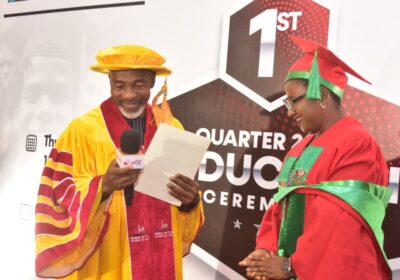
In a parallel effort to deepen institutional culture and public engagement, ECOWAS under Touray also introduced the maiden ECOWAS Award of Excellence for the Media. This initiative recognizes the vital role of journalism in promoting transparency, accountability, and regional integration, while strengthening the relationship between the Commission and the media community.
Even in the face of persistent challenges—ranging from funding constraints to geopolitical tensions involving the Alliance of Sahel States—ECOWAS has maintained its strategic direction. Its ability to sustain engagement, preserve unity among remaining member states, and continue program implementation amid such complexities speaks to the institutional strength built during this period.
Central to this resilience is the adoption of ECOWAS Vision 2050, a forward-looking framework that seeks to transform the bloc from an “ECOWAS of States” into an “ECOWAS of People.” Through the Community Strategic Framework (2023–2027) and the 4×4 Strategy, the Commission has aligned its priorities with the aspirations of citizens—focusing on peace, economic integration, democratic governance, and sustainable development.
As the Touray presidency approaches its conclusion, the legacy it leaves behind is one defined by both direction and delivery. In a region often characterized by its challenges, ECOWAS has, under his leadership, demonstrated that progress is not only possible but achievable through coordinated action, institutional strength, and a clear strategic vision.
The years between 2022 and 2026 will likely be remembered not merely as a period of recovery, but as a phase of recalibration—one in which ECOWAS reaffirmed its relevance, strengthened its foundations, and renewed its commitment to the people of West Africa.