

The Fire Circle Endures: Indigenous Governance and the establishment of Botswana’s Constitutional Court. By His Excellency Ambassador Godfrey Madanhire.
Botswana’s Parliament was disrupted on 1 December 2025 when opposition Members of Parliament staged a walkout during debate on the Constitution Amendment Bill, which seeks to establish a Constitutional Court. The protest followed claims that the process was being rushed without adequate consultation despite expert advice that public views should be gathered before any amendment. MPs rose, voiced their objections and left the chamber, leaving empty benches behind. Their departure was meant to dramatise dissatisfaction with procedure but it also highlighted the fragility of dialogue when political disagreements turn into theatre.
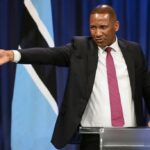
In the silence that followed, President Advocate Duma Boko addressed the chamber with words that shifted the debate from protest to principle: “The people want a Constitutional Court so that their rights are vindicated and protected.” His statement placed the issue beyond parliamentary tactics, grounding it in the wider demand for institutions that safeguard rights and strengthen democracy. In Botswana, the question of rights cannot be separated from the country’s constitutional recognition of tradition.
The Constitution acknowledges that governance is not only parliamentary but cultural. Sections 77 to 79 establish the Ntlo ya Dikgosi, or House of Chiefs, composed of paramount chiefs and other traditional leaders, giving them an advisory role in national affairs. This reflects Botswana’s governance heritage where authority was historically rooted in council of elders and the kgotla, the public assembly where consensus was forged. President Advocate Duma Boko’s call for a Constitutional Court therefore resonates not only with the protection of individual rights but also with the safeguarding of institutions that embody collective identity.
Advisory powers alone leave chiefs vulnerable to being sidelined. Their role is acknowledged but not empowered. A Constitutional Court could change that dynamic. Beyond protecting individual rights, it could serve as a platform for constitutional review, highlighting gaps in the current framework and opening the way for reforms that strengthen the role of traditional leaders. The Constitution is a living document, capable of amendment to meet evolving needs. Through its judgments, the Court could stimulate debate on whether chiefs should remain ceremonial or be given greater authority in governance, ensuring that indigenous traditions are not only recognised but actively integrated into Botswana’s democratic system.
This vision is deeply African. For centuries disputes were settled in the kgotla of Botswana, under the palaver tree in West Africa and in councils of elders across East Africa. These spaces were not only physical but symbolic: circles of justice where every voice was heard, where leaders were custodians of wisdom rather than rulers of decree. The fire at the centre was not only warmth but symbolic, a reminder that justice was communal, transparent and rooted in dialogue.
The Constitutional Court is the modern fire circle. It is where the nation gathers to hear reason and restore order. Its judgments echo the African principle that justice must be participatory, transparent and culturally legitimate. To establish such a court is not to import a foreign system but to formalise what African societies have always known: that law must be rooted in dialogue, consensus and ancestral wisdom.
Across Africa courts have played this dual role of guardian and reformer. South Africa’s Constitutional Court has upheld customary law alongside statutory law, ensuring traditions remain part of modern governance. Ghana’s Supreme Court has adjudicated chieftaincy disputes, protecting traditional authority from political interference. Uganda’s Constitutional Court has intervened against unlawful detentions, reinforcing the principle that liberty is non negotiable. These examples show that courts can both defend rights and stimulate constitutional evolution, just as the fire circle once balanced wisdom and authority.
The events in Parliament revealed frustration but they also underscored opportunity. The opposition’s walkout signalled dissatisfaction with process. President Advocate Duma Boko’s words signalled direction. The Constitutional Court now stands as the bridge between protest and progress, between recognition and empowerment, between the ceremonial and the substantive. If established, it could not only safeguard rights but also provide the platform for Botswana to revisit the role of traditional leaders, ensuring they are not confined to ceremony but empowered as partners in governance. In doing so Botswana would affirm that its democracy is not borrowed but born of its indigenous traditions, carried forward into the modernity.
By His Excellency Ambassador Godfrey
Madanhire, Diplomatic Envoy of the State of the African Diaspora,
Chief Operations Officer, Radio54 African Panorama, Pan-Africanist and Advocate for Sovereign African Governance