

SWEDD+ Ministers Renew Zero Tolerance Commitment on GBV at Banjul Meeting By Isatou Jawara
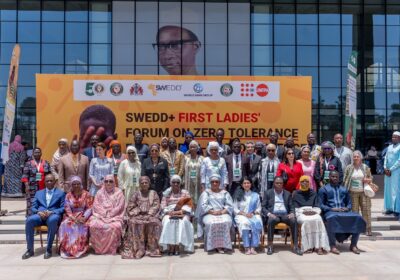
Ministers and development partners from across West and Central Africa have renewed their commitment to zero tolerance for gender-based violence (GBV), child marriage and other harmful practices during the SWEDD+ Ministerial Meeting held in Banjul.
According to Paradigm News correspondent Isatou Jawara, who attended the meeting, wrote that the high-level event brought together ministers responsible for gender, children and social welfare, alongside regional institutions and development partners, under the SWEDD+ initiative supported by the World Bank, Economic Community of West African States and UNFPA.
The forum focused on strengthening political leadership, policy commitment and regional cooperation to address violence against women and girls.
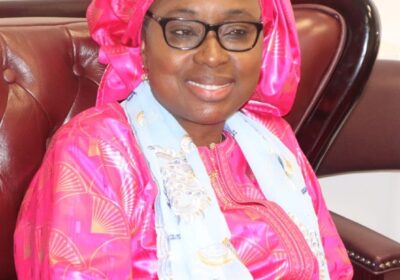
Delivering remarks at the ministerial session, the Minister of Gender, Children and Social Welfare, Mrs Fatou Kinteh, stressed that the fight against gender-based violence must be driven by strong political will and concrete policy action.
She said governments across the region must ensure that the zero-tolerance agenda is reflected in national laws, institutional reforms and survivor support systems.
Mrs Kinteh noted that political leadership remains essential in addressing the root causes of violence, including harmful social norms, gender inequality and weak enforcement mechanisms.
She emphasized that declarations alone are no longer enough, calling for sustained investment in prevention, protection and justice services.
“Political leadership and policy commitment are critical in ending violence against women and girls,” she said, adding that governments must continue to strengthen legal frameworks and ensure effective implementation.
The minister said the Banjul meeting serves as an important platform for regional solidarity and coordinated action.
She highlighted the need for stronger collaboration among governments, civil society, justice institutions and community leaders to protect women and girls from violence and abuse.
In a human-centred appeal, Mrs Kinteh reminded delegates that behind every statistic is a real life affected by violence.
She said every case represents a woman, a girl and a family whose dignity and future are at stake.
Also speaking at the meeting, the World Bank Regional Director for Human Development for West and Central Africa, H.E. Trina Haque, reaffirmed the institution’s strong commitment to ending gender-based violence, child marriage and harmful practices across the region.
She said the World Bank remains fully committed to supporting countries through the SWEDD+ initiative in strengthening protection systems for women and girls.
Haque highlighted the importance of the regional gender-based violence action plan, describing it as a key framework for coordinated responses among participating countries.
She said the action plan focuses on prevention, policy harmonization, survivor services and social norm transformation.
Particular emphasis, she noted, is being placed on ending child marriage, which continues to deny girls access to education, health and economic opportunities.
According to her, ending GBV is not only a human rights imperative but also central to achieving inclusive development and the demographic dividend across West and Central Africa.
The ministerial meeting is expected to strengthen regional commitments and reinforce collaboration among SWEDD+ countries on the implementation of the zero-tolerance roadmap.
The Banjul meeting comes at a time when leaders across the region are intensifying efforts to protect women and girls and ensure that survivors have access to justice and support.
For many participants, the discussions reflected a shared resolve to move from policy commitments to meaningful action that transforms lives.