

GERMANY–NIGERIA TRADE RELATIONS: RHEINLAND-PFALZ SEEKS STRATEGIC BUSINESS PARTNERS IN LAGOS, CITY OF EXCELLENCE By Raymond Enoch
In a bold move that signals deepening economic ambition between Europe’s largest economy and Africa’s biggest market, a high-powered delegation of German “Hidden Champions” has arrived in Lagos on a strategic mission to lock in business partnerships and expand Germany’s footprint in Nigeria.
The delegation, drawn from the industrial powerhouse state of Rheinland-Pfalz, touched down in Nigeria’s commercial nerve centre on February 24 and will remain until February 27 for high-level engagements, strategic matchmaking sessions and sector-specific consultations with Nigerian counterparts.
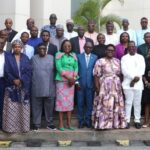
Hosted by the German Consulate General Lagos, the visiting team comprises highly specialised small and medium-sized enterprises producing world-class niche products across winemaking, construction, machinery, renewable energy, pharmaceuticals and advanced manufacturing.
At a networking reception in Lagos, Consul General Daniel Krull described the timing of the visit as critical and strategic.
“This delegation comes at the right moment,” Krull said, expressing confidence in the positive trajectory of German-Nigerian economic relations.
He noted that German businesses operating in Lagos are looking at 2026 with strong optimism, buoyed by Nigeria’s vast market potential and resilient trade ties.
Leading the delegation is Dr. Joe Weingarten, Head of Delegation from the Ministry of Economic Affairs, Transport, Agriculture and Viniculture of Rheinland-Pfalz.
He underscored Nigeria’s rising importance in Germany’s Africa trade architecture.
“Nigeria ranks as the fourth strongest trading partner of Rheinland-Pfalz in Africa, after Egypt, Algeria and South Africa,” Weingarten revealed. “This is our first formal reach-out to Nigeria, and we see the country as a highly attractive market of strategic relevance due to its large, dynamic population and significant economic potential.”
But beyond exports, Germany is thinking bigger.
From Berlin’s perspective, Nigeria is no longer just a destination for finished products. The new playbook centres on mutual production, joint ventures and long-term industrial collaboration.
“For relations to be resilient, there must be positive results for both countries,” Weingarten stressed, signaling a shift toward shared value creation.
During a pre-event press briefing, questions were raised about the current volume of German-Nigerian trade and how this visit could influence economic flows. Consul General Krull described the approach as deliberately “bottom-up” — beginning with direct business-to-business stimulation that can unlock broader institutional and policy-driven cooperation.
The delegation also spotlighted renewable energy as a major area of opportunity. Rheinland-Pfalz, one of Germany’s most industrialised states, currently generates about 60 percent of its electricity from renewable sources — a benchmark the delegation believes holds valuable lessons for Nigeria.
“We are experienced in making an industrialised state run on up to 60 percent renewable energy,” Weingarten explained. “It’s not just about wind and solar generation. It’s about building systems that guarantee reliable and sustainable energy supply for industries and households.”
For energy-hungry Nigeria, this message lands squarely at the heart of its development priorities.
In a symbolic nod to history, Krull referenced the long-standing industrial links between both nations — from German-made vehicles assembled in Lagos decades ago to iconic “Grundig” and “Telefunken” radios now displayed at the John Randle Centre as relics of Nigeria’s vibrant 1970s and 1980s consumer culture.
That legacy, he said, is only the foundation.
“There is more to come,” Krull announced, unveiling plans for additional German business delegations to visit Nigeria within the first half of 2026. These missions will focus on agro-food processing, ICT, solar energy storage, construction and infrastructure — sectors considered pivotal to Nigeria’s economic transformation agenda.
The message from Lagos is unmistakable: Germany is recalibrating its engagement with Nigeria from transactional trade to strategic industrial partnership.
As both nations navigate a shifting global economic landscape, the arrival of Rheinland-Pfalz’s Hidden Champions could mark the beginning of a more aggressive, innovation-driven chapter in German-Nigerian cooperation.
For Nigeria’s business community, the opportunity is clear. Germany is not just knocking — it is positioning itself to co-build the future.