

GERMANY–AU COOPERATION DEEPENS AS BERLIN REAFFIRMS PEACE AND SECURITY COMMITMENT TO AFRICA By Raymond Enoch
Germany has reinforced its position as a key strategic partner in Africa’s peace and security architecture following the high-level visit of Reem Alabali Radovan, Germany’s Federal Minister for Economic Cooperation and Development, to the African Union Headquarters in Addis Ababa. The visit underscores Berlin’s long-standing support for African-led solutions to conflict prevention, governance reform, and continental stability.
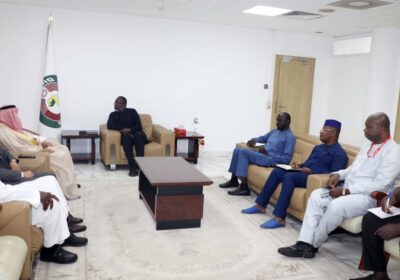
During the visit, the German Minister held talks with H.E. Mahmoud Ali Youssouf, Chairperson of the African Union Commission, and H.E. Ambassador Bankole Adeoye, Commissioner for Political Affairs, Peace and Security. Discussions centred on deepening cooperation in peacebuilding, conflict prevention, border governance, and institutional strengthening within the African Union system.
Both sides emphasized that peace and security remain the bedrock of Africa’s integration and economic transformation. A stable continent, officials noted, creates the conditions necessary for sustainable development, investment flows, and stronger economic ties between African and European businesses. With Africa accounting for 11 of the world’s 20 fastest-growing economies, the urgency of consolidating peace has taken on renewed global significance.
Germany’s engagement with the African Union is rooted in long-term structural support rather than short-term interventions. Over the years, the partnership—largely implemented through the German Agency for International Cooperation (GIZ)—has delivered tangible outcomes across the continent. Germany has supported the definition of more than 10,000 kilometres of African borders, contributing to reduced tensions and improved cross-border cooperation.
The collaboration has also strengthened integrated, multi-level border governance by supporting 42 AU Member States, four Regional Economic Communities, and over 40 joint cross-border initiatives. Germany has played a critical role in supporting the African Union’s conflict prevention and management efforts under the African Peace and Security Architecture (APSA) and the African Governance Architecture (AGA), two pillars central to continental stability.
In response to emerging global threats, Germany supported the development of the first-ever Common African Position on the Climate Change, Peace and Security Nexus, acknowledging climate change as a growing driver of conflict across Africa. The partnership further extended to the establishment of a civil society-led Regional Early Warning System for conflict prevention in Eastern and Southern Africa, as well as technical support for the ongoing organisational development and change management process of the AU’s Department of Political Affairs, Peace and Security.
African Union officials described Germany as a trusted and dependable partner. Patience Chiradza, Director of Governance and Conflict Prevention at AU PAPS, said the Minister’s visit marked another important step in advancing shared goals under Agenda 2063, Africa’s blueprint for inclusive growth and sustainable development.
Max Middeke, Sector Coordinator for Peacebuilding and Conflict Prevention at GIZ African Union, noted that Germany’s collaboration with the AU in peacebuilding and conflict prevention remains one of its longest-standing partnerships on the continent, aimed at strengthening Africa’s resilience and securing a peaceful future.
Beyond diplomatic symbolism, the visit sends a clear strategic message at a time of mounting security challenges, climate pressures, and geopolitical uncertainty. Germany’s renewed engagement affirms its commitment to supporting African institutions, reinforcing peace as the cornerstone of development, and advancing a shared vision of a stable, integrated, and prosperous Africa