

Experts Converge in Lomé to Unlock Abidjan–Lagos Motorway’s Economic Hub. By Raymond Enoch
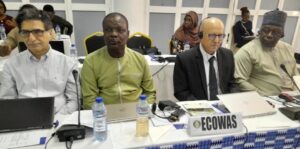
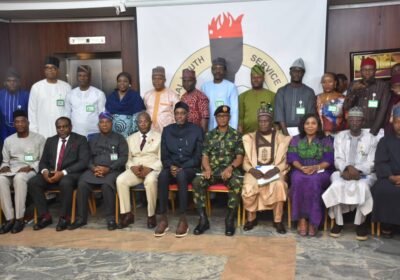
Experts driving the ambitious Abidjan–Lagos Corridor Motorway Development Project meet in Lomé on Tuesday, 16 December 2025, in a high-stakes technical session expected to shape the future of one of West Africa’s most strategic infrastructure corridors.
The 22nd meeting of the Project’s Experts Committee served a critical preparatory platform ahead of the Steering Committee session, bringing together specialists to review the outcomes of key technical studies, validate selected design options, and examine financing models for the project’s fifteen concession lots spanning five ECOWAS member states.
Beyond engineering and financing, the Lomé meeting will spotlight trade and transport facilitation—often cited as the missing link in regional integration. Experts will present the finalised framework designed to ease the movement of goods and people along the corridor, outlining practical measures to be implemented in the short, medium and long term to reduce bottlenecks, cut transit time and improve cross-border efficiency.
A major highlight of the session will be the presentation of a spatial development study that reframes the motorway not merely as a road, but as a catalyst for regional transformation. Covering an area of influence stretching nearly 100 kilometres on either side of the corridor, the study identifies 206 projects clustered into 26 development hubs. These include anchor investments, strategic infrastructure, and initiatives aimed at increasing transport density and deepening economic activity. Designed to be jointly developed alongside the motorway, the projects will be marketed to investors through integrated logistics platforms and corridor connections.
Christian Appiah, Director of Transport at the ECOWAS Commission, described the studies as evidence of a clear and coordinated roadmap by corridor states, ECOWAS and the African Development Bank (AfDB) to position the Abidjan–Lagos motorway as a backbone of regional economic growth. According to him, the combination of sound technical planning and regional transport governance reforms underscores the readiness of member states to move from vision to execution.
Speaking on behalf of the President of the ECOWAS Commission, Dr Omar Alieu Touray, Appiah called on technical and financial partners to step up support for both ECOWAS and the five corridor countries, stressing that the project represents a new model of integrated, supranational development in West Africa.
He also welcomed the endorsement of the ECOWAS Authority of Heads of State and Government at its 14 December 2025 Summit in Abuja, Nigeria, which urged development partners to support corridor-based projects as engines of growth for member states.
As experts gather in Lomé, expectations are high that the Abidjan–Lagos Corridor Motorway—linking some of West Africa’s most vibrant cities and economies—will move closer to becoming not just a transport artery, but a powerful driver of trade, investment and regional integration.