

ECOWAS Vice-President Engages Togolese Authorities on Launch of National Early Warning Mechanism By Raymond Enoch
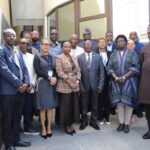
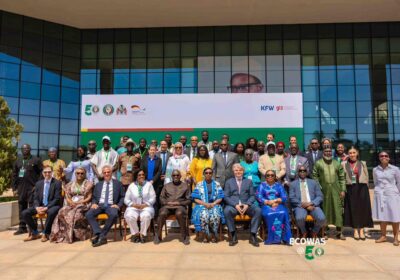
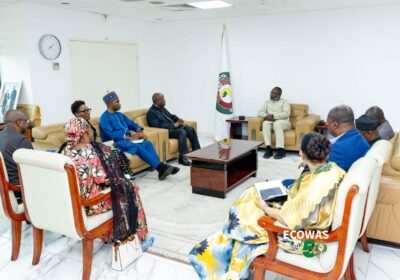
The Vice-President of the Economic Community of West African States (ECOWAS) Commission, Damtien Tchintchibidja, led a high-level regional delegation to Lomé, where she met with Togolese authorities to advance plans for the operationalisation of the country’s National Early Warning Mechanism.
The mission placed the ECOWAS Vice-President at the centre of discussions aimed at strengthening regional peace and security, as West Africa intensifies efforts to detect and respond quickly to emerging threats.
During the visit, the delegation was received by Calixte Batossie Madjoulba, Minister of Security and Civil Protection of Togo. Talks focused on concrete steps toward opening the National Coordination Centre for the Early Warning Response Mechanism, known as CNCMR.
Officials said the centre will serve as Togo’s national hub for monitoring potential security risks and sharing information with the ECOWAS regional early warning system.
Also the Vice President Tchintchibidja stressed the importance of strong national structures that connect directly with ECOWAS’ regional peace and security architecture.
Her visit underscores the Commission’s growing efforts to support member states in strengthening early warning systems that can prevent crises before they escalate.
In the ECOWAS team included the Resident Representative in Togo, Deweh Emily Gray, as well as Léné Dimban and senior officials from the Commission’s Early Warning Directorate.
Discussions reviewed the progress already made on the administrative, institutional and technical arrangements required to make the centre fully operational.
Security analysts say the initiative is critical as ECOWAS continues to expand its early warning network across member states to improve rapid response to security threats, conflict risks and humanitarian crises in the region.
With the Lomé coordination centre at the point of completion, officials believe Togo will soon become a key national interface linking local intelligence gathering with the wider ECOWAS regional security framework.
For Vice-President Tchintchibidja, the visit signals the Commission’s determination to move from policy to action — ensuring that early warning systems across West Africa are not only established, but fully functional.