

ECOWAS STORMS FREETOWN WITH BOLD INTEGRATION AGENDA —Regional bloc deepens push for agricultural transformation, trade competitiveness. By Raymond Enoch
The drive toward a more integrated and economically resilient West Africa gathered fresh momentum in Freetown as the Economic Community of West African States (ECOWAS) Commission convened high-level consultations aimed at accelerating regional economic integration.
At the heart of the engagement is a clear message: West Africa must move faster, act smarter, and integrate deeper.
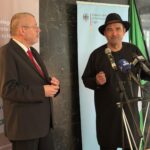
Leading the delegation, Dr Kalilou Sylla, ECOWAS Commissioner for Economic Affairs and Agriculture, described the consultations as “a defining moment” for aligning national agricultural and trade policies with regional ambitions under ECOWAS Vision 2050.
“We cannot speak of integration in abstract terms,” Dr Sylla said during discussions with senior Sierra Leonean officials. “Integration must translate into higher productivity for our farmers, easier movement of goods across our borders, stronger private sector participation, and policies that speak to each other across the region.”
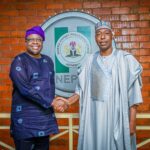
The ECOWAS delegation first met with Dr Henry Musa Kpaka, Sierra Leone’s Minister of Agriculture and Food Security, where conversations centred on agricultural transformation as the backbone of regional prosperity. Both sides acknowledged that agriculture remains the largest employer across West Africa, yet continues to operate below its full potential due to fragmented policies, limited value addition, and weak cross-border trade systems.
Dr Kpaka welcomed the regional body’s proactive engagement, stressing that Sierra Leone sees its agricultural reform agenda as inseparable from regional integration.
“For us, food security is not just a national issue—it is a regional responsibility,” he noted. “When ECOWAS strengthens policy coherence and investment frameworks, it strengthens the capacity of our farmers, our agribusinesses and our markets to compete beyond borders.”
The consultations also extended to the Ministry of Foreign Affairs and International Cooperation, signalling that the integration agenda goes beyond agriculture. Trade competitiveness, private sector mobilisation and harmonisation of regional instruments formed a core part of the discussions.
Behind closed doors, technical sessions are progressing on the harmonisation of agricultural sector policies, review of regional instruments, and strengthening of investment facilitation frameworks. Officials say these mechanisms are critical if West Africa is to present itself as a single, attractive economic space rather than fragmented national markets.
Dr Sylla emphasised the need for structured private sector involvement, arguing that governments alone cannot deliver the transformation envisioned under Vision 2050.
“The private sector must be positioned not as an afterthought but as a central actor in regional integration,” he stated. “Our role at ECOWAS is to create the enabling environment—clear rules, predictable policies, and coordinated strategies.”
Observers note that the Freetown consultations come at a time when global economic headwinds, supply chain disruptions, and food security concerns are reshaping development priorities across Africa. For ECOWAS, the message is unmistakable: regional solidarity is no longer optional—it is strategic.
As meetings continue, expectations are high that concrete implementation mechanisms will emerge from the consultations. For Sierra Leone and its West African neighbours, the outcomes could determine how effectively the region transforms ambition into measurable economic growth.
In Freetown, the tone is one of urgency—but also of opportunity. West Africa, it seems, is ready to move from promise to performance.