

ECOWAS Re-Directs Regional Integration Agenda with Vision 2050 Tech Dialogue, Positioning Artificial Intelligence and Digital Transformation as Cornerstones of West Africa’s Future. By Raymond Enoch
As the Economic Community of West African States (ECOWAS) transitions from its golden jubilee into a new phase of regional integration, the Community has embarked on a decisive strategic recalibration—one that places Artificial Intelligence (AI), digital transformation, communication, and social media at the very heart of its long-term development vision.
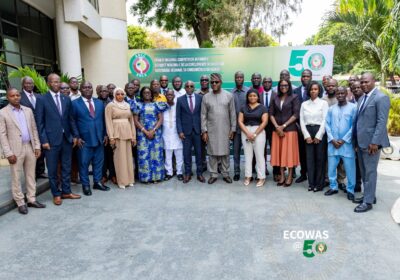
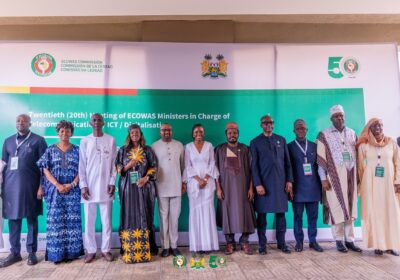
That recalibration took concrete form in Lagos this week, where ECOWAS concluded a landmark three-day Thematic Dialogue held from January 20 to 22, 2026.
The high-level consultation brought together policymakers, officials of the ECOWAS Commission, private sector leaders, civil society actors, media professionals, academics, youth innovators, and citizens from across Member States to define a unified digital roadmap under the ECOWAS Vision 2050 framework.
The choice of Lagos carried deep historical symbolism. Fifty years after hosting the signing of the ECOWAS Treaty in 1975, the city once again became the stage for a pivotal regional conversation—this time focused on redefining integration in an era shaped by artificial intelligence, digital connectivity, and information power.
The Dialogue, themed “Dialogue on ECOWAS Vision 2050 and New Technologies, Artificial Intelligence, Digital Transformation, Communication, and Social Media,” was convened in response to directives from the Authority of Heads of State and Government, reflecting a growing consensus that the future relevance, competitiveness, and resilience of ECOWAS will depend on how effectively it integrates digital innovation into governance, peace and security, and economic development.
Opening the consultations on behalf of the President of the ECOWAS Commission, H.E. Dr. Omar Alieu Touray, the Director of Cabinet, Hon. Abdou Kolley, described the gathering as a defining moment in the Community’s evolution. While the 50th anniversary offered cause for celebration, he noted, it also demanded honest reflection and strategic repositioning.
Global systems, Hon. Kolley observed, are being reshaped at unprecedented speed by artificial intelligence, data-driven governance, cybersecurity architectures, and digital trade regimes. In this context, West Africa must move beyond adaptation to leadership.
“Digital transformation must no longer be viewed as an optional add-on,” he said. “It must become a catalyst for inclusive development, institutional efficiency, and regional solidarity as ECOWAS charts its future under Vision 2050.”
Structured as a bottom-up consultation process, the Lagos Dialogue forms part of a broader effort by the Commission to ensure that Vision 2050 is grounded in the lived realities and aspirations of West African citizens.
Discussions spanned ECOWAS’ core mandates—peace and security, democracy and governance, and economic integration—through the lens of emerging technologies.
Participants examined how digital tools and artificial intelligence could strengthen early warning systems, enhance intelligence sharing, support conflict prevention, and counter violent extremism.
In the governance sphere, attention focused on leveraging technology to reinforce constitutional order, transparency, accountability, and citizen participation across the region.
Economic integration—long regarded as the backbone of the ECOWAS project—featured prominently in deliberations on digital trade, innovation ecosystems, fintech interoperability, and regional connectivity as drivers of sustainable growth and competitiveness in the global economy.
At the heart of the consultations was a shared recognition that failure to act collectively on digital transformation could deepen inequalities and marginalize West Africa in the rapidly evolving global digital order. This concern informed the adoption of a landmark Communiqué at the conclusion of the Dialogue.
The Communiqué outlines a bold commitment to transforming West Africa into a digitally integrated, peaceful, and prosperous region, anchored on a human-centered approach to technology that prioritizes social inclusion and regional digital sovereignty.
A central outcome is the commitment to establish a Regional Digital Single Market, aimed at harmonizing digital regulations, data protection laws, and cybersecurity frameworks across all Member States.
By expanding broadband access, developing interoperable fintech systems, and creating a unified digital identity infrastructure, ECOWAS seeks to dismantle digital borders and unlock economic opportunities for its more than 400 million citizens.
Recognizing the double-edged nature of emerging technologies, the Dialogue resolved to develop a Regional AI Governance Framework. While acknowledging AI’s transformative potential in health, agriculture, education, and public service delivery, the Communiqué stresses the urgent need to mitigate risks such as algorithmic bias, labor displacement, and the use of AI in spreading what it described as “information disorder.”
“Technology must be harnessed for development and transparency, not for domination or exclusion,” the Communiqué stated, underscoring the need for West Africa to transition from being a consumer of technology to an active co-creator in the global digital ecosystem.
Participants identified information disorder—including state-sponsored disinformation, extremist recruitment, and foreign influence operations—as a critical threat to regional peace and democratic stability. To counter this, the Dialogue called for the establishment of a regional framework to monitor and respond to coordinated information operations, the strengthening of ethical journalism and fact-checking networks, and the upgrading of ECOWAS Radio in Liberia into a truly regional broadcast hub operating in multiple local languages to reach underserved communities.
Human capital development featured prominently in the Communiqué, with calls for immediate investment in Centres of Excellence, expanded STEM education, and digital skills training to combat brain drain and bridge the region’s digital divide.
A strong emphasis was placed on gender inclusion, ensuring that women and girls are supported as innovators, leaders, and entrepreneurs within West Africa’s technology ecosystem.
In a pointed reminder of institutional sustainability, the Dialogue also underscored the necessity for Member States to meet their financial obligations to the Commission, noting that the timely payment of dues is fundamental to translating digital ambition into measurable outcomes.
Delivering the closing remarks on behalf of the Commission President, Hon. Abdou Kolley emphasized that the transition to a future-ready ECOWAS is no longer optional. He noted that the exchanges over the three days had generated actionable insights that will inform concrete policy commitments, institutional reforms, and implementation mechanisms.
While acknowledging the Community’s significant achievements over the past five decades, he stressed that the journey ahead requires renewed solidarity, innovation, and resilience. The ideas generated in Lagos, he assured delegates, will not remain abstract but will shape the strategic direction of ECOWAS as it moves toward the 2050 milestone.
The Dialogue was organized by the ECOWAS Commission, in partnership with the Amandla Institute and the West Africa Think Tank (WATHI), and hosted by the Government of the Federal Republic of Nigeria. Its outcomes will serve as a foundational pillar for the forthcoming Summit of the Future of West Africa, where Heads of State and Government are expected to deliberate on the adoption and implementation of the emerging Strategic Compact under Vision 2050.
As ECOWAS looks beyond its golden jubilee, the Lagos Dialogue marks a defining inflection point—one that signals the Community’s determination not merely to respond to global technological change, but to shape its own digital destiny. By placing ethics, inclusion, and regional ownership at the center of innovation, ECOWAS is positioning West Africa to tell its own story on the global stage in the digital age.