

ECOWAS RALLIES WEST AFRICA IN FREETOWN TO DRIVE FOOD SECURITY, TRADE AND PRIVATE SECTOR GROWTH By Raymond Enoch
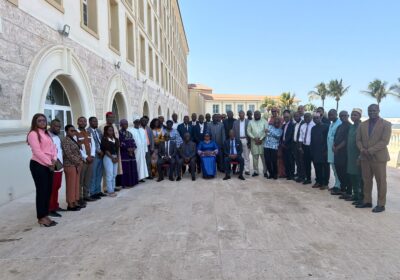
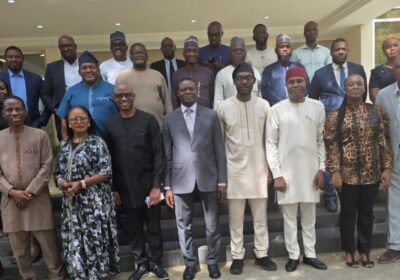
In a decisive push to recalibrate West Africa’s economic trajectory, the Economic Community of West African States (ECOWAS) has convened a high-level regional engagement in Freetown aimed at accelerating agricultural transformation, deepening trade facilitation and institutionalising private sector participation across Member States.
The strategic meeting, aligned with the bloc’s long-term development blueprint, ECOWAS Vision 2050, drew Ministers, senior technocrats and development partners into a focused dialogue on dismantling structural barriers that have slowed regional economic convergence.
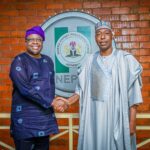
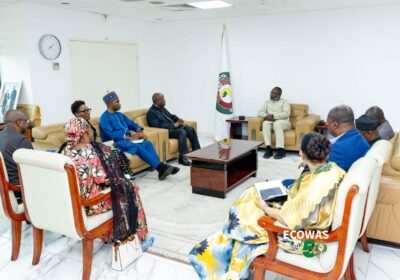
Leading the Commission’s delegation, H.E. Dr. Kalilou Sylla, Commissioner for Economic Affairs and Agriculture, framed the engagement as more than a routine consultation. It was, he noted, a policy consolidation exercise designed to harmonise agricultural competitiveness frameworks, reinforce the architecture of the ECOWAS Common Market and ensure that regional protocols translate into measurable economic outcomes.
At the heart of the discussions was a stark economic reality: West Africa continues to grapple with structural import dependence, particularly in staple foods, despite vast arable land and a youthful labour force. Delegates examined empirical data pointing to supply chain inefficiencies, weak agro-industrial linkages and fragmented market systems that constrain intra-regional trade.
Sierra Leone’s Minister of Agriculture and Food Security, Hon. Dr. Henry Musa Kpaka, underscored the strategic nexus between food security, economic sovereignty and regional stability. He argued that without coordinated investment in value addition, storage infrastructure and cross-border logistics, the sub-region risks perpetuating vulnerability to global commodity shocks.
“Food security is not merely a social obligation,” he emphasised. “It is a pillar of economic independence and political stability.”
The Freetown engagement therefore prioritised three interlocking pillars: strengthening productive capacity in agriculture, facilitating seamless trade across borders and creating structured pathways for private capital participation. Officials stressed that integration cannot remain a political aspiration; it must be anchored in functional markets, interoperable standards and enforceable regulatory mechanisms.
Technical sessions reviewed progress on harmonised sanitary and phytosanitary standards, digital customs modernisation and coordinated agricultural financing models. Particular attention was given to aligning national policies with regional instruments to prevent regulatory fragmentation — a recurring obstacle to the operationalisation of the ECOWAS Common Market.
Private sector actors present at the meeting called for predictable regulatory environments and improved access to regional value chains. Their participation marked a deliberate shift toward a multi-stakeholder integration model, reflecting the Commission’s recognition that public-sector coordination alone cannot deliver transformative growth.
Analysts say the timing of the engagement is critical. Global supply chain disruptions, climate variability and inflationary pressures have intensified calls for West Africa to strengthen endogenous production systems and deepen intra-regional trade flows.
By anchoring the Freetown consultations within Vision 2050, ECOWAS is signalling a generational commitment: to transition from a predominantly commodity-exporting bloc to a diversified, value-driven regional economy.
As deliberations closed, one message resonated clearly — integration must move from protocol to practice. For West Africa, the road to prosperity will not be paved by declarations alone, but by deliberate, coordinated implementation.
In Freetown, that implementation drive has begun to gather renewed momentum.