

ECOWAS Ministers Close Ranks on Security, Democracy and Economic Integration at 95th Council Session By Raymond Enoch
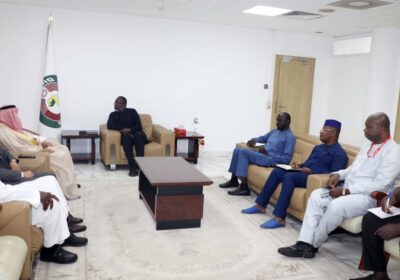
The Economic Community of West African States (ECOWAS) has concluded its 95th Ordinary Session of the Council of Ministers with a strong reaffirmation of collective resolve to confront the region’s mounting security, political and economic challenges through unity, solidarity and accelerated integration.
Closing the three-day session, the Chairman of the ECOWAS Council of Ministers and Sierra Leone’s Minister of Foreign Affairs and International Cooperation, Alhaji Musa Timothy Kabbah, described the deliberations as open, constructive and productive, stressing that the quality of engagement reflected the Community’s enduring commitment to peace, stability and shared prosperity.
“All is well that ends well,” Kabbah declared as he formally drew the session to a close, congratulating ministers and delegates for what he termed a successful meeting shaped by dedication, insight and a strong collaborative spirit. According to him, the discussions underscored ECOWAS’ collective determination to safeguard regional peace, deepen integration and deliver tangible benefits to citizens across West Africa.
He paid special tribute to the Government and people of Nigeria for hosting the session and ensuring smooth logistics, while also commending the ECOWAS Commission, Permanent Representatives, conference secretariat, technical experts and interpreters for their critical roles in facilitating effective deliberations.
Security dominated the agenda, with ministers confronting what Kabbah described as defining threats to the region’s future. These included violent extremism in the Sahel, the proliferation of small arms and light weapons, transnational organised crime, maritime insecurity in the Gulf of Guinea and the destabilising impact of unconstitutional changes of government. While acknowledging the gravity of these challenges, the Chairman insisted they were not insurmountable, arguing that ECOWAS’ greatest strength lies in its unity and its capacity to deploy both diplomatic engagement and operational measures to protect the regional peace and security architecture.
The Council also reflected deeply on political developments in parts of the region and their implications for democratic governance. In this context, Sierra Leone reiterated its firm commitment to ECOWAS norms and values, maintaining that democracy, constitutional order and the rule of law remain non-negotiable pillars of the Community.
On the economic front, the meeting renewed calls for faster implementation of flagship integration initiatives, notably the ECOWAS Single Currency programme, Free Movement Protocols and the Customs Union. Kabbah warned that in a global environment marked by economic uncertainty, West Africa’s resilience depends on reducing structural vulnerabilities, boosting intra-regional trade and building a competitive, integrated regional market. Sierra Leone, he said, stands ready to work closely with member states and ECOWAS institutions, particularly in advancing youth empowerment, innovation, digital transformation and sustainable development.
Humanitarian and climate-related vulnerabilities also featured prominently. Ministers noted that food insecurity, displacement, epidemics and natural disasters are interconnected challenges requiring coordinated and proactive regional responses. The Council therefore welcomed ongoing efforts to strengthen early warning systems, improve regional preparedness and mobilise resources to support vulnerable and at-risk communities.
As ministers prepared to return to their respective capitals, Kabbah reminded them of their responsibility to translate the vision of ECOWAS leaders into concrete action. He urged sustained momentum through faithful implementation of agreed decisions, closer coordination among national and regional institutions and continued open communication as new challenges emerge. Reaffirming Sierra Leone’s unwavering commitment to the Community, he described ECOWAS as a pillar of stability and a pathway to collective progress in uncertain times, before officially declaring the 95th Ordinary Session closed.
In a statement issued at the conclusion of the meeting, the ECOWAS Council of Ministers echoed the Chairman’s message, noting that the session, held from 10 to 12 December 2025, reinforced the Community’s renewed commitment to strengthening regional peace, security and economic integration. The statement highlighted ministers’ consensus that unity and solidarity remain central to addressing terrorism, organised crime, governance challenges and climate pressures facing West Africa.
Signed by Kimiebi Imomotimi Ebienfa, ANIPR, Spokesperson to the Minister of Foreign Affairs in Abuja, the communiqué underscored ministers’ resolve to accelerate integration initiatives, uphold democratic norms and pursue coordinated responses to humanitarian and climate challenges. It further reaffirmed appreciation to Nigeria for hosting the session and to the ECOWAS Commission and technical teams whose expertise shaped the outcomes.
With renewed optimism and a shared sense of purpose, ECOWAS ministers departed Abuja united around a common message: that the future stability and prosperity of West Africa depend on decisive collective action, sustained political will and an unbroken commitment to the ideals upon which the regional bloc was founded.