

ECOWAS HISTORIC MOVE ON GENDER PARITY BY 2035 — MINISTERS MEET IN ACCRA TO SEAL WOMEN POLITICAL LEADERSHIP REFORMS. By Raymond Enoch
ECOWAS HISTORIC MOVE ON GENDER PARITY BY 2035 — MINISTERS MEET IN ACCRA TO SEAL WOMEN POLITICAL LEADERSHIP REFORMS.
By Raymond Enoch
The West Africa’s push for inclusive governance has entered what observers describe as its most decisive moment yet, as Ministers responsible for Gender and Social Affairs across the region converged in Accra to chart the final political roadmap for women and youth leadership reforms under the Economic Community of West African States (Economic Community of West African States).
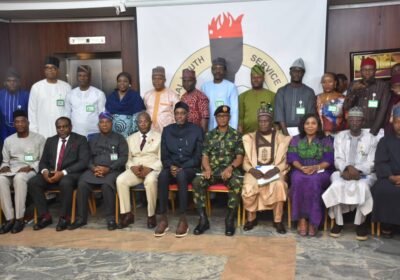
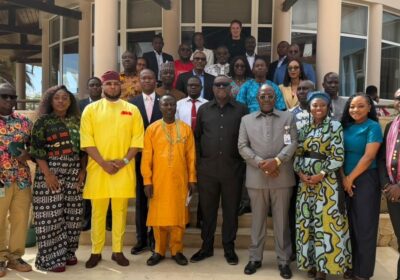
The high-level Ministerialt Meeting, held on February 19, 2026, followed two days of intensive expert consultations and culminated in the validation of a strategic report that will shape the proposed ECOWAS Political Declaration on Gender Parity. The declaration is scheduled to be presented to the Conference of Heads of State and Government in June 2026 for adoption.
The gathering forms a critical pillar of ECOWAS’ 50th Anniversary “Legacy Project” (2025–2035), a bold regional commitment to achieving gender parity in elected bodies and significantly expanding youth participation in political leadership across Member States.
In a strong demonstration of institutional commitment, the Vice-President of the ECOWAS Commission, H.E. Ms. Damtien Tchintchibidja, played a central role in the Accra engagements, underscoring the Commission’s resolve to transform long-standing regional frameworks into enforceable national reforms.
Other leading figures at the opening ceremony included Prof. Fatou Sow Sarr, ECOWAS Commissioner for Human Development and Social Affairs; H.E. Chantal Fanny, Senator and President of the ECOWAS Female Parliamentarians Association (ECOFEPA); H.E. Ms. Agnes Naa Momo Lartey, Ghana’s Minister of Gender, Children and Social Welfare; and H.E. Ms. Isata Mahoi, Sierra Leone’s Minister of Gender and Children.
The ministerial session validated recommendations earlier crafted by gender experts and Human Capital Development focal persons from Member States during the technical consultation held from February 17 to 18, also in Accra.
At the heart of the discussions is a clear objective: dismantling structural, legal and socio-political barriers that have historically restricted women and young people from accessing positions of political authority.
Experts examined electoral reforms, affirmative action frameworks, quota systems, and accountability mechanisms designed to produce measurable results. Member States are expected to domesticate these instruments within national legislation to ensure steady progress toward parity and inclusive governance by 2035.
Institutional backing for the initiative cuts across multiple ECOWAS structures — including the Office of the Vice-President, the Departments of Political Affairs and Social Affairs, the ECOWAS Court of Justice, and the ECOWAS Parliament — signaling a coordinated, whole-of-institution reform drive.
A Demographic Imperative
With West Africa’s youthful population representing both its greatest potential and its most pressing governance challenge, stakeholders in Accra emphasized that empowering women and youth is not a ceremonial gesture but a strategic necessity.
Participants stressed that inclusive political systems are central to democratic consolidation, sustainable peace, economic transformation, and long-term regional stability.
As ECOWAS marks five decades of regional integration, the momentum in Accra signals more than a commemorative gesture. It reflects a historic policy shift — one aimed at ensuring that the next generation of West African leadership mirrors the demographic realities of the region.
If adopted in June, the Political Declaration on Gender Parity could become one of the most defining legacy outcomes of ECOWAS at 50 — a turning point that repositions women and youth from the margins of governance to the centre of power across West Africa.