

Côte d’Ivoire Unveils New Bilateral Cooperation Framework in Courtesy Visit to Gozo Minister, for Trade, Culture and Sustainable Development. By Raymond Enoch
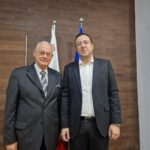
A new chapter in Mediterranean–West African diplomacy has opened in Gozo, where H.E. Mrqs. Anthony C. Coleiro, Honorary Consul of the Republic of Côte d’Ivoire to Malta, paid a courtesy visit to Hon. Arch. Clint Camilleri, Minister for Gozo and Planning, and formally presented a freshly developed Côte d’Ivoire–Malta Cooperation Dossier. The document, built as a high-impact partnership blueprint, sets out a structured agenda for5 long-term bilateral collaboration spanning institutional cooperation, sustainable development, cultural exchange, and commercial growth. The meeting, held in Victoria, underscored what diplomatic observers are calling one of the most forward-looking international proposals to emerge from an African mission in Malta in recent years.
Following the engagement, Honorary Consul Coleiro said the dossier represents a realistic and action-driven pathway designed to create measurable outcomes for both nations. “This dossier represents a forward-looking pathway for meaningful cooperation between our two nations,” he stated. “The Gozo model — its balanced planning, community-centred governance, and commitment to sustainable development — offers valuable lessons that can support regional advancement in Côte d’Ivoire. At the same time, Gozo stands to benefit from new cultural, educational, and commercial opportunities with one of West Africa’s most dynamic economies. This partnership is grounded in mutual respect, shared aspirations, and a commitment to long-term cooperation.” Diplomats familiar with the proposal say the document speaks directly to modern development challenges, positioning Gozo as a knowledge hub and Côte d’Ivoire as a rising economic force seeking strategic EU engagement.
The cooperation dossier highlights five integrated areas of collaboration, including institutional policy dialogue, sustainable urban and regional development, cultural and academic exchanges, trade and investment promotion, and joint environmental initiatives. While the sectors are varied, the concept is unified: link Gozo’s proven governance and planning experience with Ivorian ministries responsible for decentralization, urban housing, tourism, economic transformation, and cultural heritage. The plan includes provisions for renewable energy partnerships, agro-industrial links, maritime services development, digital innovation projects, tourism enhancement, student exchanges, cultural festivals, and joint heritage initiatives. Observers note that the model blends traditional diplomacy with pragmatic, people-centered development strategies.
Minister Camilleri welcomed the initiative, describing it as an opportunity to strengthen Malta’s international footprint while offering Gozo a new role as a bridge between Europe and emerging African economies. In government circles, the dossier is seen as a way to position Gozo—not just Malta—as a catalyst for international cooperation, particularly in sustainability and regional planning. The proposal outlines an 18-month implementation roadmap that includes reciprocal official visits, specialized technical missions, the creation of a digital knowledge-exchange platform, and pilot development projects aimed at generating tangible socio-economic impact. Policy analysts note that the initiative embodies a shift toward regional-to-regional diplomacy, bypassing traditional capital-centric engagement and offering a template for future micro-cooperation frameworks.
If executed as presented, the Côte d’Ivoire–Gozo partnership could deepen EU–Africa relations in new and innovative ways while strengthening Côte d’Ivoire’s presence in the central Mediterranean. For the diplomatic community, the initiative signals a maturing foreign policy strategy based on shared innovation, cultural intelligence, and sustainable planning. For Malta, it opens a new road to trade diversification, education partnerships, environmental collaboration, and Africa-centered investment opportunities. For Côte d’Ivoire, it promises knowledge transfer, governance cooperation, and exposure to European development models tested at regional level.