

2027 ELECTIONS: PCRC Deepens Community Security Drive with Multi-Layered Strategy By Raymond Enoch
As Nigeria looks ahead to the 2027 General Elections, the conversation on national security is increasingly moving beyond the traditional role of law enforcement agencies to a broader question: What role should communities play in securing the nation?
It is against this backdrop that the Police Community Relations Committee (PCRC) is set to convene its second Collective Security and Community Synergy Workshop, focusing on Nigeria’s emerging multi-layered security architecture and the security challenges that could accompany the 2027 polls.
The workshop, being convened by the PCRC Monitoring Unit (PMU), is expected to provide a platform for security stakeholders, government representatives and community leaders to examine ways of strengthening grassroots cooperation while responding effectively to emerging security threats.
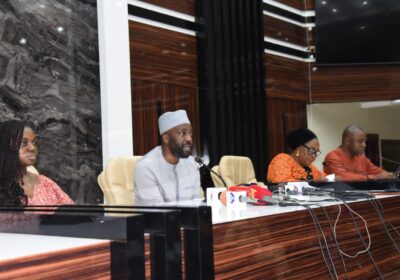
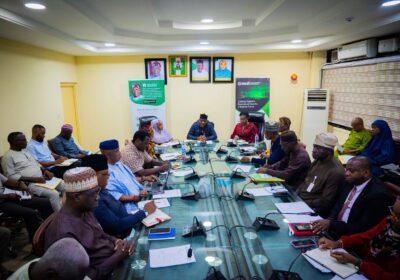
National Chairman of the PCRC, Alhaji Mogaji Ibraheem Olaniyan, disclosed the plans during the inauguration of the Local Organising Committee (LOC) at the Force Headquarters in Abuja.
The LOC is chaired by Professor Theophilus Ndubuaku, with Mr Inuwa Umar, Dr Princess Joy Idam, Engr. David Dung, Ms Gloria Dandam, Mr Onoja Sunday, QS Patrick Nwaefido, Barr. Jessy Gagara and Mr Andrew Enantiwhen as members. Mrs Sosanya Adebimpe serves as Secretary.
Represented at the ceremony by the PCRC Chairman, Zone 16, Yenagoa, Archbishop Moses Omonkhuale, Olaniyan described the forthcoming engagement as an important community security policy dialogue.
At the heart of the proposed workshop is an evolving understanding of community security and the place of citizens in Nigeria’s security architecture.
For decades, the relationship between communities and law enforcement has largely been viewed through the lens of police-community cooperation, with citizens encouraged to provide information and support security agencies.
However, the PCRC believes the changing security environment requires a more inclusive approach in which communities are not merely expected to assist security agencies but are recognised as stakeholders and active partners in producing community security.
National Coordinator of the PCRC Monitoring Unit, Austen Yong, said in a statement that the workshop represents a significant shift in the philosophy of community engagement.
According to him, the focus is moving from simply asking communities to support the police to recognising them as co-producers, stakeholders and owners of community security.
The emerging philosophy assumes greater significance as Nigeria explores different approaches to strengthening security at the local level.
Nigeria’s security architecture is evolving, with growing discussions around strengthened community policing, State Police, regional security structures and other community-based security arrangements.
While such developments could create opportunities for more responsive security systems, they also raise questions around coordination, responsibilities and the role of citizens within the emerging framework.
The PCRC workshop is therefore expected to examine how the different layers of security can work together effectively without creating confusion, gaps or duplication of responsibilities.
For communities, understanding their place within the evolving architecture could become increasingly important.
Citizens are often the first to notice unusual developments within their neighbourhoods. They understand local dynamics, know their communities and, in many cases, are uniquely positioned to provide information that could assist security agencies.
The challenge, however, is to transform such local knowledge into constructive security partnerships while ensuring that citizens understand their responsibilities.
Beyond the broader security architecture, the workshop will also focus significantly on the 2027 General Elections.
Nigeria’s elections have historically placed enormous demands on security agencies, particularly in areas where political competition, misinformation, communal tensions and other factors could trigger security concerns.
The PCRC said the forthcoming engagement would examine what it describes as violent signals ahead of the 2027 polls and explore ways communities and security stakeholders can work together to prevent potential threats from escalating.
Yong said the objective is to ensure that communities are adequately prepared to contribute to safer and more credible elections.
This places community engagement at the centre of the conversation on electoral security.
Representing the Force Public Relations Officer, CSP Iniedu Anietie Okokon, at the LOC inauguration, the Admin Officer of the Force Public Relations Department, SP Stephen Kuti, commended the PCRC for its continued efforts to strengthen police-community relations.
Kuti acknowledged the organisation’s contributions to community policing and closer integration between the police and the communities they serve.
“I often wonder where you get the energy to do all the things you are doing,” he remarked, while expressing the Police Force’s appreciation of the PCRC’s activities.
His comments underscored the growing importance of partnerships beyond the conventional security establishment.
As the countdown to the 2027 elections gradually gathers momentum, the PCRC’s proposed workshop could provide an important platform to rethink how security is understood and delivered at the community level.
The emerging message is that security cannot be the responsibility of government and security agencies alone.
Communities have a role to play, just as security institutions and government have responsibilities to the citizens they are mandated to protect.
The success of Nigeria’s evolving multi-layered security architecture may ultimately depend on how effectively these different actors communicate, coordinate and build trust.
For the PCRC, the Collective Security and Community Synergy Workshop is intended to take that conversation a step further by bringing communities into the heart of the national security dialogue and preparing them to play a constructive role in creating a safer environment for the 2027 General Elections and beyond.