

ECOWAS, UN JOIN FORCES TO RESTORE STABILITY IN WEST AFRICA AND SAHEL By Raymond Enoch
In a decisive move to confront rising uncertainty across West Africa and the Sahel, the Economic Community of West African States (ECOWAS) and the United Nations Office for West Africa and the Sahel have stepped up high-level consultations aimed at strengthening regional stability and restoring confidence among member states.
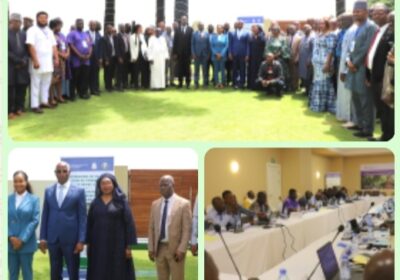
At the centre of this renewed push is a strategic meeting between ECOWAS Commission President, Omar Alieu Touray, and the UN Secretary-General’s Special Representative for the region, Leonardo Santos Simão. Their engagement signals more than routine diplomacy — it reflects a coordinated effort to respond to shifting political realities, security concerns, and fragile transitions shaping the region.
For millions across West Africa, these talks matter. From political tensions in transition states to security threats in the Sahel, the stakes remain high. Both leaders acknowledged that this is a defining moment — one that demands not just dialogue, but deliberate and unified action.
ECOWAS, long seen as the backbone of regional cooperation, is reaffirming its role as the primary platform for resolving disputes and guiding collective decisions. The message is clear: solutions to Africa’s challenges must be driven from within, with external partners supporting — not steering — the process.
Behind closed doors, discussions focused on avoiding fragmented interventions that often weaken impact. Instead, both institutions are pushing for stronger alignment — ensuring that every diplomatic, political, and security effort complements the other. The goal is simple but critical: one region, one coordinated response.
Observers say this renewed ECOWAS–UNOWAS synergy could reshape how crises are managed across the subregion. Preventive diplomacy — stopping conflicts before they escalate — emerged as a key priority, alongside maintaining open channels of communication among governments, civil society, and international actors.
There is also a growing recognition that stability is not just about ending conflicts, but about building trust, strengthening institutions, and creating credible political pathways that citizens can believe in.
As West Africa navigates a complex mix of democratic transitions, security threats, and economic pressures, this partnership sends a strong signal — that cooperation, not division, remains the region’s best path forward.
For now, the challenge lies in translating these high-level commitments into real impact on the ground — where communities continue to look up to regional leaders for direction, protection, and hope.