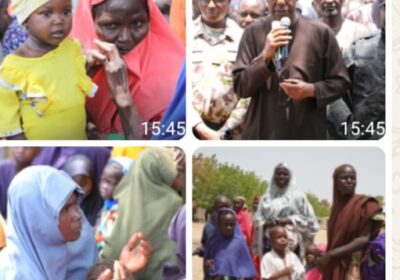


FCT TRADITIONAL RULERS’ WIVES LEAD CHARGE AGAINST ABUSE, DEFEND RIGHTS OF WOMEN AND GIRLS By Raymond Enoch
A quiet but powerful transformation is taking root across rural communities in the Federal Capital Territory (FCT), where the wives of traditional rulers are stepping forward to confront long-standing issues of abuse, discrimination, and harmful cultural practices affecting women and girls.
For decades, sexual and gender-based violence (SGBV), early child marriage, and systemic gender inequality have persisted among indigenous communities, often shielded by silence and deeply rooted traditions. Today, that silence is being challenged as traditional institutions, supported by civil society and the media, begin to rewrite the narrative.
At the center of this shift is the Association of Wives of Traditional Rulers in the FCT, whose members are using their influence within local structures to advocate for justice, protection, and dignity for vulnerable groups.
Their efforts are being amplified through a coordinated media outreach campaign under the theme “Our Culture, Our Protection,” which is bringing grassroots realities into national focus and sparking conversations that were once considered taboo.
Journalists embedded in the project have documented a wave of community engagements ranging from advocacy visits and dialogue sessions to targeted trainings aimed at reshaping how cases of abuse are handled within traditional systems.
In communities such as Abaji, Gwagwalada, Wako, and Karu, the outreach has revealed a complex picture: persistent challenges alongside emerging signs of change.
While cases of early marriage and domestic abuse remain prevalent, there is growing awareness among community members about the need to protect rights and uphold justice. Women are increasingly finding the courage to speak out, and traditional leaders are showing a willingness to reconsider practices that have long gone unquestioned.
Central to the initiative is the recognition that traditional institutions play a critical role in dispute resolution. In many rural settings, chiefs and elders remain the first point of contact for families seeking redress, making their decisions highly influential.
To address this, the programme is strengthening community-based justice systems through capacity-building sessions that equip traditional leaders with knowledge of human rights standards, legal frameworks, and survivor-centered approaches to handling sensitive cases.
The goal is to ensure that justice at the grassroots level is not only accessible but also fair, respectful, and protective of victims.
Observers say this shift is already producing results, as some traditional councils begin to adopt more structured and humane responses to cases of abuse, prioritizing the safety and dignity of survivors over customary silence.
The wives of traditional rulers have emerged as key drivers of this change. Leveraging their positions within the cultural hierarchy, they are engaging directly with women, families, and youth, advocating against harmful practices while promoting values that uphold respect and protection.
In many communities, they now serve as trusted points of contact for victims, offering guidance, emotional support, and pathways to justice that were previously unavailable or inaccessible.
Their involvement is also helping to bridge the gap between tradition and modern human rights principles, demonstrating that cultural preservation and social progress can coexist.
For the media, the initiative represents more than routine coverage. Journalists involved describe it as a responsibility to give voice to marginalized communities while maintaining ethical standards that protect survivors and avoid stigmatization.
Through their reports, stories that once remained confined to remote villages are reaching policymakers, stakeholders, and the wider public, placing pressure on institutions to respond and act.
The project is being implemented with support from the MacArthur Foundation through the Resource Centre for Human Rights and Civic Education (CHRICED), as part of a broader effort to strengthen traditional justice systems among the FCT’s original inhabitants.
Stakeholders say the multi-layered approach combining advocacy, training, and media engagement is critical to ensuring that the impact is both visible and sustainable.
Beyond policy and intervention, the initiative is also reframing culture itself as a tool for protection rather than oppression. By promoting values that emphasize dignity, respect, and community harmony, it encourages leaders and residents to retain positive traditions while discarding those that perpetuate harm.
Despite the progress, challenges remain. Resistance from segments of the community, fear of retaliation, and deeply ingrained beliefs continue to slow the pace of change.
However, advocates insist that momentum is building.
They point to increased participation in community dialogues, greater openness among traditional leaders, and a steady rise in awareness as signs that attitudes are beginning to shift.
As the campaign expands, stakeholders are calling for sustained collaboration among communities, traditional institutions, government agencies, and the media.
They stress that ending abuse and discrimination requires collective responsibility from families protecting their children to leaders ensuring justice and journalists continuing to spotlight critical issues.
Across the FCT, what was once hidden is now being spoken about openly. Conversations are replacing silence, and action is gradually taking the place of inaction.
For many women and girls, this represents more than a policy shift it is the beginning of hope.
If sustained, observers believe the movement could redefine community justice systems and secure a future where every woman and girl can live free from fear, with their rights protected and their voices heard.
The message resonating from the grassroots is clear: the time to act is now.