

ECOWAS, AfDB Move to Fast-Track Abidjan–Lagos 6-Lane Highway with ALCoMA , Board Orientation Briefing Session. By Raymond Enoch
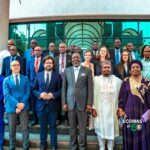
The Economic Community of West African States (ECOWAS), in partnership with the African Development Bank Group, has taken a decisive step toward the delivery of the transformative Abidjan–Lagos Highway, convening a high-level Orientation and Technical Briefing Session for members of the newly inaugurated Board of the Abidjan–Lagos Corridor Management Authority (ALCoMA).
The two-day session, held in Abidjan from February 19 to 20, forms a critical part of the onboarding process for the Authority’s Governing Board, which was officially sworn into office in December 2025 during the 22nd Ministerial Steering Committee meeting of the Abidjan–Lagos Corridor Highway Development Project.
The briefing provided board members with in-depth insights into the institutional, financial, legal and technical frameworks guiding the implementation of the flagship six-lane supra-national highway. Stretching from Abidjan through Accra, Lomé and Cotonou to Lagos, the corridor is widely regarded as one of West Africa’s most ambitious infrastructure undertakings, designed to unlock trade, enhance regional mobility and accelerate economic integration.
Officials described the session as a significant milestone in preparing the ground for the investment and construction phases of the project. With the Board now fully oriented on governance structures, project financing mechanisms and implementation timelines, stakeholders believe the Authority is better positioned to steer the multi-billion-dollar initiative into its next phase.
The Abidjan–Lagos Corridor accounts for a substantial share of West Africa’s trade and population density. Once completed, the modern highway is expected to ease cross-border movement, reduce transport costs, strengthen supply chains and stimulate industrial growth across five coastal countries.
For ECOWAS, the project aligns squarely with its regional integration agenda, while the AfDB’s involvement underscores the Bank’s continued commitment to financing large-scale infrastructure that promotes economic transformation across the continent.
With institutional groundwork steadily taking shape, attention now shifts to mobilizing investments and finalizing technical preparations that will usher the corridor into full-scale construction — a development many observers say could redefine connectivity and commerce along West Africa’s busiest economic spine.